Aramco and Sinopec Launch Petrochemical Complex in China

Aramco, Sinopec, and Fujian Petrochemical break ground on an integrated refining and petrochemical complex in China, aiming for an annual production of 16 million tons to meet the rising global demand for chemicals.

Share:

Comprehensive energy news coverage, updated nonstop

Annual subscription

8.25$/month*

*billed annually at 99$/year for the first year then 149,00$/year ​

Unlimited access • Archives included • Professional invoice

OTHER ACCESS OPTIONS

Monthly subscription

Unlimited access • Archives included

5.2$/month*
then 14.90$ per month thereafter

FREE ACCOUNT

3 articles offered per month

FREE

*Prices are excluding VAT, which may vary depending on your location or professional status

Since 2021: 35,000 articles • 150+ analyses per week

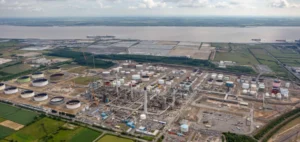
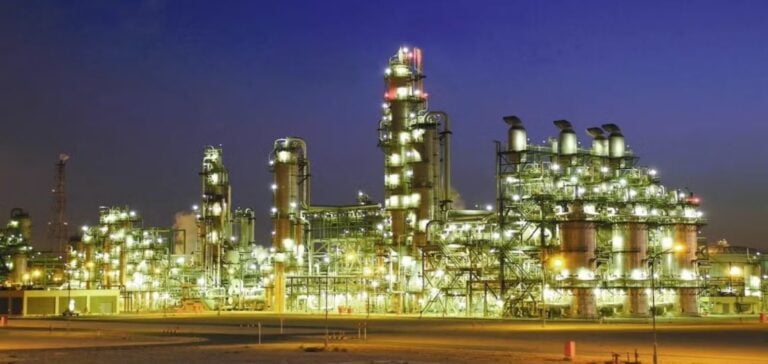
The groundbreaking ceremony for an ambitious petrochemical project was held in Fujian Province, China, marking a strategic collaboration between Aramco, Sinopec, and Fujian Petrochemical Company Limited (FPCL). This integrated refining and petrochemical complex is set to enhance production capacity and support the sector’s growth objectives.

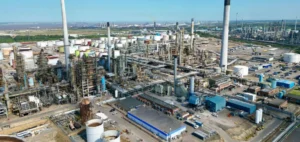
The site, expected to be fully operational by the end of 2030, will include a refining unit with a capacity of 16 million tons per year, equivalent to 320,000 barrels per day. It will also feature a 1.5-million-ton-per-year ethylene unit, a two-million-ton paraxylene capacity, downstream derivatives, and a 300,000-ton crude oil terminal to ensure a steady supply of raw materials.

Strategic Partnerships and Role Distribution

FPCL, a 50:50 joint venture between Sinopec and Fujian Petrochemical Industrial Group, holds a 50% stake in the project. Aramco and Sinopec equally share the remaining 50%. This partnership reflects a vertical integration strategy, strengthening resource supply and utilization in the region.

Mohammed Y. Al Qahtani, Aramco Downstream President, emphasized the importance of this collaboration, stating: “Today, we strengthen our downstream investment portfolio in China while reinforcing our role as a reliable and long-term partner. This project also aligns with our crude-to-chemicals strategy to meet growing global demand for petrochemicals.”

A Project Aligned with China’s Economic Priorities

For China, this complex supports its “dual circulation” strategy, which aims to boost domestic consumption while enhancing commercial partnerships. Sinopec Chairman Ma Yongsheng highlighted the benefits of this collaboration: “Aramco provides a reliable supply of raw materials, contributing to the development of the Gulei petrochemical site and bolstering our strategic China-Saudi partnership.”

This project also addresses the growing demand for chemicals in international markets while contributing to a more stable and competitive energy supply chain.

This development represents a new milestone in the economic relationship between China and Saudi Arabia, solidifying their long-term energy partnership and fostering mutual industrial expansion.
The Iraqi Prime Minister met with the founder of Lukoil to secure continued operations at the giant West Qurna-2 oil field, in response to recent US-imposed sanctions.
The sustained rise in consumption of high-octane gasoline pushes Pertamina to supplement domestic supply with new imported cargoes to stabilise stock levels.
Canadian group CRR acquires a strategic 53-kilometre road network north of Slave Lake from Islander Oil & Gas to support oil development in the Clearwater region.
Kazakhstan’s energy minister dismissed any ongoing talks between the government and Lukoil regarding the potential purchase of its domestic assets, despite earlier comments from a KazMunayGas executive.
OPEC and the Gas Exporting Countries Forum warn that chronic underinvestment could lead to lasting supply tensions in oil and gas, as demand continues to grow.
A national barometer shows that 62% of Norwegians support maintaining the current level of hydrocarbon exploration, confirming an upward trend in a sector central to the country’s economy.
ShaMaran has shipped a first cargo of crude oil from Ceyhan, marking the implementation of the in-kind payment mechanism established between Baghdad, Erbil, and international oil companies following the partial resumption of exports through the Iraq–Türkiye pipeline.
Norwegian group TGS begins Phase I of its multi-client seismic survey in the Pelotas Basin, covering 21 offshore blocks in southern Brazil, with support from industry funding.
Indonesian group Chandra Asri receives a $750mn tailor-made funding from KKR for the acquisition of the Esso network in Singapore, strengthening its position in the fuel retail sector.
Tethys Petroleum posted a net profit of $1.4mn in Q3 2025, driven by a 33% increase in hydrocarbon sales and rising oil output.
Serbia considers emergency options to avoid the confiscation of Russian stakes in NIS, targeted by US sanctions, as President Vucic pledges a definitive decision within one week.
Enbridge commits $1.4bn to expand capacity on its Mainline network and Flanagan South pipeline, aiming to streamline the flow of Canadian crude to US Midwest and Gulf Coast refineries.
The Peruvian state has tightened its grip on Petroperu with an emergency board reshuffle to secure the Talara refinery, fuel supply and the revival of Amazon oil fields.
Sofia appoints an administrator to manage Lukoil’s Bulgarian assets ahead of upcoming US sanctions, ensuring continued operations at the Balkans’ largest refinery.
The United States rejected Serbia’s proposal to ease sanctions on NIS, conditioning any relief on the complete withdrawal of Russian shareholders.
The International Energy Agency expects a surplus of crude oil by 2026, with supply exceeding global demand by 4 million barrels per day due to increased production within and outside OPEC+.
Cenovus Energy has completed the acquisition of MEG Energy, adding 110,000 barrels per day of production and strengthening its position in Canadian oil sands.
The International Energy Agency’s “Current Policies Scenario” anticipates growing oil demand through 2050, undermining net-zero pathways and intensifying investment uncertainty globally.
Saudi Aramco cuts its official selling price for Arab Light crude in Asia, responding to Brent-Dubai spread pressure and potential impact of US sanctions on Russian oil.
The removal of two Brazilian refiners and Petrobras’ pricing offensive reshuffle spot volumes around Santos and Paranaguá, shifting competition ahead of a planned tax increase in early 2026.

All the latest energy news, all the time

Annual subscription

8.25$/month*

*billed annually at 99$/year for the first year then 149,00$/year ​

Unlimited access - Archives included - Pro invoice

Monthly subscription

Unlimited access • Archives included

5.2$/month*
then 14.90$ per month thereafter

*Prices shown are exclusive of VAT, which may vary according to your location or professional status.

Since 2021: 30,000 articles - +150 analyses/week.