France: Political uncertainty threatens EDF’s nuclear revival

EDF, in the midst of relaunching its nuclear strategy, finds itself in limbo due to uncertain election results, according to unions.

Share:

EDF incertitude nucléaire politique

Comprehensive energy news coverage, updated nonstop

Annual subscription

8.25$/month*

*billed annually at 99$/year for the first year then 149,00$/year ​

Unlimited access • Archives included • Professional invoice

OTHER ACCESS OPTIONS

Monthly subscription

Unlimited access • Archives included

5.2$/month*
then 14.90$ per month thereafter

FREE ACCOUNT

3 articles offered per month

FREE

*Prices are excluding VAT, which may vary depending on your location or professional status

Since 2021: 35,000 articles • 150+ analyses per week

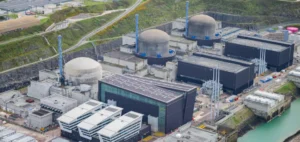
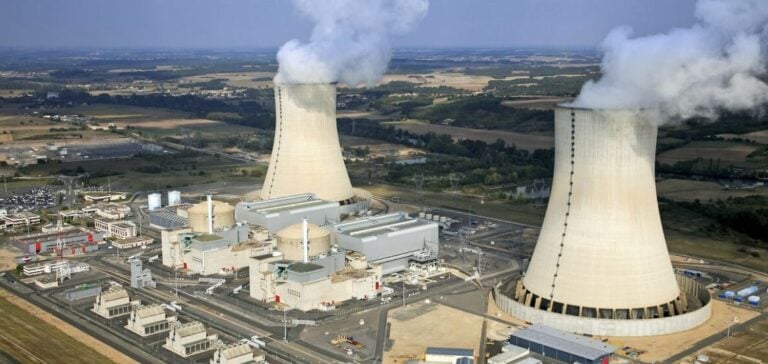
EDF, the French energy company, recently initiated a strategic shift by relaunching its nuclear program. This decision, taken in collaboration with the French government, aims to build six new-generation EPR2 reactors, including two at Penly, followed by eight more. However, the uncertain outcome of the parliamentary elections has left EDF and its employees in a state of great uncertainty, according to several union sources. Amélie Henri, national secretary of the CFE-CGC, underlines the growing concern of employees about a possible backlash that could devastate the company.
Although President Emmanuel Macron has decided to build these new reactors, not all the decisions that will structure the energy sector have yet been formally enshrined in law by the government. The future multi-annual energy plan (PPE), which is to set the framework for the energy transition, has still not been adopted. The current PPE, dating from April 2020, still calls for the closure of 12 reactors by 2035, in addition to those at Fessenheim, adding to the uncertainty.

Investments and projects on hold

José Fernandes of the CGT also expresses his concerns. Investments and studies for EPRs have already been launched, but without official validation, their future remains uncertain. Bercy stresses that the timetable is “clear”, but dependent on election results. The Nouveau Front Populaire is anti-nuclear, while the Rassemblement National supports nuclear power and opposes wind turbines.
EDF management declined to comment on this sensitive strategic issue. Julien Laplace of the CFDT points out that, despite presidential announcements, nothing is yet scheduled in the law, exacerbating the uncertainty.

Hydraulic projects and internal reorganization

Another pending project concerns the resolution of a dispute over hydraulics between Paris and Brussels. A parliamentary fact-finding mission led by Marie-Noëlle Battistel and Antoine Armand was due to study the issue. However, the future of this mission is uncertain after the elections.
The dissolution of the French National Assembly has also put the finalization of CEO Luc Rémont’s corporate project for the next ten years on hold. This plan included a significant increase in electricity production and a high proportion of controllable electricity by 2035. Amélie Henri of the CFE-CGC hopes that the political situation will not lead to another catastrophic “stop and go” for the company.

Fear of democratic destabilization

The unions fear that the future government will bypass Parliament to impose changes to the energy roadmap without democratic debate. Julien Laplace of the CFDT sees a reason for hope in the European Parliament, where the rise of the far right has not disrupted the pro-nuclear turn of green regulations.
EDF employees are anxiously awaiting the stabilization of the political situation to secure ongoing projects and guarantee the sustainability of the national energy strategy.
Terra Innovatum has increased its interactions with the Nuclear Regulatory Commission to advance licensing of its SOLO™ micro-modular reactor, despite the partial shutdown of the US federal government.
The SATURNE Industrial Chair aims to develop innovative uranium extraction methods, with joint funding from Orano and the National Research Agency over a four-year period.
US-based X-energy has signed a reservation agreement with South Korea's Doosan Enerbility to secure key components for its small modular nuclear reactors.
Niger expands its mining alliances with Uranium One to develop new sites, while the Dasa project continues seeking financing despite clear political backing.
Samsung Heavy Industries has received Approval in Principle for a floating nuclear plant featuring two SMART100 reactors, marking a step toward the commercialisation of offshore small modular reactors.
The Indian government proposes a unified legal framework for nuclear energy, aiming to boost private investment and increase installed capacity to 100 GW by 2047.
Samsung C&T strengthens its presence in modular nuclear energy in Europe by signing an agreement with Synthos Green Energy to develop up to 24 SMRs in Poland and several Central European countries.
Israeli firm nT-Tao and Ben-Gurion University have developed a nonlinear control system that improves energy stability in fusion plasmas, strengthening the technical foundation of their future compact reactors.
The Indian government has introduced a bill allowing private companies to build and operate nuclear power plants, ending a state monopoly in place for over five decades.
Natura Resources enters a new regulatory phase for its molten salt reactor MSR-1, following the signing of a framework agreement with the US Department of Energy under the Reactor Pilot Program.
Norwegian Nuclear Decommissioning is surveying 22 localities to assess their interest in hosting storage facilities for radioactive waste from the country’s former research reactors.
Electricité de France's Flamanville 3 reactor has reached full power for the first time, marking a key industrial milestone in the deployment of EPRs in Europe, despite cost overruns reaching EUR23.7bn ($25.7bn).
GE Vernova Hitachi’s BWRX-300 small modular reactor has passed a key regulatory hurdle in the United Kingdom, opening the door to potential commercial deployment, despite no current plans for construction.
Molten salt reactor developer Natura Resources has acquired Shepherd Power and partnered with NOV to scale up modular reactor manufacturing by the next decade.
China National Nuclear Corporation expects commercial operation in 2026 for its ACP100 reactor, following successful cold testing and completion of critical structures in 2025.
Start-up SEATOM has been selected to join NATO's DIANA programme with its micro nuclear reactor designed for extreme environments, reinforcing its position in dual-use marine and military energy technologies.
The Estonian Ministry of Economic Affairs has opened a tender to select a site and conduct initial environmental studies for a 600 MW nuclear power plant, marking a decisive step for the country’s energy future.
The European Commission has approved Poland's financial support plan for its first nuclear power plant, a €42bn project backed by public funding, state guarantees, and a contract for difference mechanism.
Six European nuclear authorities have completed the second phase of a joint review of the Nuward modular reactor, a key step toward aligning regulatory frameworks for small nuclear reactors across Europe.
Driven by off-grid industrial heat demand and decarbonisation mandates, the global small modular reactor market is set to grow 24% annually through 2030, with installed capacity expected to triple within five years.

All the latest energy news, all the time

Annual subscription

8.25$/month*

*billed annually at 99$/year for the first year then 149,00$/year ​

Unlimited access - Archives included - Pro invoice

Monthly subscription

Unlimited access • Archives included

5.2$/month*
then 14.90$ per month thereafter

*Prices shown are exclusive of VAT, which may vary according to your location or professional status.

Since 2021: 30,000 articles - +150 analyses/week.