Japan: Fukushima water discharge into the sea halted

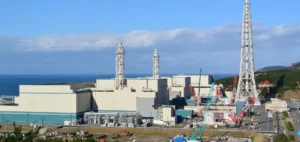
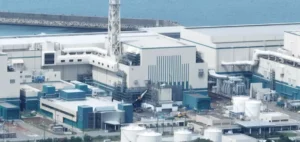
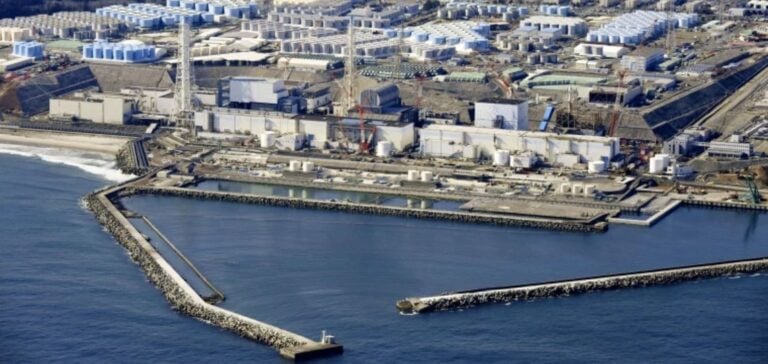
The Fukushima Daiichi nuclear power plant in Japan experienced a temporary interruption in the discharge of treated water into the Pacific Ocean, caused by a partial power cut on Wednesday.

Share:

rejet eau Fukushima panne

Comprehensive energy news coverage, updated nonstop

Annual subscription

8.25€/month*

*billed annually at 99€/year for the first year then 149,00€/year ​

Unlimited access • Archives included • Professional invoice

OTHER ACCESS OPTIONS

Monthly subscription

Unlimited access • Archives included

5.2€/month*
then 14.90€ per month thereafter

FREE ACCOUNT

3 articles offered per month

FREE

*Prices are excluding VAT, which may vary depending on your location or professional status

Since 2021: 35,000 articles • 150+ analyses per week

On Wednesday at 10:43 local time (01:43 GMT), a fault affected the plant’s A power supply line, bringing to a halt the treated water discharge process started last Friday. The operator Tepco has not yet identified the cause of the incident. Despite the outage, “no significant changes” were observed in the radioactivity control systems, and the reactor cooling system continued to operate normally.

Process and safety of treated water discharge

The discharged water, although diluted and filtered to remove the majority of radioactive substances, still contains tritium. This radionuclide is considered dangerous only at very high doses. The rejection project, which is expected to span several decades, received approval from the IAEA (International Atomic Energy Agency) and began last summer.

International reactions and on-site incident

The initiation of this rejection program provoked outrage in several countries, notably China, which reacted by suspending all imports of Japanese seafood. A separate incident was reported on site four minutes after the blackout: a worker was injured during an excavation operation. Although conscious and uncontaminated, he was transferred to emergency. No direct link with the outage has yet been confirmed.

The Fukushima Daiichi power plant, scarred by the 2011 tsunami disaster, continues to face major challenges. The plant’s decontamination and dismantling process, scheduled to last for decades yet to come, underlines the scale of the recovery and safety tasks still underway.


Niger’s military regime disputes theft allegations by French prosecutors after uranium stock vanished from a nationalised site previously operated by Orano.
Rosatom successfully completed a series of tests on its high-temperature gas-cooled reactor fuel, validating its performance at up to 1,700 °C under prolonged irradiation conditions.
Videberg Kraft AB becomes the first company to request government support to build two new reactors at the Ringhals site, under the national nuclear investment framework adopted in 2025.
The European Commission opens an in-depth investigation into Prague's public funding of a major nuclear project, which could reach €30bn ($32.88bn), with guaranteed revenues over forty years.
Niigata's assembly officially backs the restart of the Kashiwazaki-Kariwa site, marking a key step in Japan’s return to nuclear energy following the 2011 Fukushima disaster.
The Japanese government plans to fund up to 30% of loans required for nuclear projects, aiming to accelerate reactor restarts and double the share of nuclear energy in its energy mix by 2040.
French nuclear reactor developer Newcleo has submitted its lead-cooled small modular reactor design to Euratom, initiating the first regulatory phase to integrate nuclear non-proliferation safeguards at the European level.
French state utility EDF has increased the maximum estimated cost for building six new nuclear reactors to €72.8 billion ($85.29 billion), representing a 40% rise over the original figure.
US-based Holtec has signed a memorandum of understanding with Hungary’s energy group MVM to assess the deployment of its SMR-300 technology, strengthening bilateral nuclear cooperation and opening prospects for a new market in Central Europe.
California-based startup Radiant has secured $300mn to build its first factory in Tennessee and prepare for the mass production of miniature nuclear reactors for off-grid applications.
Terra Innovatum has increased its interactions with the Nuclear Regulatory Commission to advance licensing of its SOLO™ micro-modular reactor, despite the partial shutdown of the US federal government.
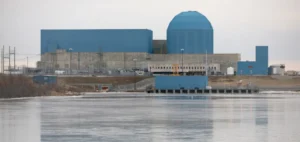
The US nuclear regulator has extended the operating licences of three Illinois reactors by 20 years, strengthening Constellation's long-term industrial outlook for the Clinton and Dresden sites.
The SATURNE Industrial Chair aims to develop innovative uranium extraction methods, with joint funding from Orano and the National Research Agency over a four-year period.
US-based X-energy has signed a reservation agreement with South Korea's Doosan Enerbility to secure key components for its small modular nuclear reactors.
Niger expands its mining alliances with Uranium One to develop new sites, while the Dasa project continues seeking financing despite clear political backing.
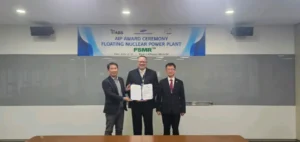
Samsung Heavy Industries has received Approval in Principle for a floating nuclear plant featuring two SMART100 reactors, marking a step toward the commercialisation of offshore small modular reactors.
The Indian government proposes a unified legal framework for nuclear energy, aiming to boost private investment and increase installed capacity to 100 GW by 2047.
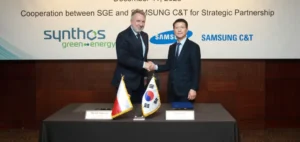
Samsung C&T strengthens its presence in modular nuclear energy in Europe by signing an agreement with Synthos Green Energy to develop up to 24 SMRs in Poland and several Central European countries.
Israeli firm nT-Tao and Ben-Gurion University have developed a nonlinear control system that improves energy stability in fusion plasmas, strengthening the technical foundation of their future compact reactors.
The Indian government has introduced a bill allowing private companies to build and operate nuclear power plants, ending a state monopoly in place for over five decades.

All the latest energy news, all the time

Annual subscription

8.25€/month*

*billed annually at 99€/year for the first year then 149,00€/year ​

Unlimited access - Archives included - Pro invoice

Monthly subscription

Unlimited access • Archives included

5.2€/month*
then 14.90€ per month thereafter

*Prices shown are exclusive of VAT, which may vary according to your location or professional status.

Since 2021: 30,000 articles - +150 analyses/week.