OPEC’s impact on the Israeli-Palestinian crisis

In a complex geopolitical context, OPEC is at the heart of tensions between Arab nations and Israel, profoundly influencing the current crisis.

Share:

Géopolitique pétrolière en tension

Comprehensive energy news coverage, updated nonstop

Annual subscription

8.25€/month*

*billed annually at 99€/year for the first year then 149,00€/year ​

Unlimited access • Archives included • Professional invoice

OTHER ACCESS OPTIONS

Monthly subscription

Unlimited access • Archives included

5.2€/month*
then 14.90€ per month thereafter

FREE ACCOUNT

3 articles offered per month

FREE

*Prices are excluding VAT, which may vary depending on your location or professional status

Since 2021: 35,000 articles • 150+ analyses per week

The Organization of the Petroleum Exporting Countries (OPEC), known for its significant influence on the world oil market, plays a crucial role in international relations, particularly with regard to the Israeli-Palestinian conflict. Libya’s Oil Minister Mohamed Oun’s recent interview with S&P Global Commodity Insights on November 21 highlights the complexity of OPEC’s position on the ongoing war in Gaza.

Background: The 1973 Embargo

Oun points to the heterogeneity of OPEC, made up of non-Arab countries, suggesting a potential reluctance to back an oil embargo against Israel’s supporters. This position clearly diverges from that of Iran, a vocal member of OPEC, which advocates a Muslim oil embargo. However, this proposal was rejected by Gulf producers. The situation is reminiscent of the 1973 oil embargo, when Arab producers cut production, raised oil prices and cut off supplies to the USA and other consumer countries because of their support for Israel. This embargo triggered an unprecedented worldwide oil crisis, quadrupling prices and leading to gasoline shortages in the United States.

Libya’s Calls to Action

Oun, as a Libyan citizen, calls on Arab countries to sanction Israel and its Western backers in the Gaza war, without specifying the use of oil as a weapon.

“Any means that can exert pressure on the Western community to push Israel to stop these massacres must be considered,”

he declares.

OPEC+ Voluntary Reductions

The majority of Libyan politicians condemn Israel’s war on Gaza, but no consensus has emerged on the use of oil as a means of pressure. Any such Libyan decision would be a matter for the government, not the Oil Ministry. At the same time, Iran’s calls for an embargo come at a time when OPEC+ co-leaders Saudi Arabia and Russia have already cut their oil production.

These voluntary reductions, added to OPEC+’s 2 million barrels per day cuts starting in November 2022, have influenced the global market. The impact of these decisions is palpable. Production in Saudi Arabia, which had voluntarily cut output by 1.5 million barrels a day since July, fell to 9 million barrels a day in October, a two-year low. Russia, meanwhile, reduced its export production by 300,000 barrels a day.

OPEC, with its heterogeneous composition and influence on the world oil market, is at the heart of current geopolitical tensions. While some members are calling for oil to be used as a political weapon, others are opposed, underlining the differences within the organization. The current situation reflects not only OPEC’s internal dynamics, but also the interconnection between energy resources and global politics.
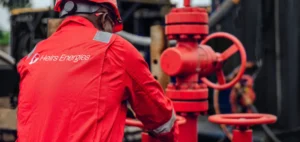
The agreement signed with Afreximbank marks a strategic shift for Heirs Energies, aiming to scale up its exploration and production operations on Nigeria's OML 17 oil block.
Oritsemeyiwa Eyesan’s appointment as head of Nigeria’s oil regulator marks a strategic shift as the country targets $10bn in upstream investment through regulatory reform and transparent licensing.
Baghdad states that all international companies operating in Kurdistan’s oil fields must transfer their production to state marketer SOMO, under the agreement signed with Erbil in September.
Chinese oil group CNOOC continues its expansion strategy with a new production start-up in the Pearl River Basin, marking its ninth offshore launch in 2025.
A train carrying over 1,200 tonnes of gasoline produced in Azerbaijan entered Armenia on December 19, marking the first commercial operation since recent conflicts, with concrete implications for regional transit.
Subsea 7 has secured a new extension of its frame agreement with Equinor for subsea inspection, maintenance and repair services through 2027, deploying the Seven Viking vessel on the Norwegian Continental Shelf.
Caracas says Iran has offered reinforced cooperation after the interception of two ships carrying Venezuelan crude, amid escalating tensions with the United States.
US authorities intercepted a second oil tanker carrying Venezuelan crude, escalating pressure on Caracas amid accusations of trafficking and tensions over sanctioned oil exports.
California Resources Corporation completed an all-stock asset transfer with Berry Corporation, strengthening its oil portfolio in California and adding strategic exposure in the Uinta Basin.
The Ugandan government aims to authorise its national oil company to borrow $2 billion from Vitol to fund strategic projects, combining investments in oil infrastructure with support for national logistics needs.
British company BP appoints Meg O'Neill as CEO to lead its strategic refocus on fossil fuels, following the abandonment of its climate ambitions and the early departure of Murray Auchincloss.
The Venezuelan national oil company has confirmed the continuity of its crude exports, as the United States enforces a maritime blockade targeting sanctioned vessels operating around the country.
Baker Hughes will supply advanced artificial lift systems to Kuwait Oil Company to enhance production through integrated digital technologies.
The United States has implemented a full blockade on sanctioned tankers linked to Venezuela, escalating restrictions on the South American country's oil flows.
Deliveries of energy petroleum products fell by 4.5% in November, driven down by a sharp decline in diesel, while jet fuel continues its growth beyond pre-pandemic levels.
ReconAfrica is finalising preparations to test the Kavango West 1X well in Namibia, while expanding its portfolio in Angola and Gabon to strengthen its presence in sub-Saharan Africa.
Shell has reopened a divestment process for its 37.5% stake in Germany's PCK Schwedt refinery, reviving negotiations disrupted by the Russia-Ukraine conflict and Western sanctions.
Aliko Dangote accuses Nigeria’s oil regulator of threatening local refineries by enabling refined fuel imports, while calling for a corruption probe against its director.
Shell Offshore approves a strategic investment to extend the life of the Kaikias field through a waterflood operation, with first injection planned for 2028 from the Ursa platform.
Oil prices drop amid progress in Ukraine talks and expectations of oversupply, pushing West Texas Intermediate below $55 for the first time in nearly five years.

All the latest energy news, all the time

Annual subscription

8.25€/month*

*billed annually at 99€/year for the first year then 149,00€/year ​

Unlimited access - Archives included - Pro invoice

Monthly subscription

Unlimited access • Archives included

5.2€/month*
then 14.90€ per month thereafter

*Prices shown are exclusive of VAT, which may vary according to your location or professional status.

Since 2021: 30,000 articles - +150 analyses/week.