Solar energy in Iraq: Hazar Merd leads the way

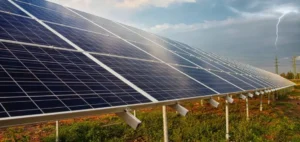
In the mountains of Iraqi Kurdistan, a village is turning to solar power to meet its energy needs, offering a glimpse of the country's energy future.

Share:

Énergie solaire en Irak

Comprehensive energy news coverage, updated nonstop

Annual subscription

8.25$/month*

*billed annually at 99$/year for the first year then 149,00$/year ​

Unlimited access • Archives included • Professional invoice

OTHER ACCESS OPTIONS

Monthly subscription

Unlimited access • Archives included

5.2$/month*
then 14.90$ per month thereafter

FREE ACCOUNT

3 articles offered per month

FREE

*Prices are excluding VAT, which may vary depending on your location or professional status

Since 2021: 35,000 articles • 150+ analyses per week

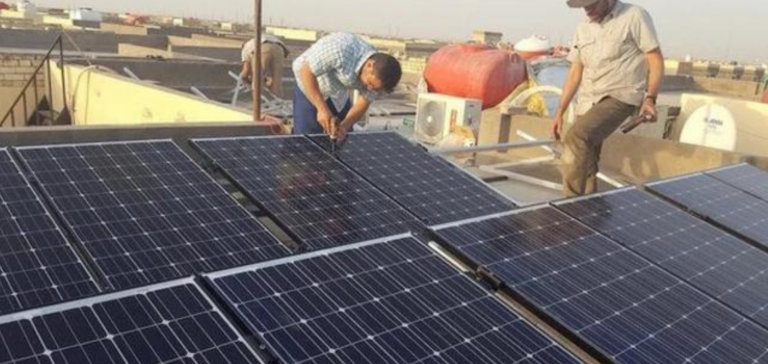
In a hamlet perched high in the mountains of Iraqi Kurdistan, virtually every roof is covered with solar panels. But the Hazar Merd village remains an exception in a country where the authorities have yet to give concrete expression to their commitment to developing renewable energies. For an Iraq that is hostage to its oil wealth and hard hit by the effects of climate change, the issue is of paramount importance.

Ongoing challenges

On a daily basis, Iraq’s 43 million inhabitants live with the rhythm of power cuts, which worsen in summer when temperatures approach or even exceed 50 degrees Celsius. But the scarcity of solar power in one of the sunniest countries on the planet illustrates the difficulty of moving economies away from the ease of oil and gas, as dozens of countries will be demanding at the next COP28, in Dubai in November and December.

The solar initiative at Hazar Merd

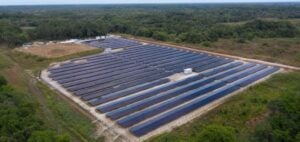
Nestled in the mountains of autonomous Kurdistan, near Souleimaniyeh, a village has taken up the challenge of solar energy: in Hazar Merd, 17 of the 25 households have installed photovoltaic panels. “Solar covers all our needs: fridge, TV, (air) cooler, washing machine, vacuum cleaner,” sums up Daniar Abdallah, 33. “It’s been a great relief for us,” continues this father of two girls, who paid $2,800 (around €2,650) in 2018 to convert to solar power.

The challenge of generalization

The ambient calm is no longer disturbed by the roar of the large district generators used all over Iraq to compensate for power cuts, which are extremely polluting because they run on fossil fuels. “Before, we had a generator that broke down all the time,” continues Mr. Abdallah, a soldier in the local Kurdish forces. Especially as load shedding sometimes lasts “12 or 13 hours a day”. Following his example, “several friends in other villages rushed to install solar panels”, he adds.

Future plans for solar energy in Iraq

However, the phenomenon is still marginal. In Suleimaniyeh, the second-largest city in Iraqi Kurdistan, only 500 of the 600,000 households with public electricity are equipped with solar panels, admits department spokesman Sirouan Mahmoud. Solar power has been “progressing rapidly” since the regional parliament voted for incentives in 2021, he assures us. As a result, any household that supplies the authorities with solar energy it does not consume benefits from a reduction in its public electricity bill.

The challenges of solar energy in Iraq

Mr. Mahmoud points out that Kurdistan is planning to build three solar power plants with a total capacity of 75 megawatts (MW). In a country whose infrastructure has been ravaged by decades of conflict, and where governance is undermined by endemic corruption, Iraq’s power plants generate just 24,000 MW. To say goodbye to load shedding, the 32,000 MW threshold would have to be exceeded. Yet renewable energies remain under-exploited in the energy mix. Iraq enjoys more than 3,000 hours of sunshine out of the 8,700 hours in the year.

The growing adoption of solar energy in Hazar Merd and other parts of Iraqi Kurdistan is a sign of hope for a more sustainable energy future for the country. However, persistent challenges, such as oil dependency and the need to overcome logistical and financial obstacles, underline the difficult road to a successful energy transition.

T1 Energy will supply Treaty Oak with 900MW of solar modules over three years, leveraging domestically produced cells from Austin to meet increasing regulatory requirements.
Solarpro commissions Hungary’s largest photovoltaic plant using 700,000 advanced modules supplied by LONGi, with an expected annual output of 470 GWh.
Technique Solaire has secured €40mn ($43.5mn) in junior debt from BNP Paribas Asset Management to structure two solar portfolios totalling 392 MWp across France, Spain and the Netherlands.
EDF Power Solutions UK has appointed METLEN to lead engineering and construction for the 400MW Longfield solar farm in Essex, with commissioning scheduled for 2030.
Independent power producer Neoen has secured six agrivoltaic projects totalling 124 MWp, reinforcing its position as the leading winner in French solar tenders since 2021.
As the photovoltaic industry enters a phase of deep restructuring, the duel between TOPCon 4.0 and heterojunction technologies is redefining manufacturers’ margins. In 2026, reducing production costs becomes the primary strategic lever for global market leaders.
JA Solar and Trinasolar top Wood Mackenzie’s latest semiannual ranking despite a sector-wide net loss of $2.2 billion. Industrial leaders are strengthening their grip on global photovoltaic module supply through rigorous financial discipline.
BayWa r.e. has finalised the sale of a 46 MW floating solar park, the country’s largest, to a Dutch public-local consortium, marking a new step in the decentralised structuring of the solar market in the Netherlands.
The ATUM Solar industrial complex, located in Ain Sokhna, will include three factories—two of 2 GW capacity—backed by a $220mn investment from an international consortium.
AMEA Power has completed the commercial commissioning of a 120 MWp solar project in Kairouan, marking a national first in Tunisia for a renewable energy installation of this scale.
The Gerus plant becomes the first solar installation in Namibia to sell electricity directly on the Southern African Power Pool regional market.
Japanese conglomerate Tokyu teams up with Global Infrastructure Management and Clean Energy Connect to build 800 low-voltage solar plants totalling 70MWDC, under an off-site power purchase agreement for its facilities.
T1 Energy has begun construction of a solar cell facility in Milam County, Texas, representing an investment of up to $425mn, aimed at strengthening U.S. industrial autonomy in the photovoltaic supply chain.
Pivot Energy has secured $225mn in funding from three banking partners to support a portfolio of 60 community solar power plants across nine US states.
Voltalia has started building a 43-megawatt hybrid plant in Sainte-Anne, combining solar, battery storage and bioenergy to meet growing electricity demand in western French Guiana.
Masdar’s exit ends ReNew Energy's privatisation attempt, despite offer rising to $8.15 per share.
California surpassed 52.3% of electricity from renewables and large hydro in 2024, marking a major energy milestone while increasing pressure on storage, permitting and curtailed production.
European Energy France has secured two wins in tenders issued by the French Energy Regulatory Commission for its agrivoltaic parks in Saint-Voir, with a combined capacity of 14.3 MWp and commissioning expected by late 2027.
TotalEnergies will supply Google with 1TWh of renewable electricity from a 20MW solar plant in Malaysia under a 21-year power purchase agreement.
Enviromena secured approval for its Fillongley solar farm after a local council’s refusal was overturned, despite conflicts of interest tied to public funds used to oppose the project.

All the latest energy news, all the time

Annual subscription

8.25$/month*

*billed annually at 99$/year for the first year then 149,00$/year ​

Unlimited access - Archives included - Pro invoice

Monthly subscription

Unlimited access • Archives included

5.2$/month*
then 14.90$ per month thereafter

*Prices shown are exclusive of VAT, which may vary according to your location or professional status.

Since 2021: 30,000 articles - +150 analyses/week.