Karavasta Solar Power Plant: Albania’s Green Electricity

Albania is witnessing an energy revolution with the Karavasta solar power plant. This ensures a stable electricity supply, reduces dependence on oil, and protects local biodiversity.

Share:

Centrale solaire de karavasta

Comprehensive energy news coverage, updated nonstop

Annual subscription

8.25€/month*

*billed annually at 99€/year for the first year then 149,00€/year ​

Unlimited access • Archives included • Professional invoice

OTHER ACCESS OPTIONS

Monthly subscription

Unlimited access • Archives included

5.2€/month*
then 14.90€ per month thereafter

FREE ACCOUNT

3 articles offered per month

FREE

*Prices are excluding VAT, which may vary depending on your location or professional status

Since 2021: 35,000 articles • 150+ analyses per week

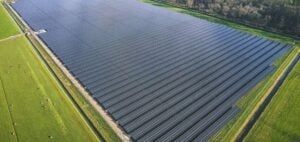
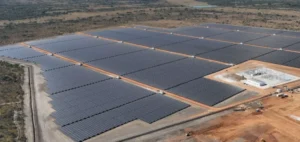
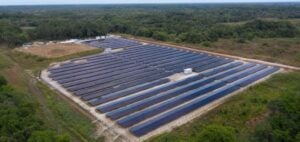
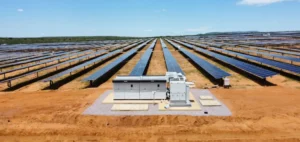
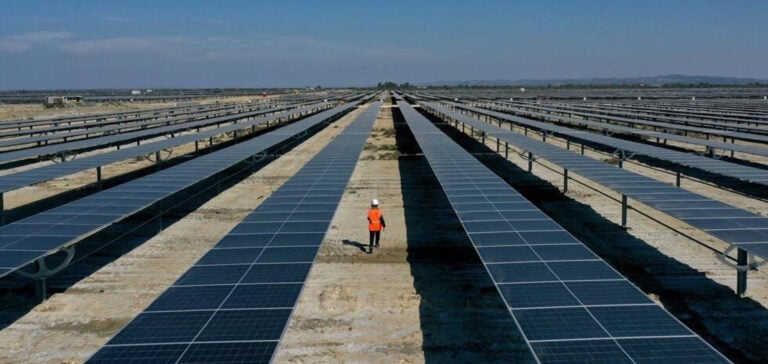
The Karavasta solar power plant plans to connect its 234,828 solar panels in a few weeks’ time. In this way, Albania can continue to boast about its 100% green electricity. Voltalia, whose main shareholder is the Mulliez family, built what will become the largest solar power plant in the Western Balkans in less than two years. Located on 200 hectares of land provided by the Albanian government on the edge of the Karavasta Lagoon National Park, the plant will be able to generate 140 megawatts, enough to supply several hundred thousand homes with electricity.

A Step Towards Green Energy

In 2022, an official study warned of the state of the dams – and new dam projects were cancelled, challenged by environmental NGOs. Karavasta’s thousands of hours of annual sunshine should ensure stable production.

As of this winter, explains Constantin von Alvensleben, Voltalia’s country manager for Albania, “100% of the energy produced by the Karavasta solar power plant will be sold to the Albanian national utility, which will in turn distribute it via the Albanian distribution company OSHEE. If Albania generates a surplus of electrical energy, it will be able to export the electricity to users in neighboring countries such as Greece, Italy, Kosovo, Montenegro or Northern Macedonia”.

Although its electricity is 100% green, Albania also produces some 650,000 tonnes of crude oil every year, much of which is exported to the European Union under conditions denounced by many environmental organizations.

Salty Soils for an Energy Revolution

The Karavsta power plant is located on salty, uncultivable land – a rarity in Europe, explains Luca Anthouard, engineer on the project, which has enabled this plant to be “on a grand scale by European standards”. And this soil is well suited to the panels installed here, “which we call bi-facial because they capture energy from the sun’s direct rays as well as the diffuse radiation from the ground’s reverberation”, he adds.

The cracked earth used to be home to small green frogs – Pelophylax shqipericus, or Albanian Frogs. “A protected species,” explains Vilma Terpollari, Voltalia’s environmental consultant. To this end, she explains, “we have drawn up specific projects to protect this species and create new habitats so that it can return and reproduce here”. On the prefabs dotted around the plant, photos of this little frog with a fluorescent green line across its back urge workers to be careful.

Impact on local wildlife

Higher up, it’s the line that carries electricity from the power station to the redistribution station that could disturb the birds. The nearby nature reserve is home to curly pelicans and pink flamingos, and the region is on the migration map for many species. “Voltalia has installed bird diverters,” points out Ms Terpollari, “a first in Albania”. These towers signal the birds to make a detour.

As for the inhabitants of the surrounding villages, 53 families had to leave their homes to make way for the construction of the power plant. Voltalia’s social advisor Ramatlen Bollobani explains that they will be reimbursed by the state, in accordance with the law”. The company has undertaken to add money “to reach the market value of their property, including agricultural production”. Only one family is contesting its eviction.

Final analysis

The Karavasta power plant represents a major energy and environmental turning point for Albania. It will not only guarantee a stable electricity supply, but also reduce dependence on hydroelectric power plants and oil imports. In addition, efforts to preserve local wildlife demonstrate the company’s commitment to biodiversity.

In conclusion, the Karavasta solar power plant embodies Albania’s future in clean, renewable energy. Its positive impact on the environment and the country’s electricity supply makes it an essential project. Albania is thus opening up to green energy opportunities, while taking steps to protect its precious natural resources.


T1 Energy will supply Treaty Oak with 900MW of solar modules over three years, leveraging domestically produced cells from Austin to meet increasing regulatory requirements.
Solarpro commissions Hungary’s largest photovoltaic plant using 700,000 advanced modules supplied by LONGi, with an expected annual output of 470 GWh.
UK-based manufacturer Awendio Solaris plans to build a 2.5 GW solar industrial platform, expandable to 5 GW, in Quebec, targeting North American markets with a 100% regional supply chain.
Technique Solaire has secured €40mn ($43.5mn) in junior debt from BNP Paribas Asset Management to structure two solar portfolios totalling 392 MWp across France, Spain and the Netherlands.
EDF Power Solutions UK has appointed METLEN to lead engineering and construction for the 400MW Longfield solar farm in Essex, with commissioning scheduled for 2030.
Independent power producer Neoen has secured six agrivoltaic projects totalling 124 MWp, reinforcing its position as the leading winner in French solar tenders since 2021.
As the photovoltaic industry enters a phase of deep restructuring, the duel between TOPCon 4.0 and heterojunction technologies is redefining manufacturers’ margins. In 2026, reducing production costs becomes the primary strategic lever for global market leaders.
JA Solar and Trinasolar top Wood Mackenzie’s latest semiannual ranking despite a sector-wide net loss of $2.2 billion. Industrial leaders are strengthening their grip on global photovoltaic module supply through rigorous financial discipline.
BayWa r.e. has finalised the sale of a 46 MW floating solar park, the country’s largest, to a Dutch public-local consortium, marking a new step in the decentralised structuring of the solar market in the Netherlands.
The ATUM Solar industrial complex, located in Ain Sokhna, will include three factories—two of 2 GW capacity—backed by a $220mn investment from an international consortium.
AMEA Power has completed the commercial commissioning of a 120 MWp solar project in Kairouan, marking a national first in Tunisia for a renewable energy installation of this scale.
The Gerus plant becomes the first solar installation in Namibia to sell electricity directly on the Southern African Power Pool regional market.
Pivot Energy has secured $225mn in funding from three banking partners to support a portfolio of 60 community solar power plants across nine US states.
Voltalia has started building a 43-megawatt hybrid plant in Sainte-Anne, combining solar, battery storage and bioenergy to meet growing electricity demand in western French Guiana.
Masdar’s exit ends ReNew Energy's privatisation attempt, despite offer rising to $8.15 per share.
California surpassed 52.3% of electricity from renewables and large hydro in 2024, marking a major energy milestone while increasing pressure on storage, permitting and curtailed production.
European Energy France has secured two wins in tenders issued by the French Energy Regulatory Commission for its agrivoltaic parks in Saint-Voir, with a combined capacity of 14.3 MWp and commissioning expected by late 2027.
TotalEnergies will supply Google with 1TWh of renewable electricity from a 20MW solar plant in Malaysia under a 21-year power purchase agreement.
Enviromena secured approval for its Fillongley solar farm after a local council’s refusal was overturned, despite conflicts of interest tied to public funds used to oppose the project.
According to Wood Mackenzie, the global solar inverter market will face two consecutive years of contraction after record shipments in 2024, driven by regulatory tensions in China, Europe and the United States.

All the latest energy news, all the time

Annual subscription

8.25€/month*

*billed annually at 99€/year for the first year then 149,00€/year ​

Unlimited access - Archives included - Pro invoice

Monthly subscription

Unlimited access • Archives included

5.2€/month*
then 14.90€ per month thereafter

*Prices shown are exclusive of VAT, which may vary according to your location or professional status.

Since 2021: 30,000 articles - +150 analyses/week.