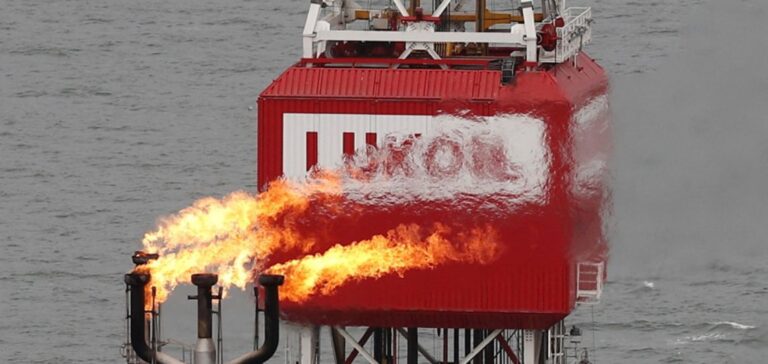
Bulgarian Competition Commission sanctions Lukoil

The Bulgarian Competition Commission is sanctioning Lukoil for abuse of a dominant position, fining the Russian oil giant 67 million leva (34 million euros) for refusing discounts to its competitors, resulting in higher prices for Bulgarian consumers.

Share:

Comprehensive energy news coverage, updated nonstop

Annual subscription

8.25€/month*

*billed annually at 99€/year for the first year then 149,00€/year ​

Unlimited access • Archives included • Professional invoice

OTHER ACCESS OPTIONS

Monthly subscription

Unlimited access • Archives included

5.2€/month*
then 14.90€ per month thereafter

FREE ACCOUNT

3 articles offered per month

FREE

*Prices are excluding VAT, which may vary depending on your location or professional status

Since 2021: 35,000 articles • 150+ analyses per week

The Bulgarian Competition Commission has sanctioned the Russian oil giant Lukoil for abuse of a dominant position. The company has refused to give discounts to its competitors even though it controls the only refinery in the country. This situation has led to higher prices for Lukoil’s rivals, thus harming the interests of consumers. The decision was published on Friday, after the agency was seized by the Austrian OMV and Bulgarian Insa Oil groups.


A fine of 67 million leva imposed

As a result, the Commission decided to impose a fine of 67 million leva (34 million euros) on Lukoil. The sanction was taken after OMV and Insa Oil reported the Russian company’s refusal to give them discounts when purchasing large quantities. The two rivals were therefore forced to pay the same price as that posted in the stations of Lukoil. The Commission found that Lukoil exerted pressure on wholesale fuel prices, thereby impeding competition.


Lukoil can appeal the decision

However, the Commission noted progress on the part of Lukoil during the investigation. The company may also appeal the decision. It should be noted that the Russian company holds nearly 80% of the storage capacity on Bulgarian soil, as well as a vast network of service stations.


Bulgaria still heavily dependent on Russian oil

Bulgaria has traditionally been close to Moscow, but since the war in Ukraine, the country has accelerated the diversification of its energy supply sources. However, it is still very dependent on black gold. Because of this particular situation, the country has been exempted for two years from the European Union embargo on Russian crude. However, apart from the oil needed for its own consumption, the country can now only export oil products to Ukraine.


The decision of the Bulgarian Competition Commission is a strong signal to companies seeking to abuse their dominant position in the market. Lukoil was sanctioned for refusing discounts to its rivals, resulting in higher prices for consumers. This decision also shows that Bulgaria is still heavily dependent on Russian oil, despite its desire to diversify its energy supply sources.

Subsea7 has secured a subsea installation contract from LLOG for the Buckskin South project, scheduled for execution between 2026 and 2027, strengthening its position in the Gulf of Mexico and boosting its order book visibility.
Global crude oil production is expected to rise by 0.8 million barrels per day in 2026, with Brazil, Guyana and Argentina contributing 50% of the projected increase.
Woodbridge Ventures II Inc. signs definitive agreement with Greenflame Resources for a transformative merger, alongside a concurrent financing of up to $10mn.
Interceptions of ships linked to Venezuelan oil are increasing, pushing shipowners to suspend operations as PDVSA struggles to recover from a cyberattack that disrupted its logistical systems.
Harbour Energy acquires US offshore operator LLOG for $3.2bn, adding 271 million barrels in reserves and establishing a fifth operational hub in the Gulf of Mexico.
The agreement signed with Afreximbank marks a strategic shift for Heirs Energies, aiming to scale up its exploration and production operations on Nigeria's OML 17 oil block.
Oritsemeyiwa Eyesan’s appointment as head of Nigeria’s oil regulator marks a strategic shift as the country targets $10bn in upstream investment through regulatory reform and transparent licensing.
Baghdad states that all international companies operating in Kurdistan’s oil fields must transfer their production to state marketer SOMO, under the agreement signed with Erbil in September.
Chinese oil group CNOOC continues its expansion strategy with a new production start-up in the Pearl River Basin, marking its ninth offshore launch in 2025.
A train carrying over 1,200 tonnes of gasoline produced in Azerbaijan entered Armenia on December 19, marking the first commercial operation since recent conflicts, with concrete implications for regional transit.
Subsea 7 has secured a new extension of its frame agreement with Equinor for subsea inspection, maintenance and repair services through 2027, deploying the Seven Viking vessel on the Norwegian Continental Shelf.
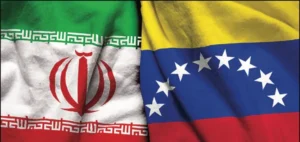
Caracas says Iran has offered reinforced cooperation after the interception of two ships carrying Venezuelan crude, amid escalating tensions with the United States.
US authorities intercepted a second oil tanker carrying Venezuelan crude, escalating pressure on Caracas amid accusations of trafficking and tensions over sanctioned oil exports.
California Resources Corporation completed an all-stock asset transfer with Berry Corporation, strengthening its oil portfolio in California and adding strategic exposure in the Uinta Basin.
The Ugandan government aims to authorise its national oil company to borrow $2 billion from Vitol to fund strategic projects, combining investments in oil infrastructure with support for national logistics needs.
British company BP appoints Meg O'Neill as CEO to lead its strategic refocus on fossil fuels, following the abandonment of its climate ambitions and the early departure of Murray Auchincloss.
The Venezuelan national oil company has confirmed the continuity of its crude exports, as the United States enforces a maritime blockade targeting sanctioned vessels operating around the country.
Baker Hughes will supply advanced artificial lift systems to Kuwait Oil Company to enhance production through integrated digital technologies.
The United States has implemented a full blockade on sanctioned tankers linked to Venezuela, escalating restrictions on the South American country's oil flows.
Deliveries of energy petroleum products fell by 4.5% in November, driven down by a sharp decline in diesel, while jet fuel continues its growth beyond pre-pandemic levels.

All the latest energy news, all the time

Annual subscription

8.25€/month*

*billed annually at 99€/year for the first year then 149,00€/year ​

Unlimited access - Archives included - Pro invoice

Monthly subscription

Unlimited access • Archives included

5.2€/month*
then 14.90€ per month thereafter

*Prices shown are exclusive of VAT, which may vary according to your location or professional status.

Since 2021: 30,000 articles - +150 analyses/week.