Gas consumption falls in several regions of the world

Gas consumption fell sharply in January in several parts of the world, particularly in the European Union and the United Kingdom, due to mild temperatures and the rise of renewable energy.

Share:

Comprehensive energy news coverage, updated nonstop

Annual subscription

8.25€/month*

*billed annually at 99€/year for the first year then 149,00€/year ​

Unlimited access • Archives included • Professional invoice

OTHER ACCESS OPTIONS

Monthly subscription

Unlimited access • Archives included

5.2€/month*
then 14.90€ per month thereafter

FREE ACCOUNT

3 articles offered per month

FREE

*Prices are excluding VAT, which may vary depending on your location or professional status

Since 2021: 35,000 articles • 150+ analyses per week

A report by the Gas Exporting Countries Forum (GECF) released on Wednesday, February 16, 2023, indicates that gas consumption fell sharply in January in several regions of the world. In fact, the European Union and the United Kingdom have seen gas consumption fall by 19% and 16% respectively. This was largely due to above normal seasonal temperatures, which reduced heating demand. In addition, energy conservation efforts and high European market prices have contributed to curbing gas consumption in the EU. The report also highlights that hydro, wind and solar power generation have grown significantly in the UK.


The impact of weather conditions on gas consumption

The GECF report, which is based on the Opec report, points out that weather conditions have a significant impact on gas consumption. In the United States, mild temperatures and the industrial slowdown are cited as reasons for an 8.8% drop in gas consumption to 92 bcm. The report also reviews several Asian countries, but on heterogeneous comparative bases.


Changes in gas production in Europe

The report highlights that in the European Union, gas used in power plants decreased by 13% in January over a year, to the benefit of coal (+24%) and hydro (+8%). In addition, Russian gas deliveries via pipelines fell by 58% compared to the average for the period 2019 to 2021, while Norwegian gas became the leading pipeline supplier in 2022, providing 47% of deliveries.


Forecasts for the liquefied natural gas market

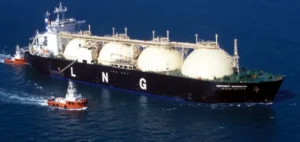
The global liquefied natural gas market, under pressure since the war in Ukraine, is expected to remain tight until the end of 2025 due to strong European demand. However, it could find itself in overcapacity after that period, according to the Institute for Energy Economics and Financial Analysis (IEEFA) think tank.


The GECF report is the first of its kind for this group of gas producing countries formed around Qatar. It highlights changes in gas consumption and production in several regions of the world, and offers forecasts for the liquefied natural gas market. GECF members, which include twelve member states, claim 72% of the world’s reserves and 44% of the world’s sold gas production.

The energy subsidiary of Sumitomo Corp is exploring the establishment of a liquefied natural gas trading operation in Singapore, following its London presence set up last August.
Tokyo denounces the presence of a Chinese drilling vessel in a disputed exclusive economic zone. This operation, reportedly targeting a gas field, reignites tensions between the two Asian powers.
The protocol signed between Egypt and Qatar outlines LNG exports to meet seasonal energy demand, as domestic gas production continues to decline.
Energy Transfer expects up to $17.7bn in consolidated EBITDA for 2026 and plans to invest up to $5.5bn, primarily focused on expanding its gas network in the United States.
Canadian company NG Energy finalises the sale of 40% of its stake in the Sinú-9 block to Maurel & Prom for $150mn, consolidating a joint venture on one of Colombia's largest gas fields.
Falcon Oil & Gas has secured shareholder approval to sell its majority stake in its Australian subsidiary to Tamboran group, clearing a key hurdle in a broader divestment transaction.
Quantum Capital Group sells nearly 90% of Cogentrix assets to Vistra for $4.7bn, marking a strategic repositioning of gas-fired assets in the United States.
Vital Energy has completed a strategic land acquisition in western Alberta, increasing its regional exposure to nine sections and supporting its development outlook in the Charlie Lake reservoir.
Eni and Repsol are facing difficulties recovering payments for gas deliveries to Venezuela, with an outstanding balance of $6bn and no clear engagement from U.S. authorities on the matter.
Chevron has launched production at the South N’dola field in Block 0 offshore Angola, leveraging existing infrastructure to support its investment strategy in offshore hydrocarbons.
The UK's $1.15bn funding withdrawal exposes the Mozambique LNG project to international political reversals, highlighting structural risks for large African energy projects reliant on foreign backers.
Osaka Gas has launched operations at the first unit of its new gas-fired power plant in Himeji, marking a key step in expanding its national electricity production capacity.
In response to rising domestic demand, Sonatrach adopts a five-year plan focused on increasing production, securing infrastructure, and maintaining export commitments.
Pipeline natural gas deliveries from Russia to the European Union dropped by 44% in 2025, reaching their lowest level in five decades following the end of transit via Ukraine.
AltaGas has finalised a labour agreement with union ILWU Local 523B, ending a 28-day strike at its Ridley Island propane terminal, a key hub for Canadian exports to Asia.
Amber Grid has signed an agreement to maintain gas transit to Russia’s Kaliningrad exclave, with a daily capacity cap of 10.5 mn m³ until the end of 2030, under a framework regulated by the European Union.
Lebanon engages in a memorandum of understanding with Egypt to import natural gas and support its electricity production, with infrastructure rehabilitation and active funding searches required to secure delivery.
Australian producer Woodside has signed a binding agreement with Turkish state-owned company BOTAŞ for the delivery of 5.8 billion cubic metres of LNG starting in 2030.
Condor Energies has completed a $13.65mn private financing to deploy a second drilling rig and intensify a 12-well gas programme in Uzbekistan scheduled for 2026.
After a hiatus of more than four years, Myanmar has resumed liquefied natural gas deliveries, receiving a half-cargo in November to supply two state-funded power generation projects.

All the latest energy news, all the time

Annual subscription

8.25€/month*

*billed annually at 99€/year for the first year then 149,00€/year ​

Unlimited access - Archives included - Pro invoice

Monthly subscription

Unlimited access • Archives included

5.2€/month*
then 14.90€ per month thereafter

*Prices shown are exclusive of VAT, which may vary according to your location or professional status.

Since 2021: 30,000 articles - +150 analyses/week.