Kazakh Urals seduces refiners

The Kazakh Ural, renamed KEBCO in June, is finding favour with European refiners in the Mediterranean.

Share:

Comprehensive energy news coverage, updated nonstop

Annual subscription

8.25$/month*

*billed annually at 99$/year for the first year then 149,00$/year ​

Unlimited access • Archives included • Professional invoice

OTHER ACCESS OPTIONS

Monthly subscription

Unlimited access • Archives included

5.2$/month*
then 14.90$ per month thereafter

FREE ACCOUNT

3 articles offered per month

FREE

*Prices are excluding VAT, which may vary depending on your location or professional status

Since 2021: 35,000 articles • 150+ analyses per week

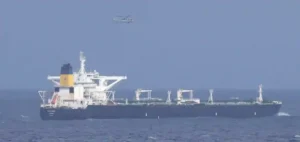
The Kazakh Urals is finding favour with European refiners in the Mediterranean. Renamed KEBCO in June to distinguish itself from its Russian counterpart under sanctions, it trades at high premiums.

Kazakh Urals renamed

There was no distinction between Kazakh and Russian Ural crude before the Russian-Ukrainian conflict began. In fact, both crudes had the Ural appellation. However, Ural crude became increasingly difficult to sell in Europe due to the sanctions.

In response, Kazakhstan announced on June 7 a change of name for the crude oil it exports. The Russian network Transneft will export, from now on, the Kazakh Urals under the name of Kazakhstan Export Blend Crude Oil (KEBCO). Thus, the name change comes in a context of sanctions targeting Russian exports to Europe.

The weight of sanctions

On June 3, the European Union adopted the sixth set of measures sanctioning Russian oil exports to Europe. Brussels bans Russian crude oil exports by sea to Europe from December 5. However, the European Union makes an exception if the oil loaded in Russia comes from a third country.

Kazakh Ural comes from the Uzen land deposit near the Caspian Sea. Thus, Kazakhstan exports this production via the Uzen-Atyrau-Samara pipeline. Finally, in Samara, the Kazakh Urals joins the Transneft network and mixes with Russian crude.

Modest volumes

The majority of the crude oil is heading south to the Black Sea port of Novorosiisk. The rest is exported to the north, to the port of Ust-Luga opening on the Gulf of Finland and the Baltic. However, the total volumes for the Kazakh Urals are modest, amounting to about 200,000 b/d.

Kazakh Urals contrasts with Kazakhstan’s flagship export crude, CPC Blend, which has a relatively light sweet grade. Loaded at Novorosiisk, approximately 1.5 million bpd of CPC Blend transits through a dedicated pipeline from the Caspian Sea. However, this volume, which includes a Russian part, continues to trade freely as if it came from a third country.

Volumes destined for Europe

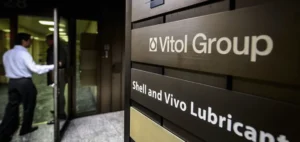
The Kazakh Urals accounts for approximately 13% of the Urals’ exports each month. The state-owned company KazMunaiGaz (KMG) is allocated a proportional share of the total Ural loading program. In addition, only Vitol and KMG sell KEBCO, making it a relatively small and new market.

There is no publication of the Ural loading programs since June. However, Kpler’s data reveals an export pattern that supplies KEBCO primarily to Europe at the expense of Asia. Thus, in the last three months, about 90% of the Kazakh Ural cargoes were exported to European refineries.

KMG supplies Europe with crude oil

In June, six cargoes, representing 156,000 b/d of Kazakh Urals, were exported to Europe, except for one cargo. In July, 256,000 b/d of KEBCO were exported and all but two of the shipments were going to Europe. Finally, in August, seven cargoes, representing 174,000 b/d of KEBCO, left for Europe.

In contrast, in the three months from March to June, approximately one third of KMG shipments were exported to Europe. In fact, the majority of them supplied China, India, Turkey and the United Arab Emirates. However, these shipments contained Russian Urals due to the lack of distinction in the market.

New buyers

The nine shipments of KMG’s Ural to Europe between March and May fed the Romanian refinery Petromidia. Thus, Petromidia, owned by KMG, and the Italian refinery Milazzo received the largest number of cargoes from the Kazakh Urals. In addition, the Italian Falconara and Spanish Petronor refineries have also been purchasing cargoes since June.

The new Mediterranean players on the KEBCO market are evidence of the change in attitude towards the Kazakh Urals. Indeed, European buyers previously shunned crude from Kazakhstan. Nevertheless, some traders consider it expensive, as it is the same price as a Russian cargo before the Russian-Ukrainian conflict.

A reconfiguration of the market

The disappearance of the Urals from European refineries led buyers to purchase softer grades. Thus, margins were soaring for distillates. However, eroded margins, declining demand and high prices were driving Mediterranean refiners to other options.

Currently, former Asian importers from the Urals are turning away from this quality. Indeed, demand is decreasing and freight costs are increasing. Thus, in this context, the possibilities of negotiation for this quality are diminishing.
Subsea 7 has secured a new extension of its frame agreement with Equinor for subsea inspection, maintenance and repair services through 2027, deploying the Seven Viking vessel on the Norwegian Continental Shelf.
Caracas says Iran has offered reinforced cooperation after the interception of two ships carrying Venezuelan crude, amid escalating tensions with the United States.
US authorities intercepted a second oil tanker carrying Venezuelan crude, escalating pressure on Caracas amid accusations of trafficking and tensions over sanctioned oil exports.
California Resources Corporation completed an all-stock asset transfer with Berry Corporation, strengthening its oil portfolio in California and adding strategic exposure in the Uinta Basin.
The Ugandan government aims to authorise its national oil company to borrow $2 billion from Vitol to fund strategic projects, combining investments in oil infrastructure with support for national logistics needs.
British company BP appoints Meg O'Neill as CEO to lead its strategic refocus on fossil fuels, following the abandonment of its climate ambitions and the early departure of Murray Auchincloss.
The Venezuelan national oil company has confirmed the continuity of its crude exports, as the United States enforces a maritime blockade targeting sanctioned vessels operating around the country.
Baker Hughes will supply advanced artificial lift systems to Kuwait Oil Company to enhance production through integrated digital technologies.
The United States has implemented a full blockade on sanctioned tankers linked to Venezuela, escalating restrictions on the South American country's oil flows.
Deliveries of energy petroleum products fell by 4.5% in November, driven down by a sharp decline in diesel, while jet fuel continues its growth beyond pre-pandemic levels.
ReconAfrica is finalising preparations to test the Kavango West 1X well in Namibia, while expanding its portfolio in Angola and Gabon to strengthen its presence in sub-Saharan Africa.
Shell has reopened a divestment process for its 37.5% stake in Germany's PCK Schwedt refinery, reviving negotiations disrupted by the Russia-Ukraine conflict and Western sanctions.
Aliko Dangote accuses Nigeria’s oil regulator of threatening local refineries by enabling refined fuel imports, while calling for a corruption probe against its director.
Shell Offshore approves a strategic investment to extend the life of the Kaikias field through a waterflood operation, with first injection planned for 2028 from the Ursa platform.
Oil prices drop amid progress in Ukraine talks and expectations of oversupply, pushing West Texas Intermediate below $55 for the first time in nearly five years.
The US energy group plans to allocate $1.3bn to growth and $1.1bn to asset maintenance, with a specific focus on natural gas liquids and refining projects.
Venezuelan state oil group PDVSA claims it was targeted by a cyberattack attributed to foreign interests, with no impact on main operations, amid rising tensions with the United States.
BUTEC has finalised the financing of a 50 MW emergency power project in Burkina Faso, structured under a BOOT contract and backed by Banque Centrale Populaire Group.
BW Energy has signed a long-term lease agreement with Minsheng Financial Leasing for its Maromba B platform, covering $274mn of the project’s CAPEX, with no payments due before first oil.
Shell will restart offshore exploration on Namibia’s PEL 39 block in April 2026 with a five-well drilling programme targeting previously discovered zones, despite a recent $400mn impairment.

All the latest energy news, all the time

Annual subscription

8.25$/month*

*billed annually at 99$/year for the first year then 149,00$/year ​

Unlimited access - Archives included - Pro invoice

Monthly subscription

Unlimited access • Archives included

5.2$/month*
then 14.90$ per month thereafter

*Prices shown are exclusive of VAT, which may vary according to your location or professional status.

Since 2021: 30,000 articles - +150 analyses/week.