Masdar issues $750 million in green bonds to support growth in renewable energies

Masdar issues a $750 million green bond to finance its goal of 100 GW of renewable energy by 2030, using innovative financing models and diversifying its global operations.

Share:

Comprehensive energy news coverage, updated nonstop

Annual subscription

8.25€/month*

*billed annually at 99€/year for the first year then 149,00€/year ​

Unlimited access • Archives included • Professional invoice

OTHER ACCESS OPTIONS

Monthly subscription

Unlimited access • Archives included

5.2€/month*
then 14.90€ per month thereafter

FREE ACCOUNT

3 articles offered per month

FREE

*Prices are excluding VAT, which may vary depending on your location or professional status

Since 2021: 35,000 articles • 150+ analyses per week

In July, Masdar launched a $750 million green bond issue on the London Stock Exchange. CFO Niall Hannigan announces that this is the start of a $3B program to reach a 100 GW global portfolio by 2030. These funds finance wind, solar and battery projects, particularly in developing economies.

Opening up to non-traditional markets

“Green bonds give us access to a whole new pool of liquidity for wind, solar and battery projects, many of which are located in developing economies or facing climate challenges,” said Hannigan. This liquidity represents a risk for Masdar, not for the developing economy, he added. “This is how we use the green bond, by channelling funds to otherwise inaccessible markets,” he added.

Hannigan points out that green bonds offer access to otherwise inaccessible markets. They enable Masdar to take project risks rather than the risks associated with developing economies. This model also aims to reduce the funding inequalities between developed and developing countries, a key theme of recent UN climate summits.

“We’re not overly exposed to any specific technology or geography – bond investors were interested in our diversified global portfolio,” said Hannigan. “The Gulf represents an important growth market for us, covering green hydrogen production capacity in the United Arab Emirates and Saudi Arabia. The Middle East and North Africa are also key regions, and through our joint venture Infinity Power Holdings, we have acquired a platform with projects in Egypt, South Africa and Senegal,” he added.

Diversification of Financing and Risks

Masdar emphasizes the innovative aspect of its approach to project financing. Its 500 MW wind farm at Zarafshan in Uzbekistan saw the involvement of commercial banks in the financing for its construction.

“We have been working with export credit agencies to find appropriate risk allocation solutions for all. We’re looking to diversify the pool of project finance away from traditional development finance institutions, bringing commercial banks into the equation,” said Hannigan.

Diversified and Ambitious Portfolio

Masdar plans to raise up to $3 billion to finance its energy projects at home and abroad. The aim is to reach a portfolio of 100 GW by 2030, while producing 1 million tonnes of renewable dihydrogen. The Gulf market and the MENA region remain major growth areas for Masdar. The company is also diversifying its operations in the UK, Europe and Asia.

“Ultimately, we want to leverage this knowledge across the portfolio. By acquiring Arlington, we gained the necessary skills in a complex market. In the UK, these early projects are stand-alone, but for the portfolio as a whole, our more recent projects aim to bundle battery assets with intermittent solar or wind installations.”

Challenges and opportunities

Niall Hannigan points out that despite the capital available, the challenges lie in finding opportunities and capabilities. Masdar is considering acquisitions and partnerships to accelerate its growth. Supply chains are diversifying and prices are stabilizing. Masdar aims to remain the world leader in renewable energies.

“Collaboration remains a challenge – we’re trying to bring governments, regulators, financial institutions and developers together to work with them seamlessly to create a viable framework for projects,” Hannigan explained.

“Competition is tough. We will continue to participate in government tenders and engage in mergers and acquisitions to strengthen our capabilities. To achieve scale in the US, for example, we’ll be looking to acquire operational assets, a pipeline of projects and people with local expertise,” he concluded.

“Prices have been volatile for two years, especially for solar panels. You need more stability to place wholesale orders, and we’re just starting to see that. Turbine and panel prices are higher, but now you can get enough validity to lock in a price,” said Hannigan.
Bourbon enters a new strategic phase following the arrival of Davidson Kempner and Fortress, who have become majority shareholders after a financial restructuring approved by the French courts.
US-based Armada has signed a memorandum of understanding with the Department of Energy to participate in the Genesis Mission, aimed at accelerating scientific research and reinforcing national energy and technology sovereignty.
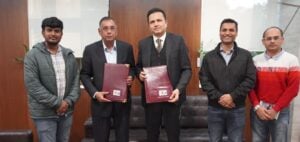
Solar Energy Corporation of India signed a strategic agreement with Global Energy Alliance to strengthen grid resilience and support the expansion of storage and smart management technologies.
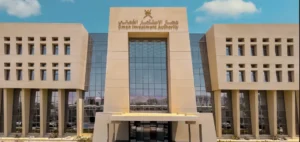
Le fonds souverain omanais a validé 141 projets en 2025 pour un engagement total de $1.2bn, visant à renforcer l’indépendance énergétique et l’industrialisation nationale à travers un programme d’investissement de $5.2bn.
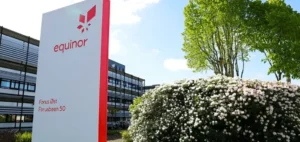
The Norwegian energy group rejects the sanction imposed for illegal gas discharges at Mongstad, citing disagreement over maintenance obligations and the alleged financial benefit.
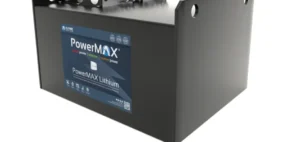
Alpine Power Systems announces the acquisition of Chicago Industrial Battery to expand its regional presence and support the growth of its PowerMAX line of used and rental batteries and chargers.
HASI and KKR strengthen their strategic partnership with an additional $1bn allocation to CarbonCount Holdings 1, bringing the vehicle’s total investment capacity to nearly $5bn.
EDF is considering selling some of its subsidiaries, including Edison and its renewables activities in the United States, to strengthen its financial capacity as a €5bn ($5.43bn) savings plan is underway.
French group Qair secures a structured €240 million loan to consolidate debt and strengthen liquidity, with participation from ten leading financial institutions.
Xcel Energy initiates three public tender offers totalling $345mn on mortgage bonds issued by Northern States Power Company to optimise its long-term debt structure.
EDF power solutions' Umoyilanga energy project has entered provisional operation with the Dassiesridge wind plant, marking a key milestone in delivering dispatchable electricity to South Africa’s national grid.
Indian group JSW Energy launches a combined promoter injection and institutional raise totalling $1.19bn, while appointing a new Chief Financial Officer to support its expansion plan through 2030.
Singapore’s Sembcorp Industries has entered the Australian energy market with the acquisition of Alinta Energy in a deal valued at AU$6.5bn ($4.3bn), including debt.
Potentia Energy has secured $553mn in financing to optimise its operational renewable assets and support the delivery of six new projects totalling over 600 MW of capacity across Australia.
Drax plans to convert its 1,000-acre site in Yorkshire into a data centre by 2027, repurposing former coal infrastructure and existing grid connections.
EDF has inaugurated a synchronous compensator in Guadeloupe to enhance the stability of an isolated power grid, an unprecedented initiative aiming to reduce dependence on thermal plants and the risk of prolonged outages.
NGE and the Agence Régionale Énergie Climat Occitanie form a partnership to develop a heating and cooling network designed to support economic activity in the Magna Porta zone, with locally integrated production solutions.
GEODIS and EDF have signed a strategic partnership to cut emissions from logistics and energy flows, with projects planned in France and abroad.
The American oil group now plans to invest $20 billion in low-emission technologies by 2030, down from the $30 billion initially announced one year earlier.
BHP sells a minority stake in its Western Australia Iron Ore power network to Global Infrastructure Partners for $2 billion, retaining strategic control while securing long-term funding for its mining expansion.

All the latest energy news, all the time

Annual subscription

8.25€/month*

*billed annually at 99€/year for the first year then 149,00€/year ​

Unlimited access - Archives included - Pro invoice

Monthly subscription

Unlimited access • Archives included

5.2€/month*
then 14.90€ per month thereafter

*Prices shown are exclusive of VAT, which may vary according to your location or professional status.

Since 2021: 30,000 articles - +150 analyses/week.