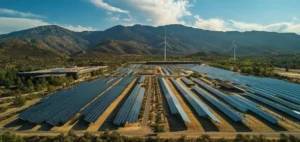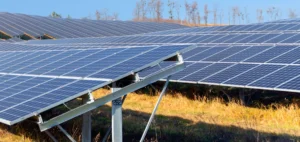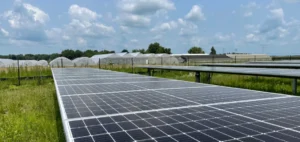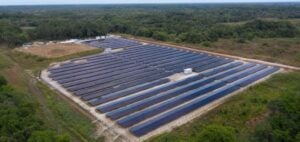

PowerBank Corporation announced it has reached a key development milestone for its Phillips Rd solar project, a 2.1 megawatt (MW) facility located on a closed landfill site in New York State. The company has completed the Coordinated Electric System Interconnection Review (CESIR), a required regulatory step that allows the project to proceed with permitting at the local level.
A project backed by New York’s VDER scheme
The project qualifies for compensation under the Value of Distributed Energy Resources (VDER) mechanism implemented by the New York State Public Service Commission under Case 15-E-0751. This programme ensures an estimated first-year average rate of $0.0971/kWh. The pricing structure is expected to support the financial viability of the site upon commissioning.
The Phillips Rd project may also be eligible for multiple support mechanisms, including incentives from the New York State Energy Research and Development Authority (NYSERDA) under the NY-Sun programme, as well as federal Investment Tax Credits outlined in the Inflation Reduction Act of 2022 and the One Big Beautiful Bill Act passed in 2025.
A shared energy model for local subscribers
Construction will begin once permits and financing are secured. The site will operate as a community solar project, enabling households, renters, and businesses to subscribe without the need for onsite solar equipment. Subscribers will receive electricity bill credits as the facility feeds energy directly into the local grid.
PowerBank develops, owns, and operates energy infrastructure across North America. The company reports over 100 MW of completed projects and a development pipeline exceeding 1 gigawatt (GW). Its institutional-grade execution and project structuring capabilities are presented as key assets in delivering new utility-scale projects.
A regional market gaining momentum
The Phillips Rd project aligns with New York’s solar targets of reaching 10 GW of installed capacity by 2030. The State had already met its interim 6 GW solar goal in autumn 2024, securing its position as a national leader in community solar development.
PowerBank notes that several risks could impact the project’s advancement. These include permitting approvals, securing community solar subscription contracts, availability of third-party financing, and construction-related challenges. The company also warns that any future reduction or withdrawal of public incentive schemes may undermine the project’s economic viability.