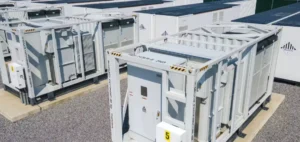
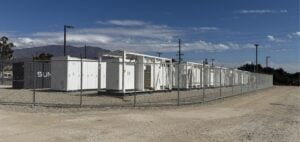
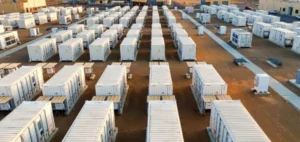
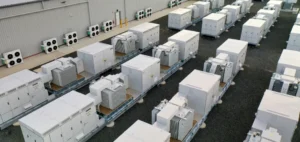
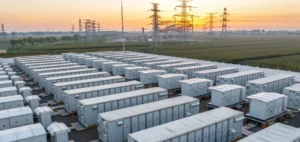
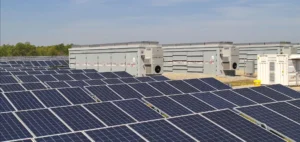
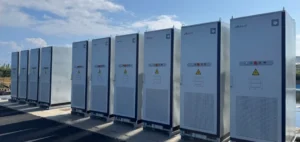
Japanese company Port Inc., historically active outside the energy sector, has announced that its 2 MW/8 MWh Battery Energy Storage System (BESS) pilot in Gunma Prefecture could reach profitability as early as fiscal year 2025. This anticipated profitability relies on a combined exploitation of the spot electricity market and the balancing market, a strategy made possible under the current regulatory framework but potentially impacted by reforms expected in 2026.
Multi-level monetisation in an under-saturated market
Port’s strategic positioning is based on two revenue streams. The first comes from the Japan Electric Power Exchange (JEPX), the spot electricity market, while the second relies on the Electric Power Reserve eXchange (EPRX), which allows batteries to receive payments for providing system services. Port uses aggregation partners to maximise this monetisation. In a market still building liquidity, this strategy secures a premium for the fast response capability of batteries, especially for primary frequency reserve (FCR).
A regulatory window to be locked in before 2026
Port has indicated that a decision on scaling up the project will be made before March 2026. This timeline aligns with expected reforms to the balancing market, which could impact product structures, measurement requirements and compensation mechanisms. In this context, the Gunma pilot also serves as an operational compliance demonstrator, already incorporating contractual constraints related to performance and availability.
Rising number of entrants in a temporarily lucrative segment
Several non-traditional players in the electricity sector, such as Yachiyo Green Energy and JALCO Holdings, are positioning themselves with similar BESS projects, betting on a high-profitability phase ahead of market saturation. These initiatives reflect a shared perception that the current yield opportunity is exceptional but likely short-lived. Aggregation models are becoming a key differentiation factor, incorporating performance guarantees and revenue-sharing mechanisms.
A financing lever and asset securing before congestion
The announcement of early profitability also serves a financing goal: to attract financial partners or green debt instruments before rising land and interconnection costs. Japan’s BESS segment faces structural constraints, including limited interconnection points. By capitalising on a successful first operation, Port aims to rapidly anchor a project portfolio ahead of national pipeline congestion.
Industrial and geopolitical implications of increased deployment
The rapid expansion of battery energy storage systems contributes to improving the stability of Japan’s fragmented grid, split across multiple frequency zones, while marginally reducing reliance on imported fossil fuels. However, this trend also increases dependence on a supply chain dominated by Asian manufacturers of battery cells and electronic components, exposing the sector to potential trade tensions in a context of intensified industrial competition.