US oil blockade on Venezuela disrupts maritime shipments

Interceptions of ships linked to Venezuelan oil are increasing, pushing shipowners to suspend operations as PDVSA struggles to recover from a cyberattack that disrupted its logistical systems.

Share:

Comprehensive energy news coverage, updated nonstop

Annual subscription

8.25$/month*

*billed annually at 99$/year for the first year then 149,00$/year ​

Unlimited access • Archives included • Professional invoice

OTHER ACCESS OPTIONS

Monthly subscription

Unlimited access • Archives included

5.2$/month*
then 14.90$ per month thereafter

FREE ACCOUNT

3 articles offered per month

FREE

*Prices are excluding VAT, which may vary depending on your location or professional status

Since 2021: 35,000 articles • 150+ analyses per week

Oil loading in Venezuela slowed significantly at the start of the week, with vessels now operating almost exclusively between domestic ports. This decline in activity follows the interception of two additional ships by US authorities and comes amid internal disruptions affecting Petróleos de Venezuela S.A. (PDVSA), which is grappling with a cyberattack.

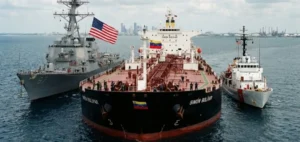
The United States has stepped up its pressure campaign on Venezuelan oil exports by attempting to intercept two vessels over the weekend, according to US authorities. One was empty but already under sanctions, the other, a fully loaded tanker en route to China, was not subject to restrictions. US President Donald Trump stated that the seized oil cargoes could be retained or sold by Washington, adding that the seized ships would not be released.

Ships blocked and exports suspended

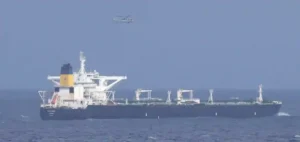
The Centuries supertanker, flying the Panamanian flag at the time of its interception, was accused by Panama’s Foreign Minister of violating maritime rules by changing its name and disabling its transponder. Panama has reiterated that such actions could result in the vessel being removed from its national maritime registry.

This blockade campaign is part of a broader escalation in US military operations in maritime areas surrounding Venezuela, including more than twenty targeted strikes on vessels suspected of drug trafficking. The ongoing interceptions are further complicating oil exports, already under strain since the 2020 sanctions that targeted PDVSA’s trading arms and two subsidiaries of the Russian group Rosneft.

Logistical losses and market slowdown

On Monday, PDVSA had transferred a 1.9 million-barrel cargo of heavy crude to the already sanctioned vessel Azure Voyager at Jose port. No further loading operations for Asia-bound tankers were scheduled, according to internal documents. The number of loaded supertankers still docked has increased in recent days, leaving millions of barrels in limbo.

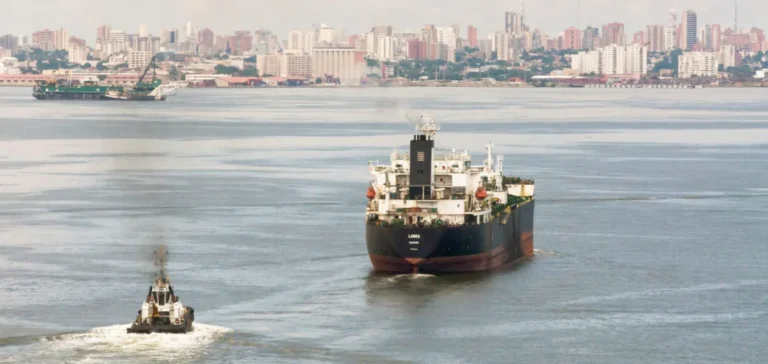
Several tankers approaching Venezuelan shores to load crude or deliver refined products such as naphtha have turned around or suspended navigation. Shipowners now await clear instructions before proceeding. Shipping monitoring data showed an increase in these evasive movements starting Monday.

PDVSA paralysed by cyberattack

PDVSA’s difficulties are exacerbated by a cyberattack that paralysed its administrative systems. The company has reverted to using paper documentation for some critical operations, while delayed salary payments have been reported internally. Venezuela’s Ministry of Petroleum has not responded to requests for comment.

China has condemned the recent US actions as a “serious violation of international law”, while Venezuela’s Foreign Minister Yvan Gil labelled the seizures as “acts of piracy”. Venezuela has maintained oil shipments to the United States through Chevron Corporation, its main partner operating under US authorisation.

Chevron has exported seven cargoes to the US coast in December, each carrying between 300,000 and 500,000 barrels. A 500,000-barrel shipment was dispatched on Sunday from Venezuela aboard a Chevron-operated tanker.

Maritime interceptions and diplomatic tensions

The empty Bella 1 supertanker, targeted by the US Coast Guard on Sunday, was drifting northeast of Bermuda on Monday, according to a satellite image. US officials confirmed that the vessel had not been boarded, noting that interceptions may include sailing or flying close to vessels of concern.

The Skipper, the first vessel seized in December, reached the vicinity of the Galveston port in Texas on Sunday to transfer its cargo. Guyana, whose flag the tanker was allegedly using, stated that the authorisation had been falsified. Collectively, Skipper, Centuries, and Bella 1 have exported 41 million barrels of crude oil and fuel oil from Iran and Venezuela in recent years, according to TankerTrackers.com.
Harbour Energy acquires US offshore operator LLOG for $3.2bn, adding 271 million barrels in reserves and establishing a fifth operational hub in the Gulf of Mexico.
The agreement signed with Afreximbank marks a strategic shift for Heirs Energies, aiming to scale up its exploration and production operations on Nigeria's OML 17 oil block.
Oritsemeyiwa Eyesan’s appointment as head of Nigeria’s oil regulator marks a strategic shift as the country targets $10bn in upstream investment through regulatory reform and transparent licensing.
Baghdad states that all international companies operating in Kurdistan’s oil fields must transfer their production to state marketer SOMO, under the agreement signed with Erbil in September.
Chinese oil group CNOOC continues its expansion strategy with a new production start-up in the Pearl River Basin, marking its ninth offshore launch in 2025.
A train carrying over 1,200 tonnes of gasoline produced in Azerbaijan entered Armenia on December 19, marking the first commercial operation since recent conflicts, with concrete implications for regional transit.
Subsea 7 has secured a new extension of its frame agreement with Equinor for subsea inspection, maintenance and repair services through 2027, deploying the Seven Viking vessel on the Norwegian Continental Shelf.
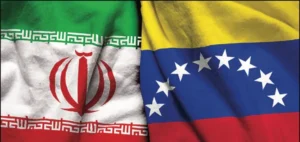
Caracas says Iran has offered reinforced cooperation after the interception of two ships carrying Venezuelan crude, amid escalating tensions with the United States.
US authorities intercepted a second oil tanker carrying Venezuelan crude, escalating pressure on Caracas amid accusations of trafficking and tensions over sanctioned oil exports.
California Resources Corporation completed an all-stock asset transfer with Berry Corporation, strengthening its oil portfolio in California and adding strategic exposure in the Uinta Basin.
The Ugandan government aims to authorise its national oil company to borrow $2 billion from Vitol to fund strategic projects, combining investments in oil infrastructure with support for national logistics needs.
British company BP appoints Meg O'Neill as CEO to lead its strategic refocus on fossil fuels, following the abandonment of its climate ambitions and the early departure of Murray Auchincloss.
The Venezuelan national oil company has confirmed the continuity of its crude exports, as the United States enforces a maritime blockade targeting sanctioned vessels operating around the country.
Baker Hughes will supply advanced artificial lift systems to Kuwait Oil Company to enhance production through integrated digital technologies.
The United States has implemented a full blockade on sanctioned tankers linked to Venezuela, escalating restrictions on the South American country's oil flows.
Deliveries of energy petroleum products fell by 4.5% in November, driven down by a sharp decline in diesel, while jet fuel continues its growth beyond pre-pandemic levels.
ReconAfrica is finalising preparations to test the Kavango West 1X well in Namibia, while expanding its portfolio in Angola and Gabon to strengthen its presence in sub-Saharan Africa.
Shell has reopened a divestment process for its 37.5% stake in Germany's PCK Schwedt refinery, reviving negotiations disrupted by the Russia-Ukraine conflict and Western sanctions.
Aliko Dangote accuses Nigeria’s oil regulator of threatening local refineries by enabling refined fuel imports, while calling for a corruption probe against its director.
Shell Offshore approves a strategic investment to extend the life of the Kaikias field through a waterflood operation, with first injection planned for 2028 from the Ursa platform.

All the latest energy news, all the time

Annual subscription

8.25$/month*

*billed annually at 99$/year for the first year then 149,00$/year ​

Unlimited access - Archives included - Pro invoice

Monthly subscription

Unlimited access • Archives included

5.2$/month*
then 14.90$ per month thereafter

*Prices shown are exclusive of VAT, which may vary according to your location or professional status.

Since 2021: 30,000 articles - +150 analyses/week.