Uganda seeks $2 billion loan from Vitol for oil infrastructure projects

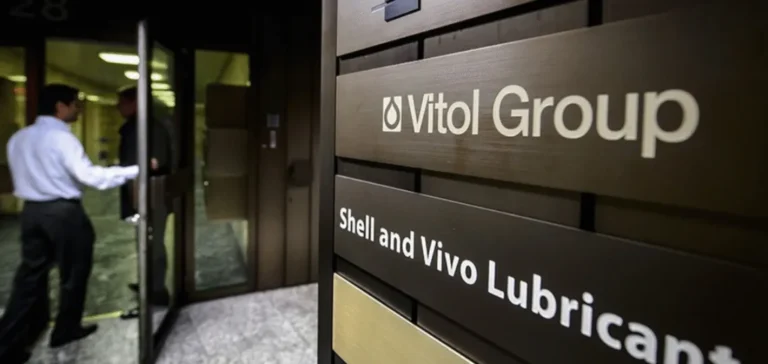
The Ugandan government aims to authorise its national oil company to borrow $2 billion from Vitol to fund strategic projects, combining investments in oil infrastructure with support for national logistics needs.

Share:

Comprehensive energy news coverage, updated nonstop

Annual subscription

8.25€/month*

*billed annually at 99€/year for the first year then 149,00€/year ​

Unlimited access • Archives included • Professional invoice

OTHER ACCESS OPTIONS

Monthly subscription

Unlimited access • Archives included

5.2€/month*
then 14.90€ per month thereafter

FREE ACCOUNT

3 articles offered per month

FREE

*Prices are excluding VAT, which may vary depending on your location or professional status

Since 2021: 35,000 articles • 150+ analyses per week

The Republic of Uganda is seeking to strengthen the investment capacity of its national oil company, Uganda National Oil Company (UNOC), by requesting a $2 billion loan from Vitol Bahrain E.C. This initiative aims to offset tighter external financing conditions currently affecting several African countries. Minister of State for Finance Henry Musasizi presented the request to Parliament, highlighting the need for alternative budgetary support to implement the national oil sector’s development projects.

A structure based on future oil revenues

The loan would be granted for a period of 84 months, including a two-year grace period. UNOC would be the official borrower, though the State will ensure its capitalisation and structure the repayment through future oil revenues. A dedicated account mechanism would secure the financial flows required for debt servicing in the event of revenue shortfalls or project delays.

The financing is split into two components: $1.2 billion would be allocated to UNOC’s development projects, while the remaining amount would fund key road infrastructure for oil logistics. Oil-related investments include the Kampala storage terminal, expansion of the Jinja terminal, port storage capacity in Mombasa, and the Eldoret–Kampala pipeline. A portion of the funds will also cover the first phase of the national refinery construction.

An increasingly selective international financing environment

The Ugandan executive justifies this structure by the decline in concessional loans and increased investor caution in international markets. The global energy transition has also dampened interest in oil projects, particularly in Africa. The recent experience of the East African Crude Oil Pipeline (EACOP) project highlighted these capital mobilisation challenges.

To enhance the scheme’s viability, the government is leveraging its existing partnership with Vitol, which has supplied all petroleum products in the country through UNOC since July 2024. This model has stabilised the domestic market while providing financial visibility. In the long term, official projections estimate that the funded projects could generate up to $5.6 billion in cumulative revenue for UNOC.

Risks transferred to future production

Using future revenues to guarantee repayment introduces a high dependency on asset performance. Any variation in crude oil prices, production volumes or delivery timelines could impact the repayment capacity. The success of the operation will therefore rely on the rigorous execution of projects and the company’s ability to develop sustainable commercial flows.

The dedicated accounts mechanism introduces budgetary discipline but reduces the government’s flexibility over the use of future revenues. Nonetheless, this strategy marks a shift in how Kampala finances its energy infrastructure, relying on existing commercial partnerships and regional integration of the oil market.
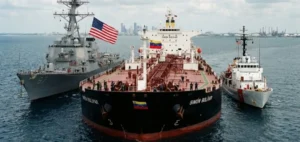
The Venezuelan national oil company has confirmed the continuity of its crude exports, as the United States enforces a maritime blockade targeting sanctioned vessels operating around the country.
Baker Hughes will supply advanced artificial lift systems to Kuwait Oil Company to enhance production through integrated digital technologies.
The United States has implemented a full blockade on sanctioned tankers linked to Venezuela, escalating restrictions on the South American country's oil flows.
Deliveries of energy petroleum products fell by 4.5% in November, driven down by a sharp decline in diesel, while jet fuel continues its growth beyond pre-pandemic levels.
ReconAfrica is finalising preparations to test the Kavango West 1X well in Namibia, while expanding its portfolio in Angola and Gabon to strengthen its presence in sub-Saharan Africa.
Shell has reopened a divestment process for its 37.5% stake in Germany's PCK Schwedt refinery, reviving negotiations disrupted by the Russia-Ukraine conflict and Western sanctions.
Aliko Dangote accuses Nigeria’s oil regulator of threatening local refineries by enabling refined fuel imports, while calling for a corruption probe against its director.
Shell Offshore approves a strategic investment to extend the life of the Kaikias field through a waterflood operation, with first injection planned for 2028 from the Ursa platform.
Oil prices drop amid progress in Ukraine talks and expectations of oversupply, pushing West Texas Intermediate below $55 for the first time in nearly five years.
The US energy group plans to allocate $1.3bn to growth and $1.1bn to asset maintenance, with a specific focus on natural gas liquids and refining projects.
Venezuelan state oil group PDVSA claims it was targeted by a cyberattack attributed to foreign interests, with no impact on main operations, amid rising tensions with the United States.
BUTEC has finalised the financing of a 50 MW emergency power project in Burkina Faso, structured under a BOOT contract and backed by Banque Centrale Populaire Group.
BW Energy has signed a long-term lease agreement with Minsheng Financial Leasing for its Maromba B platform, covering $274mn of the project’s CAPEX, with no payments due before first oil.
Shell will restart offshore exploration on Namibia’s PEL 39 block in April 2026 with a five-well drilling programme targeting previously discovered zones, despite a recent $400mn impairment.
Iranian authorities intercepted a vessel suspected of fuel smuggling off the coast of the Gulf of Oman, with 18 South Asian crew members on board, according to official sources.
Harbour Energy will acquire Waldorf Energy Partners’ North Sea assets for $170mn, increasing its stakes in the Catcher and Kraken fields, while Capricorn Energy settles part of its claims.
The Big Beautiful Gulf 1 sale attracted more than $300mn in investments, with a focused strategy led by BP, Chevron and Woodside on high-yield blocks.
The United States intercepted an oil tanker loaded with Venezuelan crude and imposed new sanctions on maritime entities, increasing pressure on Nicolas Maduro’s regime and its commercial networks in the Caribbean.
OPEC expects crude demand from its members to reach 43 million barrels per day in 2026, nearly matching current OPEC+ output, contrasting with oversupply forecasts from other institutions.
The United States seized a vessel suspected of transporting sanctioned oil from Iran and Venezuela, prompting a strong reaction from Nicolás Maduro's government.

All the latest energy news, all the time

Annual subscription

8.25€/month*

*billed annually at 99€/year for the first year then 149,00€/year ​

Unlimited access - Archives included - Pro invoice

Monthly subscription

Unlimited access • Archives included

5.2€/month*
then 14.90€ per month thereafter

*Prices shown are exclusive of VAT, which may vary according to your location or professional status.

Since 2021: 30,000 articles - +150 analyses/week.