
Aliko Dangote, Nigeria’s richest man, has escalated his criticism of the Nigerian Midstream Downstream Petroleum Regulatory Authority (NMDPRA), accusing the agency of favouring low-cost fuel imports that jeopardise the profitability of domestic refineries, including his own facility in Lagos.
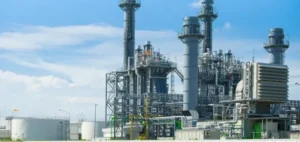
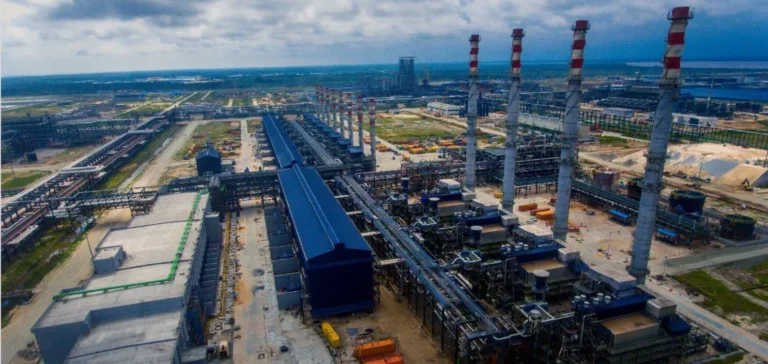
The Dangote complex, with a reported capacity of 650,000 barrels per day, was built to reduce the country’s reliance on imported fuel. However, according to its founder, the lack of regulatory support is threatening the viability of the entire project. “You don’t use imported goods to curb domestic potential,” he said during a press briefing at the industrial site.
Open conflict over capacity and national priorities
The regulator, led by Farouk Ahmad, recently advised the president against banning the import of refined petroleum products, arguing that domestic output cannot meet the daily demand estimated at 55 million litres. Dangote disputes this, claiming that official figures reflect distribution data rather than true production capacity at his refinery.
The Dangote Group also claims the NMDPRA is failing to enforce an existing regulation that guarantees local refineries priority access to Nigerian crude oil. As a result, the Lagos refinery is forced to import nearly 100 million barrels of crude per year, a volume expected to double with the facility’s expansion.
Call for investigation and financial stakes for local economy
Aliko Dangote has called for an official investigation into the conduct of Farouk Ahmad, citing discrepancies between the director’s legitimate earnings and his personal expenditures. The regulator has not issued any comment at this time. Ahmad previously stated that Dangote was seeking a monopoly while being unable to meet national demand.
At the same time, Dangote reaffirmed his plans for the company, including listing it on the local stock exchange and paying dividends in US dollars. He described the industrial project as “too large to fail”, stressing the need to safeguard the investments made in the face of what he sees as distorted market competition.
An industrial model challenged by political arbitration
Nigeria, Africa’s largest oil producer, remains heavily dependent on fuel imports. State-owned refineries, either shut down or underperforming, fail to cover domestic needs. The Dangote project, expected to alter this energy equation, faces a regulatory framework accused of favouring import channels over local industrial development.
Continued expansion of the Dangote refinery could reshape Nigeria’s energy sector, provided market conditions and regulatory alignment improve to ensure coordination between local output and national energy security.