Brussels eases methane stance to secure gas imports

The European Union will apply its methane emissions rules more flexibly to secure liquefied natural gas supplies from 2027.

Share:

Comprehensive energy news coverage, updated nonstop

Annual subscription

8.25$/month*

*billed annually at 99$/year for the first year then 149,00$/year ​

Unlimited access • Archives included • Professional invoice

OTHER ACCESS OPTIONS

Monthly subscription

Unlimited access • Archives included

5.2$/month*
then 14.90$ per month thereafter

FREE ACCOUNT

3 articles offered per month

FREE

*Prices are excluding VAT, which may vary depending on your location or professional status

Since 2021: 35,000 articles • 150+ analyses per week

The European Union is preparing to adopt a more flexible approach to the implementation of its legislation on methane emissions, particularly for hydrocarbon imports scheduled from 2027. The energy ministers of the 27 Member States gave their support to this direction during a meeting in Brussels, responding to concerns related to supply security.

The EU had adopted legislation in 2024 to regulate methane emissions, a greenhouse gas released during the extraction of fossil resources such as natural gas and coal. From January 2027, companies importing hydrocarbons into the EU will have to demonstrate that their suppliers comply with European standards on reducing methane leaks.

A balance between regulation and energy security

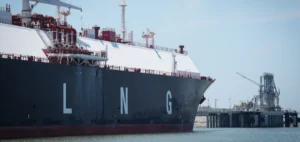
This measure was initially intended to strengthen environmental oversight of supply chains. However, the geopolitical context has shifted Brussels’ priorities. The drive to rapidly reduce dependence on Russian gas, notably by increasing liquefied natural gas (LNG) imports from the United States and the Middle East, has led to a pragmatic reinterpretation of the regulation.

“We will work with Member States and third countries to apply it in the best possible way,” said European Commissioner for Energy Dan Jorgensen, ruling out any repeal of the law or formal exemptions. The implementation of these rules will be entrusted to national authorities, with flexibility to avoid market disruptions.

International pressure on EU standards

Calls for regulatory flexibility have grown in recent months, including from the U.S. administration. LNG producers in the United States, made up largely of independent small operators, struggle to meet the traceability requirements imposed by the EU. Washington has expressed concern over the impact of this legislation on exports to Europe.

The European Commission has confirmed that the approach does not intend to undermine the original regulatory goals but to allow a gradual adaptation to the reality of the global gas market. No systematic exemptions are planned, but importer compliance could be phased in depending on suppliers’ technical capacities.

A signal to international hydrocarbon markets

The refocus on energy security allows the EU to send a clear signal to international suppliers while preserving its regulatory leverage. This shift comes as LNG imports to Europe have increased by more than 60% over two years, mainly to compensate for the drop in Russian deliveries.

The methane legislation is seen by some Member States as a strategic tool but potentially restrictive if applied uniformly to all trade partners. Brussels is therefore seeking to establish a framework for bilateral dialogue with supplier countries to maintain energy flows while continuing its regulatory objectives.
National Fuel has secured $350mn in a private placement of common stock with accredited investors to support the acquisition of CenterPoint’s regulated gas business in Ohio.
GTT appoints François Michel as CEO starting January 5, separating governance roles after strong revenue and profit growth in 2024.
The United States is requesting a derogation from EU methane rules, citing the Union’s energy security needs and the technical limits of its liquefied natural gas export model.
Falcon Oil & Gas and its partner Tamboran have completed stimulation of the SS2-1H horizontal well in the Beetaloo Sub-basin, a key step ahead of initial production tests expected in early 2026.
Gasunie Netherlands and Gasunie Germany have selected six industrial suppliers under a European tender to supply pipelines for future natural gas, hydrogen and CO₂ networks.
The ban on Russian liquefied natural gas requires a legal re-evaluation of LNG contracts, where force majeure, change-in-law and logistical restrictions are now major sources of disputes and contractual repricing.
The US House adopts a reform that weakens state veto power over gas pipeline projects by strengthening the federal role of FERC and accelerating environmental permitting.
Morocco plans to commission its first liquefied natural gas terminal in Nador by 2027, built around a floating unit designed to strengthen national import capacity.
An explosion on December 10 on the Escravos–Lagos pipeline forced NNPC to suspend operations, disrupting a crucial network supplying gas to power stations in southwestern Nigeria.
At an international forum, Turkmenistan hosted several regional leaders to discuss commercial cooperation, with a strong focus on gas and alternative export corridors.
The Australian government has launched the opening of five offshore gas exploration blocks in the Otway Basin, highlighting a clear priority for southeast supply security amid risks of shortages by 2028, despite an ambitious official climate policy.
BlackRock sold 7.1% of Spanish company Naturgy for €1.7bn ($1.99bn) through an accelerated bookbuild managed by JPMorgan, reducing its stake to 11.42%.
The British company begins the initial production phase of Morocco's Tendrara gas field, activating a ten-year contract with Afriquia Gaz amid phased technical investments.
The Energy Information Administration revises its gas price estimates upward for late 2025 and early 2026, in response to strong consumption linked to a December cold snap.
Venture Global denies Shell’s claims of fraud in an LNG cargo arbitration and accuses the oil major of breaching arbitration confidentiality.
The Valera LNG carrier delivered a shipment of liquefied natural gas (LNG) from Portovaya, establishing a new energy route between Russia and China outside Western regulatory reach.
South Stream Transport B.V., operator of the offshore section of the TurkStream pipeline, has moved its headquarters from Rotterdam to Budapest to protect itself from further legal seizures amid ongoing sanctions and disputes linked to Ukraine.
US LNG exports are increasingly bypassing the Panama Canal in favour of Europe, seen as a more attractive market than Asia in terms of pricing, liquidity and logistical reliability.
Indian Oil Corporation has issued a tender for a spot LNG cargo to be delivered in January 2026 to Dahej, as Asian demand weakens and Western restrictions on Russian gas intensify.
McDermott has secured a major engineering, procurement, construction, installation and commissioning contract for a strategic subsea gas development offshore Brunei, strengthening its presence in the Asia-Pacific region.

All the latest energy news, all the time

Annual subscription

8.25$/month*

*billed annually at 99$/year for the first year then 149,00$/year ​

Unlimited access - Archives included - Pro invoice

Monthly subscription

Unlimited access • Archives included

5.2$/month*
then 14.90$ per month thereafter

*Prices shown are exclusive of VAT, which may vary according to your location or professional status.

Since 2021: 30,000 articles - +150 analyses/week.