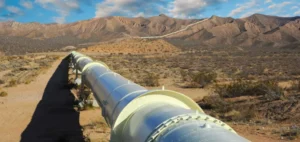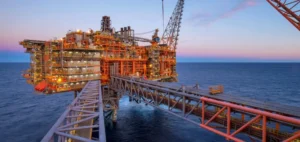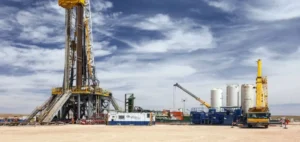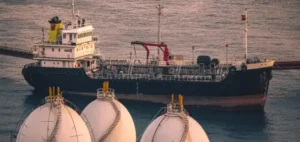

The Venezuelan government has announced the immediate suspension of all contracts and negotiations related to natural gas supply with Trinidad and Tobago. This decision follows the seizure of a vessel transporting Venezuelan crude by the United States in Caribbean waters. Caracas has formally accused the Trinidadian government of collaborating with US authorities during the operation, described by Venezuelan officials as an “act of piracy”.
An energy rupture with immediate consequences
The vessel, boarded by helicopters with soldiers rappelling onto the deck, was carrying Venezuelan oil. The intervention was condemned by Vice President Delcy Rodriguez, who also serves as Minister of Petroleum, citing “a serious violation of international law” and a direct blow to the freedom of maritime trade. President Nicolas Maduro had already suspended bilateral gas agreements in October, but this latest announcement marks a complete end to exchanges.
Trinidad’s stance and closer ties with Washington
Prime Minister Kamla Persad-Bissessar rejected the accusations, stating that her country was not involved in the dispute between Caracas and Washington. She clarified that Trinidad and Tobago does not rely on Venezuela for its natural gas needs and that efforts are underway to accelerate domestic exploration and production. At the same time, the Trinidadian government authorised temporary use of its airports by US forces for logistical operations.
Increased US military presence in the region
In recent months, the United States has stepped up its presence in the Caribbean, officially to combat drug trafficking. Military ships, including the USS Gravely destroyer, were welcomed by Trinidad and Tobago, and joint drills were held in November. A radar was also installed on the island of Tobago near a still-unfinished new airport. Caracas views this as a military pressure strategy aimed at weakening the current leadership.
Political tensions heightened by European sanctions
The energy rupture comes amid heightened diplomatic tensions. The European Union has extended until January 10, 2027, the sanctions targeting 69 Venezuelan officials. The government of Nicolas Maduro condemned the decision, calling it “illegitimate” and “contrary to international law”. At the same time, state-owned company Petroleos de Venezuela (PDVSA) announced it had suffered a cyberattack, with no significant impact on industrial operations.