
The United States House of Representatives adopted, on December 12, the H.R.3668 bill, which significantly alters the permitting regime for interstate gas pipelines. This text removes from states their ability to block energy projects through Section 401 of the Clean Water Act (CWA), granting broader decision-making authority to the Federal Energy Regulatory Commission (FERC), the federal energy regulatory agency.
A shift in the permitting hierarchy
The reform is based on the principle of federal supremacy. State-issued environmental certifications, previously mandatory, are no longer required for obtaining a federal authorisation. Local agencies are included as consulting entities and may propose technical conditions, but their inclusion depends on FERC’s final decision. The bill also sets a 90-day deadline following the completion of the environmental review procedure (National Environmental Policy Act – NEPA) for all required federal decisions to be issued.
This new framework reduces administrative fragmentation by making FERC the sole coordinating authority for projects under the Natural Gas Act. It also limits the involvement of other federal and local agencies in the official legal record of the projects. This centralisation alters the institutional balance between the federal government and local entities.
Implications for the gas industry and investors
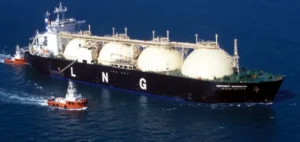
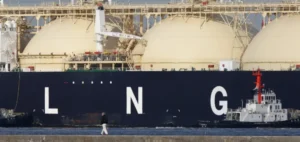
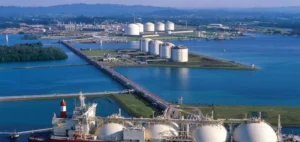
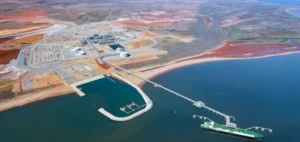
The primary objective is to reduce the regulatory risk premium affecting gas pipeline and liquefied natural gas (LNG) terminal projects. By removing the risk of late-stage vetoes, the reform improves project timeline visibility and facilitates the achievement of final investment decisions (FID) in a context of rising demand for energy capacity, particularly due to the growth of data centres.
Several previously stalled or abandoned projects could become viable again. While the immediate impact on supply is limited, the administrative simplification may reactivate the entire value chain—from engineering to construction—while exerting upward pressure on key segments such as steel, compression and EPC (engineering, procurement, construction) services.
Political response and legal outlook
The bill passed with a narrow majority (213 votes to 184) and has triggered strong opposition. Some states, historically using CWA §401 to delay sensitive projects, denounce a loss of environmental sovereignty. Several non-governmental organisations are preparing lawsuits to challenge the constitutionality of the text or to redirect opposition through other regulatory levers, including permits under CWA §404, land use rules or protected species legislation.
Concerns also arise about how FERC will integrate—or dismiss—conditions proposed by states. Centralisation may heighten political tensions between the federal government and local jurisdictions, with obstruction strategies likely to shift to other stages of the permitting process.
A strategic move in US energy policy
This federal pivot comes as US electricity demand is projected to increase in 2025 and 2026, driven by artificial intelligence and data centre expansion. The availability of dispatchable gas capacity is becoming a key factor for supply security. The reform aims to shorten critical project timelines to ensure infrastructure development keeps pace.
Internationally, securing the interstate gas supply chain also strengthens the US position in the LNG export market. It supports American energy leadership by increasing reliability in delivering gas to export terminals.