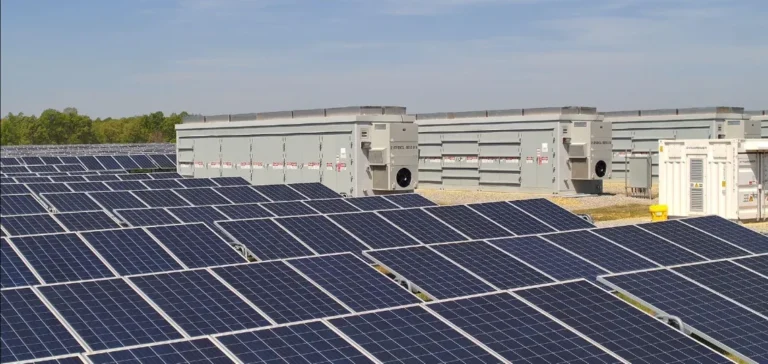
Controllable solar hits strategic threshold at $65/MWh despite China supply risk

The collapse in storage costs positions batteries as a key lever for dispatchable solar, but dependence on Chinese suppliers creates growing tension between competitiveness and supply chain security.

Share:

Comprehensive energy news coverage, updated nonstop

Annual subscription

8.25$/month*

*billed annually at 99$/year for the first year then 149,00$/year ​

Unlimited access • Archives included • Professional invoice

OTHER ACCESS OPTIONS

Monthly subscription

Unlimited access • Archives included

5.2$/month*
then 14.90$ per month thereafter

FREE ACCOUNT

3 articles offered per month

FREE

*Prices are excluding VAT, which may vary depending on your location or professional status

Since 2021: 35,000 articles • 150+ analyses per week

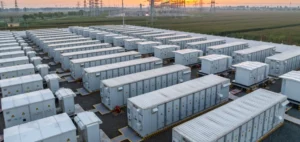
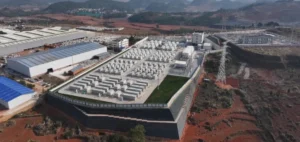
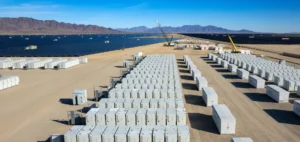
A new wave of large-scale battery storage projects reveals an unprecedented competitiveness threshold around $65/MWh for energy shifting, excluding the cost of charging electricity. This level, calculated pre-tax and excluding Chinese components, is based on technical and financial assumptions now considered achievable in projects backed by long-term guaranteed contracts. Recent tenders in India, Saudi Arabia and Italy confirm this trend, despite regional disparities in execution conditions and economic robustness.

Structuring tenders for pricing and guarantees

In Italy, the MACSE mechanism led by grid operator Terna awarded 1.1 GW of storage capacity with 15-year fixed-price contracts. Groups such as Enel and Plenitude (a subsidiary of Eni) were among the winners. In Saudi Arabia, the Tabuk and Hail projects integrate batteries supplied by HiTHIUM, with construction works assigned to Alfanar, reflecting an industrial approach based on standardisation. In India, auctions led by Rajasthan Rajya Vidyut Utpadan Nigam Limited (RVUNL) reached floor prices, supported by public subsidies, but raised concerns about technical viability.

A business model driven by cost of capital

The $65/MWh threshold relies on a 7% discount rate, 20-year lifespan and 90% efficiency. This performance level is only accessible with guaranteed revenues, excluding projects operating in fully deregulated markets. The estimated capital expenditure of around $125/kWh includes equipment imported from China at $75/kWh, with $50/kWh covering installation costs, where grid connection remains a volatile factor.

A sector facing a geopolitical dilemma

The current model largely relies on a China-origin supply chain, a prerequisite for reaching observed cost levels. The United States, via its Foreign Entities of Concern (FEOC) regulation, and the European Union, through local content support schemes, aim to reduce this dependency. In Italy, a separate tender for “non-China-made” solar revealed a significant cost gap, highlighting the price premium linked to geopolitical criteria.

Market segmentation and regulatory evolution

As day-night spreads narrow, business models are shifting towards remuneration for capacity and ancillary services. Regulators are pushing to include reinforced technical criteria in tenders, notably in India, where low bids have triggered safety and equipment quality concerns. Hybrid projects combining co-located solar photovoltaic and storage are also emerging as a response to rising grid connection constraints.

Companies facing a new requirement matrix

Developers able to secure long-term contracts, grid access and supply chain traceability will gain a competitive edge. For manufacturers, margin pressure is increasing alongside growing expectations for performance and safety guarantees. Power system operators are turning to regulated mechanisms to avoid price and capacity volatility as storage becomes industrialised.
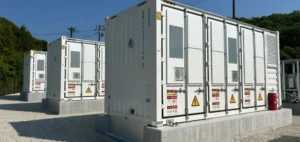
Sinexcel has installed a 2MW/8MWh energy storage system in Matsusaka, marking a breakthrough in a regulated market after five years of technical partnerships and gradual deployment in Japan.
Inlyte Energy has successfully completed factory validation testing of its first full-scale iron-sodium battery, witnessed by Southern Company, paving the way for a pilot installation in the United States in early 2026.
Neoen begins construction of a new 305 MW stage in Australia, raising its total battery storage capacity in the country to 2 GW, and signs two additional virtual battery contracts with ENGIE.
ENGIE has awarded NHOA Energy the contract for a 320 MWh battery energy storage system in Drogenbos, marking a new step in their industrial partnership in Belgium.
Stardust Power has completed an independent review of its lithium refinery project in Muskogee, confirming technical feasibility and compliance with industry standards for its initial production phase.
California-based battery manufacturer South 8 Technologies has secured $11mn to boost production of its LiGas cells, targeting military and space applications under extreme conditions.
Samsung SDI will supply LFP cells for energy storage systems in the United States starting in 2027, under a multi-year deal valued at $1.53bn.
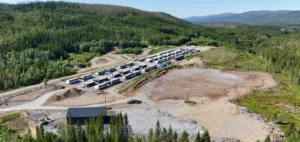
Bitzero Holdings launches a new 70 MW expansion phase in Namsskogan, Norway, targeting a total capacity of 110 MW and an upgrade of its high-performance computing capabilities.
Remixpoint and Nippon Chikudenchi have formalised a partnership to develop seven 2MW/8MWh BESS facilities by October 2026 through a newly established joint venture.
UK-based Ray Systems has selected Beam Global to supply tailored battery systems for its new autonomous underwater drones, aiming to extend mission duration without compromising stealth or manoeuvrability.
Sungrow has started construction on a 200 MW/400 MWh battery storage system for ENGIE, aimed at strengthening grid stability in a state heavily reliant on renewable energy.
Blue Current secures over $80mn in funding led by Amazon to industrialise its silicon solid-state batteries for large-scale mobility and stationary applications.
AGL has begun construction of a 500 MW battery storage system in Tomago, a project valued at AUD800mn ($530.8mn), in the Hunter region, with commissioning expected in 2027.
Real estate group JALCO Holdings diversifies its activities by investing in a 2 MW/8.1 MWh battery energy storage system developed by Taoke Energy in Narita, Chiba Prefecture.
BKW is conducting feasibility studies on four sites to assess the profitability and development conditions for large-scale battery storage installations in Switzerland.
A 300 MW/1,200 MWh electrochemical energy storage facility has been commissioned in China, marking a major milestone in the country’s largest publicly funded energy infrastructure project.
Sustainable Holdings is developing a battery storage facility in Matsusaka, with operations scheduled to begin in June 2026 on Japan’s electricity market.
California-based Korbel Winery is now equipped with an integrated energy storage and intelligent control system, installed by Energy Toolbase and BPi, to optimise usage and address local grid constraints.
The 200 MW Greenwater battery storage project enters execution phase following a $400mn bank financing, marking a strategic milestone in the Pacific Northwest’s energy infrastructure development.
Solar with batteries becomes a bankability lever in three key ASEAN markets, where the focus shifts from cost reduction to the monetisation of energy flexibility.

All the latest energy news, all the time

Annual subscription

8.25$/month*

*billed annually at 99$/year for the first year then 149,00$/year ​

Unlimited access - Archives included - Pro invoice

Monthly subscription

Unlimited access • Archives included

5.2$/month*
then 14.90$ per month thereafter

*Prices shown are exclusive of VAT, which may vary according to your location or professional status.

Since 2021: 30,000 articles - +150 analyses/week.