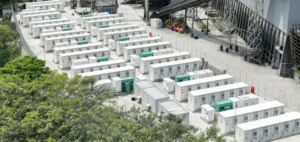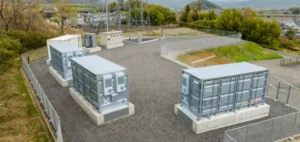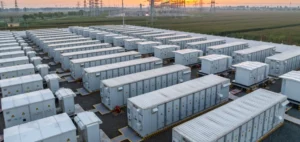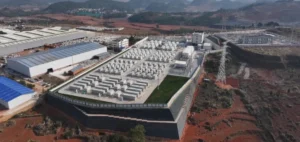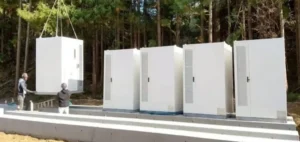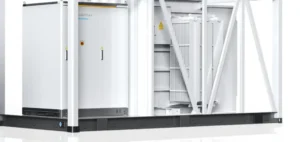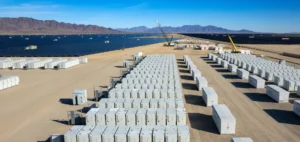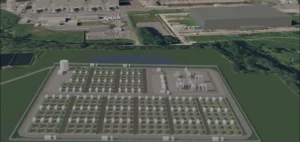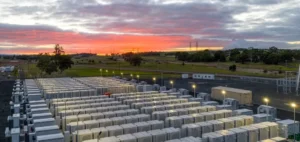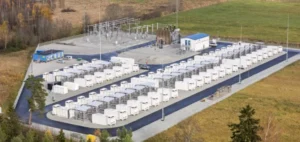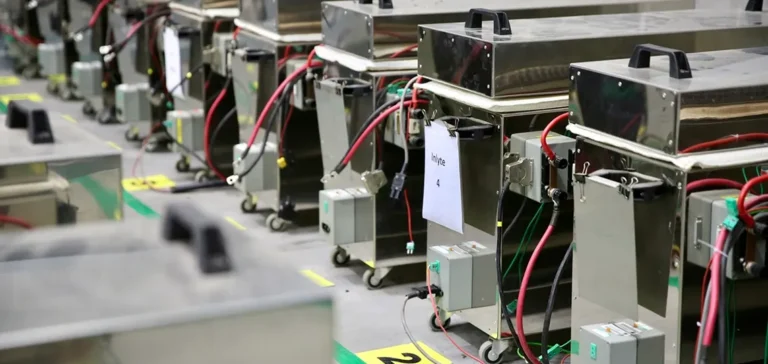

Battery manufacturer Inlyte Energy announced it has successfully completed factory acceptance testing of its first field-ready sodium-based energy storage system. Conducted at its facility near Derby, United Kingdom, the test was observed by representatives from Southern Company, one of the largest electricity providers in the United States. The system integrates sodium metal chloride cells, inverters, and control electronics.
A large-scale system for long-duration storage
The tested system includes the largest sodium metal chloride battery modules ever constructed, each capable of storing more than 300 kilowatt-hours. Inlyte states that this technology provides an alternative to current lithium-ion batteries, which face economic limitations for long-duration applications. The United States Department of Energy projects a need for over 225 gigawatts of long-duration energy storage (LDES) by 2050, a capacity far beyond what existing technologies can cost-effectively supply.
High efficiency to compete with lithium-ion
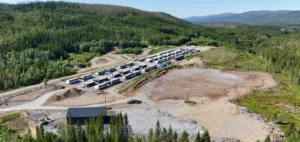
During the test, Inlyte’s battery system achieved a round-trip efficiency of 83%, including auxiliaries, a level competitive with lithium-ion batteries and higher than the 40 to 70% range observed for other LDES technologies. The test was validated on-site by Southern Company’s research and development team, marking a key step before the planned installation at the Wilsonville Energy Storage Test Site in Alabama in early 2026.
U.S. production planned for 2026
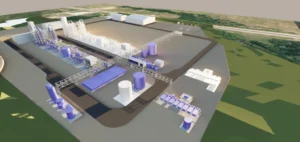
Inlyte Energy is now moving toward full-scale manufacturing and commercialisation in the United States. The company is finalising site selection for its first domestic production facility, scheduled to launch in 2026. To support this phase, Inlyte has announced a strategic partnership with HORIEN Salt Battery Solutions, a recognised industry player with over 25 years of experience in sodium metal chloride batteries.
The partnership aims to combine HORIEN’s industrial capabilities with Inlyte’s system integration expertise to accelerate the rollout of domestically manufactured battery systems. First commercial deliveries are expected in 2027, targeting the growing global energy storage market, projected to reach $150bn by 2030.