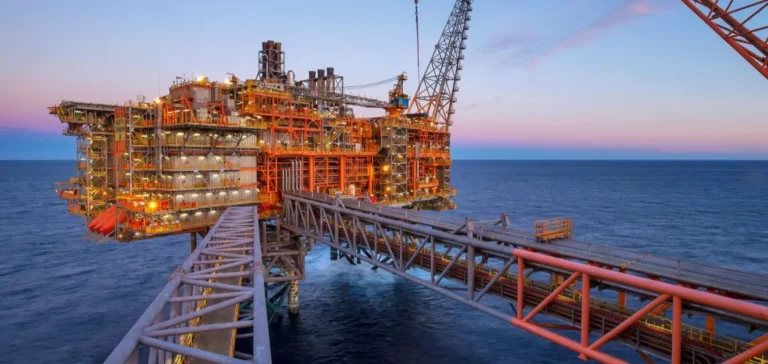
Australia opens five new offshore blocks to secure gas supply

The Australian government has launched the opening of five offshore gas exploration blocks in the Otway Basin, highlighting a clear priority for southeast supply security amid risks of shortages by 2028, despite an ambitious official climate policy.

Share:

Comprehensive energy news coverage, updated nonstop

Annual subscription

8.25$/month*

*billed annually at 99$/year for the first year then 149,00$/year ​

Unlimited access • Archives included • Professional invoice

OTHER ACCESS OPTIONS

Monthly subscription

Unlimited access • Archives included

5.2$/month*
then 14.90$ per month thereafter

FREE ACCOUNT

3 articles offered per month

FREE

*Prices are excluding VAT, which may vary depending on your location or professional status

Since 2021: 35,000 articles • 150+ analyses per week

The federal Australian government, in coordination with the state of Victoria, has approved the opening of five new offshore gas exploration blocks in the Otway Basin. The decision is part of the Future Gas Strategy (FGS), which affirms the role of natural gas as a necessary energy source for the Australian economy through to 2050. The newly released areas fall within Commonwealth waters and are governed by the Offshore Petroleum and Greenhouse Gas Storage Act 2006, which regulates the granting of licences.

A local response to anticipated shortfalls

The move comes as the Australian Energy Market Operator (AEMO) forecasts seasonal gas shortages on the east coast as early as 2028, followed by a structural deficit from 2029. Declining output from the historic Bass Strait and Otway fields is increasing pressure on regional supply, while pipeline capacity from Queensland remains limited. Developing new local resources in Otway would reduce reliance on imported liquefied natural gas (LNG) and the need for major new transport infrastructure.

The legal framework applied imposes an accelerated development logic, with tighter requirements on work-bids, exploration timelines and production licence conversion. The approach seeks to deter speculative licence retention and ensure timely use of resources in line with market needs.

Local opposition and political trade-offs

The initiative is backed by existing Otway producers, including Cooper Energy and Beach Energy, which already operate infrastructure connected to the Iona and Athena hubs. The Australian Energy Producers federation welcomed the decision as essential to domestic market stability. However, several environmental groups and coastal communities oppose the restart of fossil exploration in a region where gas will be banned in new residential buildings from 2027.

The Victorian government justifies its participation in the tender by citing energy security concerns. Despite a residential gas phase-out policy, the state executive argues that local industry and winter demand peaks require nearby resources to avoid supply disruptions. This tension between climate goals and energy realities fuels ongoing political controversy.

Economic and industrial consequences

The announcement could immediately influence contractual negotiations across gas-intensive industrial sectors. By projecting a potential increase in domestic supply, companies may seek more favourable pricing conditions post-2026. However, actual production from these blocks remains a medium-term prospect, subject to commercially viable discoveries.

Reactivating exploration activity in the Otway Basin also indirectly supports oilfield service companies, in a context where other major Australian projects are already straining capacity. This brownfield approach, with tie-back projects connected to existing facilities, addresses the need to reduce capital expenditure in an uncertain investment environment.

Geopolitical balances and market signals

For Canberra, maintaining a domestic production base in the south eases pressure on Queensland’s LNG export volumes used in contracts with Asia. The move aims to preserve Australia’s reputation as a reliable supplier, without introducing rigid gas reservation mechanisms. The FGS, Otway block release, and revision of the Gas Market Code together form a coherent signal to markets.

However, this strategy may face legal risks from climate-related litigation. NGOs have already indicated plans to challenge environmental approvals. The outcome could impact the regulatory timeline and influence investor confidence, depending on how the government enforces development obligations.

The British company begins the initial production phase of Morocco's Tendrara gas field, activating a ten-year contract with Afriquia Gaz amid phased technical investments.
The Energy Information Administration revises its gas price estimates upward for late 2025 and early 2026, in response to strong consumption linked to a December cold snap.
Venture Global denies Shell’s claims of fraud in an LNG cargo arbitration and accuses the oil major of breaching arbitration confidentiality.
The Valera LNG carrier delivered a shipment of liquefied natural gas (LNG) from Portovaya, establishing a new energy route between Russia and China outside Western regulatory reach.
South Stream Transport B.V., operator of the offshore section of the TurkStream pipeline, has moved its headquarters from Rotterdam to Budapest to protect itself from further legal seizures amid ongoing sanctions and disputes linked to Ukraine.
US LNG exports are increasingly bypassing the Panama Canal in favour of Europe, seen as a more attractive market than Asia in terms of pricing, liquidity and logistical reliability.
Indian Oil Corporation has issued a tender for a spot LNG cargo to be delivered in January 2026 to Dahej, as Asian demand weakens and Western restrictions on Russian gas intensify.
McDermott has secured a major engineering, procurement, construction, installation and commissioning contract for a strategic subsea gas development offshore Brunei, strengthening its presence in the Asia-Pacific region.
The partnership between Fluor and JGC has handed over LNG Canada's second liquefaction unit, completing the first phase of the major gas project on Canada’s west coast.
Northern Oil and Gas and Infinity Natural Resources invest $1.2bn to acquire Utica gas and infrastructure assets in Ohio, strengthening NOG’s gas profile through vertical integration and high growth potential.
China has received its first liquefied natural gas shipment from Russia’s Portovaya facility, despite growing international sanctions targeting Russian energy exports.
Brazil’s natural gas market liberalisation has led to the migration of 13.3 million cubic metres per day, dominated by the ceramics and steel sectors, disrupting the national competitive balance.
Sasol has launched a new gas processing facility in Mozambique to secure fuel supply for the Temane thermal power plant and support the national power grid’s expansion.
With the addition of Nguya FLNG to Tango, Eni secures 3 mtpa of capacity in Congo, locking in non-Russian volumes for Italy and positioning Brazzaville within the ranks of visible African LNG exporters.
Japan’s JERA has signed a liquefied natural gas supply contract with India’s Torrent Power for four cargoes annually from 2027, marking a shift in its LNG portfolio toward South Asia.
The merger of TotalEnergies and Repsol’s UK assets into NEO NEXT+ creates a 250,000 barrels of oil equivalent per day operator, repositioning the majors in response to the UK’s fiscal regime and basin decline.
Climate requirements imposed by the European due diligence directive are complicating trade relations between the European Union and Qatar, jeopardising long-term gas supply as the global LNG market undergoes major shifts.
A report forecasts that improved industrial energy efficiency and residential electrification could significantly reduce Colombia’s need for imported gas by 2030.
Falling rig counts and surging natural gas demand are reshaping the Lower 48 energy landscape, fuelling a rebound in gas-focused mergers and acquisitions.
The Nigerian government has approved a payment of NGN185bn ($128 million) to settle debts owed to gas producers, aiming to secure electricity supply and attract new investments in the energy sector.

All the latest energy news, all the time

Annual subscription

8.25$/month*

*billed annually at 99$/year for the first year then 149,00$/year ​

Unlimited access - Archives included - Pro invoice

Monthly subscription

Unlimited access • Archives included

5.2$/month*
then 14.90$ per month thereafter

*Prices shown are exclusive of VAT, which may vary according to your location or professional status.

Since 2021: 30,000 articles - +150 analyses/week.