Panama Canal sidelined as US LNG flows shift decisively toward Europe

US LNG exports are increasingly bypassing the Panama Canal in favour of Europe, seen as a more attractive market than Asia in terms of pricing, liquidity and logistical reliability.

Share:

Comprehensive energy news coverage, updated nonstop

Annual subscription

8.25$/month*

*billed annually at 99$/year for the first year then 149,00$/year ​

Unlimited access • Archives included • Professional invoice

OTHER ACCESS OPTIONS

Monthly subscription

Unlimited access • Archives included

5.2$/month*
then 14.90$ per month thereafter

FREE ACCOUNT

3 articles offered per month

FREE

*Prices are excluding VAT, which may vary depending on your location or professional status

Since 2021: 35,000 articles • 150+ analyses per week

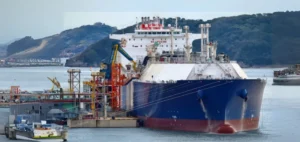
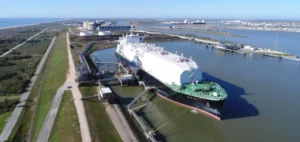
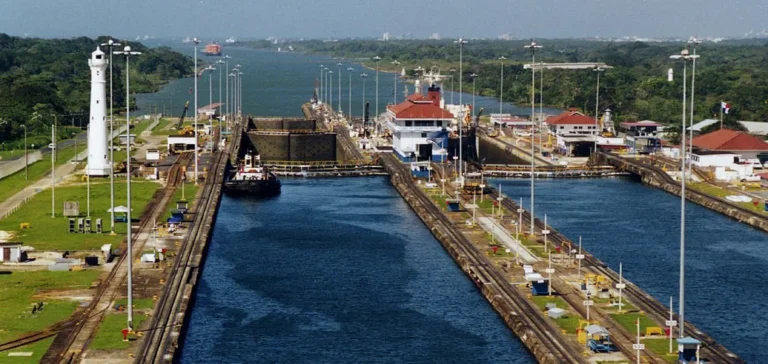
US liquefied natural gas (LNG) exports are now heavily concentrated in Europe, significantly reducing the strategic role of the Panama Canal in intercontinental energy flows. In November, nearly 70% of US LNG cargoes were shipped to Europe, compared to just 16% to Asia. This redirection is reshaping global LNG trade routes and weakening Panama’s position as a key node in transpacific exchanges.

Economic arbitrage no longer favours Asia

Logistics data shows that the cost difference between the Panama route and the Cape of Good Hope route is no longer sufficient to justify the absence of favourable price signals in Asia. Transport via Panama costs $2.21/MBtu compared to $3.21/MBtu via the Cape, but the net spread to Asia remains at only $0.225/MBtu. This does not compensate for the risks of congestion and hydrological volatility in Panama. Meanwhile, the increased liquidity of European gas markets (TTF, NBP) and supply stability further boost Atlantic basin appeal.

Structural risks affecting Panama Canal

Climatic conditions in 2023 and 2024 severely impacted the canal’s operations, prompting the Panama Canal Authority (ACP) to lower authorised draft limits and introduce a new auction-based system, LoTSA 2.0. This mechanism cuts long-term reserved slots from four to three per day, increasing uncertainty for spot LNG vessels. Slots are now predominantly allocated to container lines and other regular maritime flows.

Logistics shift across LNG supply chain

In response, US exporters—particularly terminals like Sabine Pass and Cameron LNG—are strengthening their long-term commitments to Europe. Operators such as New Fortress Energy are reconfiguring routes, using Mexico as a redistribution hub for the Pacific basin. In Asia, buyers like JERA and KOGAS are revising procurement strategies, favouring closer suppliers such as Qatar and Australia to offset reduced US flexibility.

Market and pricing implications

The decline in US LNG transits through Panama reinforces regional segmentation. Europe has become the main destination for US volumes, potentially weakening the traditional linkage between TTF and JKM indices. This new configuration is also increasing demand for LNG carriers on longer routes via the Cape of Good Hope, with a limited impact on freight rates. Meanwhile, it reduces arbitrage margins and the ability of traders to capitalise on rapid shifts between basins.
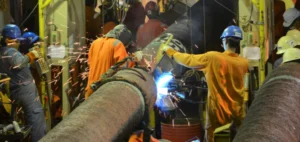
McDermott has secured a major engineering, procurement, construction, installation and commissioning contract for a strategic subsea gas development offshore Brunei, strengthening its presence in the Asia-Pacific region.
The partnership between Fluor and JGC has handed over LNG Canada's second liquefaction unit, completing the first phase of the major gas project on Canada’s west coast.
China has received its first liquefied natural gas shipment from Russia’s Portovaya facility, despite growing international sanctions targeting Russian energy exports.
Brazil’s natural gas market liberalisation has led to the migration of 13.3 million cubic metres per day, dominated by the ceramics and steel sectors, disrupting the national competitive balance.
Sasol has launched a new gas processing facility in Mozambique to secure fuel supply for the Temane thermal power plant and support the national power grid’s expansion.
With the addition of Nguya FLNG to Tango, Eni secures 3 mtpa of capacity in Congo, locking in non-Russian volumes for Italy and positioning Brazzaville within the ranks of visible African LNG exporters.
Japan’s JERA has signed a liquefied natural gas supply contract with India’s Torrent Power for four cargoes annually from 2027, marking a shift in its LNG portfolio toward South Asia.
The merger of TotalEnergies and Repsol’s UK assets into NEO NEXT+ creates a 250,000 barrels of oil equivalent per day operator, repositioning the majors in response to the UK’s fiscal regime and basin decline.
Climate requirements imposed by the European due diligence directive are complicating trade relations between the European Union and Qatar, jeopardising long-term gas supply as the global LNG market undergoes major shifts.
A report forecasts that improved industrial energy efficiency and residential electrification could significantly reduce Colombia’s need for imported gas by 2030.
Falling rig counts and surging natural gas demand are reshaping the Lower 48 energy landscape, fuelling a rebound in gas-focused mergers and acquisitions.
The Nigerian government has approved a payment of NGN185bn ($128 million) to settle debts owed to gas producers, aiming to secure electricity supply and attract new investments in the energy sector.
Riley Exploration Permian has finalised the sale of its Dovetail Midstream entity to Targa Northern Delaware for $111 million, with an additional conditional payment of up to $60 million. The deal also includes a future transfer of equipment for $10 million.
Stanwell has secured an exclusive agreement with Quinbrook for the development of the Gladstone SDA Energy Hub, combining gas turbines and long-duration battery storage to support Queensland’s electricity grid stability.
The growth of US liquefied natural gas exports could slow if rising domestic costs continue to squeeze margins, as new volumes hit an already saturated global market.
Turkmenistan is leveraging the Global Gas Centre to build commercial links in Europe and South Asia, as it responds to its current dependence on China and a shifting post-Russian gas market.
The Marmara Ereğlisi liquefied natural gas (LNG) terminal operated by BOTAŞ is increasing its regasification capacity, consolidating Türkiye’s role as a regional player in gas redistribution toward the Balkans and Southeast Europe.
Budapest contests the European agreement to ban Russian natural gas imports by 2027, claiming the measure is incompatible with its economic interests and the European Union's founding treaties.
The European Union has enshrined in law a complete ban on Russian gas by 2027, forcing utilities, operators, traders and states to restructure contracts, physical flows and supply strategies under strict regulatory pressure.
The partial exploitation of associated gas from the Badila field by Perenco supplies electricity to Moundou, highlighting the logistical and financial challenges of gas development in Chad.

All the latest energy news, all the time

Annual subscription

8.25$/month*

*billed annually at 99$/year for the first year then 149,00$/year ​

Unlimited access - Archives included - Pro invoice

Monthly subscription

Unlimited access • Archives included

5.2$/month*
then 14.90$ per month thereafter

*Prices shown are exclusive of VAT, which may vary according to your location or professional status.

Since 2021: 30,000 articles - +150 analyses/week.