Poland: Orlen Consolidates Gas, Targets Regional Hub Without Liberalization

Poland’s gas market remains highly concentrated around Orlen, which controls imports, production, and distribution, while Warsaw targets internal and regional expansion backed by new infrastructure capacity and demand from heat and power.

Share:

Comprehensive energy news coverage, updated nonstop

Annual subscription

8.25£/month*

*billed annually at 99£/year for the first year then 149,00£/year ​

Unlimited access • Archives included • Professional invoice

OTHER ACCESS OPTIONS

Monthly subscription

Unlimited access • Archives included

5.2£/month*
then 14.90£ per month thereafter

FREE ACCOUNT

3 articles offered per month

FREE

*Prices are excluding VAT, which may vary depending on your location or professional status

Since 2021: 35,000 articles • 150+ analyses per week

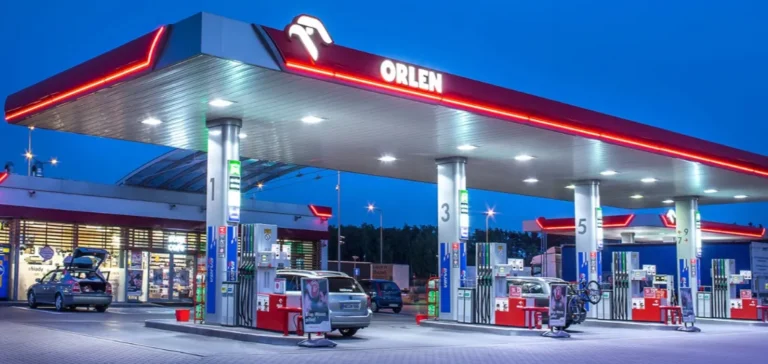
Poland’s gas market remains dominated by Orlen, the successor to PGNiG, with about 85% of retail and wholesale sales in 2024. The Urząd Regulacji Energetyki (URE, Polish regulator) reports sales to end users near 194 TWh in 2024, up versus 2023. Orlen imported more than 150 TWh, over 88% of physical inflows, and produced about 96% of domestic gas, consolidating a de facto single-buyer position. Exchange-sale obligations have not created durable liquidity: activity on Towarowa Giełda Energii (TGE, power exchange) has receded since a 2021 peak.

Legal framework and structural effects

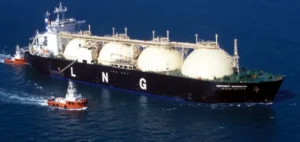
The Act on Stocks imposes costly mandatory reserves that are difficult to outsource, with the Governmental Agency for Strategic Reserves (RARS, strategic reserves agency) limited to extended mandates without structural reform. Article 24a, repeatedly debated, maintains firm requirements for volumes stored abroad, creating regulatory asymmetries. The Court of Justice of the European Union (ECJ, Court of Justice) is seized on the compatibility of these rules with the internal market. Gradual reductions of the LNG terminal entry discount at Świnoujście (liquefied natural gas, LNG — gaz naturel liquéfié) are planned, but Orlen already holds 100% of long-term capacity at Świnoujście and has reserved the entire 6.1 bcm/year of the future Gdańsk floating terminal (floating storage and regasification unit, FSRU — unité flottante de stockage et de regazéification). Combined, these elements limit access for new entrants.

The entry–exit system remains split by the Yamal–Europe pipeline (SGT), whose high annual entry costs make imports via Mallnow less competitive than the national system (KSP). The transmission system operator Gaz-System (TSO, operator de transport) proposes a “postage stamp” tariff methodology and unification from 2027, which would lower Mallnow’s relative cost. Booking assumptions published remain modest, suggesting limited competitive impact in the near term. In parallel, temporary increases in firm capacity toward Ukraine and metering works at Hermanowice expand export capability without altering upstream concentration.

Domestic demand: heat and power in the lead

The Polityka Energetyczna Polski 2040 (PEP2040, energy policy) and the National Energy and Climate Plan (NECP, national plan) project higher gas use as a substitute for coal in heat and power generation. Combined-cycle gas turbine plants (CCGT, centrales à cycle combiné) and cogeneration units (CHP, production combinée de chaleur et d’électricité) are multiplying, with new blocks commissioned and others planned. Prices in the Emissions Trading System (ETS, système européen d’échange) and ETS2 for buildings strengthen the switching economics. Orlen anticipates national demand peaking around 27 bcm by 2030, while targeting 12 bcm/year of own production and roughly 15 bcm/year of long-term contracts, a portfolio equal to projected total consumption.

Poland’s import capacity reaches about 1.29 TWh/day firm, more than double average needs, with interconnections to all neighbors and Norway via Baltic Pipe (technical capacity ~10 bcm/year). The Świnoujście terminal has been raised to ~8.3 bcm/year, and Gdańsk (6.1 bcm/year) is expected in 2028, with an option for a second FSRU. This physical margin supports rising heat and power demand, while mandatory reserves still occupy a significant share of total storage of about 36 TWh, expanding at Wierzchowice. The combination of infrastructure and contracts secures supply but concentrates purchasing power within a single integrated group.

Regional ambition: “distributor” rather than marketplace

Public documents target a larger regional role, notably toward Ukraine where flows have strengthened, and potentially toward Slovakia and neighbors if Russian imports cease within the Union. Annual auctions show firm export bookings to Ukraine, backed by commercial agreements. Nevertheless, a “marketplace” presupposes sustained exchange liquidity, deregulated prices, and many active participants—conditions still distant: the number of “active” companies on TGE has fallen from late-2010s highs. International licenses (OGZ) were streamlined, with cancellations in cases of inactivity, and authorization processes remain heavy.

The most probable path is a “champion-led hub”: significant volumes in and out through capacities largely reserved by the incumbent, with arbitrage via a flexible LNG portfolio. Tariff integration of Yamal–Europe and lower LNG entry discounts can open marginal arbitrage windows without reversing the dominant structure. For energy-intensive industries, the issue remains access to transparent price references and competing offers, which the envisaged increase of the exchange-sale quota to 85% could encourage if adopted without dilution.
Pipeline natural gas deliveries from Russia to the European Union dropped by 44% in 2025, reaching their lowest level in five decades following the end of transit via Ukraine.
AltaGas has finalised a labour agreement with union ILWU Local 523B, ending a 28-day strike at its Ridley Island propane terminal, a key hub for Canadian exports to Asia.
Lebanon engages in a memorandum of understanding with Egypt to import natural gas and support its electricity production, with infrastructure rehabilitation and active funding searches required to secure delivery.
Australian producer Woodside has signed a binding agreement with Turkish state-owned company BOTAŞ for the delivery of 5.8 billion cubic metres of LNG starting in 2030.
Condor Energies has completed a $13.65mn private financing to deploy a second drilling rig and intensify a 12-well gas programme in Uzbekistan scheduled for 2026.
After a hiatus of more than four years, Myanmar has resumed liquefied natural gas deliveries, receiving a half-cargo in November to supply two state-funded power generation projects.
The Australian government will require up to 25% of gas extracted on the east coast to be reserved for the domestic market from 2027, in response to supply tensions and soaring prices.
Baker Hughes will deliver six gas refrigeration trains for Commonwealth LNG’s 9.5 mtpa export project in Louisiana, under a contract with Technip Energies.
Shanghai Electric begins a combined-cycle expansion project across four Iraqi provinces, aiming to boost energy efficiency by 50% without additional fuel consumption.
Zefiro Methane, through its subsidiary Plants & Goodwin, completes an energy conversion project in Pennsylvania and plans a new well decommissioning operation in Louisiana, expanding its presence to eight US states.
The Council of State has cancelled the authorisation to exploit coalbed methane in Lorraine, citing risks to the region's main aquifer and bringing an end to a legal battle that began over a decade ago.
Japanese power producer JERA will deliver up to 200,000 tonnes of liquefied natural gas annually to Hokkaido Gas starting in 2027 under a newly signed long-term sale agreement.
An agreement announced on December 17, 2025 provides for twenty years of deliveries through 2040. The package amounts to 112 billion new Israeli shekels (Israeli shekels) (NIS), with flows intended to support Egyptian gas supply and Israeli public revenues.
Abu Dhabi’s national oil company has secured a landmark structured financing to accelerate the development of the Hail and Ghasha gas project, while maintaining strategic control over its infrastructure.
U.S.-based Sawgrass LNG & Power celebrates eight consecutive years of LNG exports to The Bahamas, reinforcing its position in regional energy trade.
Kinder Morgan restored the EPNG pipeline capacity at Lordsburg on December 13, ending a constraint that had driven Waha prices negative. The move highlights the Permian’s fragile balance, operating near the limits of its gas evacuation infrastructure.
ENGIE activates key projects in Belgium, including an 875 MW gas-fired plant in Flémalle and a battery storage system in Vilvoorde, to strengthen electricity supply security and grid flexibility.
Hungary has signed a contract with US company Chevron to import 400mn m³ of LNG per year, while maintaining a structural dependence on Russian gas through a long-term agreement with Gazprom.
Chevron Australia awards Subsea7 a major contract for subsea installation on the Gorgon Stage 3 project, with offshore operations scheduled for 2028 at 1,350 metres depth.
Ovintiv has entered into an agreement with Pembina Pipeline Corporation to secure 0.5 million tonnes per annum of LNG liquefaction capacity over 12 years, strengthening its export outlook to Asian markets.

All the latest energy news, all the time

Annual subscription

8.25£/month*

*billed annually at 99£/year for the first year then 149,00£/year ​

Unlimited access - Archives included - Pro invoice

Monthly subscription

Unlimited access • Archives included

5.2£/month*
then 14.90£ per month thereafter

*Prices shown are exclusive of VAT, which may vary according to your location or professional status.

Since 2021: 30,000 articles - +150 analyses/week.