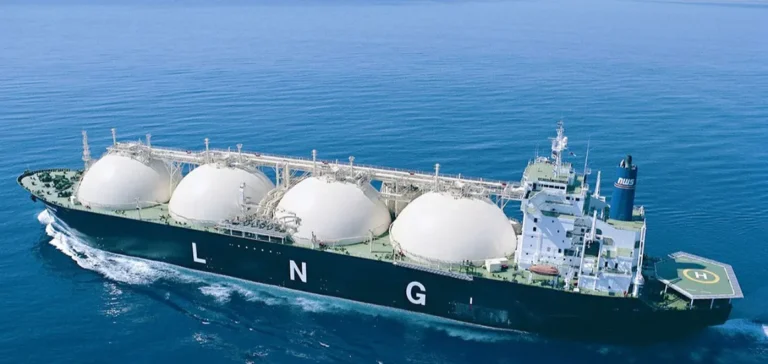
LNG wave: 300 bcm by 2030, prices and contracts pivot according to the IEA

A record expansion of liquefied natural gas (LNG, gaz naturel liquéfié — GNL) capacity is reshaping global supply, with expected effects on prices, contractual flexibility and demand trajectories in importing regions.

Share:

Comprehensive energy news coverage, updated nonstop

Annual subscription

8.25€/month*

*billed annually at 99€/year for the first year then 149,00€/year ​

Unlimited access • Archives included • Professional invoice

OTHER ACCESS OPTIONS

Monthly subscription

Unlimited access • Archives included

5.2€/month*
then 14.90€ per month thereafter

FREE ACCOUNT

3 articles offered per month

FREE

*Prices are excluding VAT, which may vary depending on your location or professional status

Since 2021: 35,000 articles • 150+ analyses per week

The latest outlook from the International Energy Agency (IEA, Agence internationale de l’énergie — AIE) sets out an unprecedented ramp-up of LNG, driven by firm investment decisions and a project pipeline already underway. The foundation rests on added liquefaction capacity and progressive ramp-ups across several basins. The market remains steered by trade-offs between security of supply, marginal cost and logistical availability. Trade balances are shifting toward greater flexibility, supported by more modular contracts and strengthened liquidity.

Capacity and industrial timeline

The IEA counts around 300 billion cubic meters (bcm) per year of new LNG export capacity by 2030, primarily in the United States and Qatar. Accounting for declines and actual ramp-ups, the net potential increase in available LNG supply stands near 250 bcm per year. Final investment decisions (FID, décision finale d’investissement — DFI) have reached a peak in the U.S. segment, with more than 80 bcm per year sanctioned in the current period. This pace concentrates the next supply wave in a few hubs while shifting a greater share of security of supply onto the LNG fleet and regasification terminals.

The rise in supply exerts statistical downward pressure on spot differentials across basins. Narrowing spreads reduce the intensity of opportunistic arbitrage and favor more stable procurement strategies for players exposed to the short term. Price effects will nevertheless depend on the phasing of start-ups, scheduled maintenance and vessel availability. Reallocations of flows relative to long-distance pipeline links are expected to continue, reinforcing LNG’s role in interregional balancing.

Demand trajectories and price elasticity

The IEA’s base case anticipates average gas demand growth close to 1.5% per year through 2030, or about 380 bcm in additional volume. Asia-Pacific would capture nearly half of this increase, with heterogeneous paths depending on power mixes and downstream infrastructure availability. The Middle East would contribute close to 30% of the growth, supported by fuel-to-gas switching in power generation. In the near term, global growth slows below 1%, reflecting still-elevated price levels and industrial adjustments.

The high case explores the impact of a steeper decline in LNG prices on regional elasticity, adding more than 65 bcm per year by 2030 compared with the base case. This sensitivity is particularly marked in emerging Asia, where LNG’s relative competitiveness versus coal and oil conditions utilization at importing power plants. Realizing this trajectory assumes adapted domestic networks and coherent tariff frameworks. Exchange-rate and credit risks remain determining parameters for buyers indexed to international hubs.

Contracts, indexations and liquidity

The share of destination-free contracts should slightly exceed half of contracted volumes by 2030. This evolution enhances cargo fungibility and facilitates redirection according to price signals. Hub-linked and hybrid indexation formulas are gaining ground at the expense of oil-only indexation, widening hedging options. The rise of portfolio players increases commercial optionality and the depth of the secondary market.

Contract tenors have remained predominantly long since 2022, combining project bankability with buyer visibility. Volume-flex and resale clauses, coupled with diversified indexations, support risk management. This framework does not eliminate the risk of mismatch between project finance timelines and commercial optimization behavior, monitored by lenders and balance traders.

Costs, financing and integration of capture

Carbon capture, utilization and storage (CCUS, captage, utilisation et stockage du carbone — CSC) is advancing in upstream and liquefaction to reduce Scope 1 and 2 emissions intensity. Capture modules and transport–storage infrastructure are being integrated at existing and upcoming sites, with cost trajectories dependent on scale effects and storage reservoir availability. CCUS integration can influence financing access and the bankability of long-term contracts in demanding jurisdictions.

Low-emissions gases — biomethane, low-emissions hydrogen and e-methane — are accelerating but retain a limited relative size by 2030. Their volumes do not supplant LNG’s volumetric role in interregional balancing. LNG’s centrality remains within the security–cost–flexibility triad, with growing importance for logistical strategies and hedging tools. Risk parameters include industrial timelines, geopolitical tensions and price trajectories, as well as the availability of qualified labor.

The Australian government will require up to 25% of gas extracted on the east coast to be reserved for the domestic market from 2027, in response to supply tensions and soaring prices.
Baker Hughes will deliver six gas refrigeration trains for Commonwealth LNG’s 9.5 mtpa export project in Louisiana, under a contract with Technip Energies.
Zefiro Methane, through its subsidiary Plants & Goodwin, completes an energy conversion project in Pennsylvania and plans a new well decommissioning operation in Louisiana, expanding its presence to eight US states.
The Council of State has cancelled the authorisation to exploit coalbed methane in Lorraine, citing risks to the region's main aquifer and bringing an end to a legal battle that began over a decade ago.
Japanese power producer JERA will deliver up to 200,000 tonnes of liquefied natural gas annually to Hokkaido Gas starting in 2027 under a newly signed long-term sale agreement.
An agreement announced on December 17, 2025 provides for twenty years of deliveries through 2040. The package amounts to 112 billion new Israeli shekels (Israeli shekels) (NIS), with flows intended to support Egyptian gas supply and Israeli public revenues.
Abu Dhabi’s national oil company has secured a landmark structured financing to accelerate the development of the Hail and Ghasha gas project, while maintaining strategic control over its infrastructure.
U.S.-based Sawgrass LNG & Power celebrates eight consecutive years of LNG exports to The Bahamas, reinforcing its position in regional energy trade.
Kinder Morgan restored the EPNG pipeline capacity at Lordsburg on December 13, ending a constraint that had driven Waha prices negative. The move highlights the Permian’s fragile balance, operating near the limits of its gas evacuation infrastructure.
ENGIE activates key projects in Belgium, including an 875 MW gas-fired plant in Flémalle and a battery storage system in Vilvoorde, to strengthen electricity supply security and grid flexibility.
Hungary has signed a contract with US company Chevron to import 400mn m³ of LNG per year, while maintaining a structural dependence on Russian gas through a long-term agreement with Gazprom.
Chevron Australia awards Subsea7 a major contract for subsea installation on the Gorgon Stage 3 project, with offshore operations scheduled for 2028 at 1,350 metres depth.
Ovintiv has entered into an agreement with Pembina Pipeline Corporation to secure 0.5 million tonnes per annum of LNG liquefaction capacity over 12 years, strengthening its export outlook to Asian markets.
TotalEnergies has completed the sale of a minority stake in a Malaysian offshore gas block to PTTEP, while retaining its operator role and a majority share.
The European Union will apply its methane emissions rules more flexibly to secure liquefied natural gas supplies from 2027.
Venezuela has ended all energy cooperation with Trinidad and Tobago after the seizure of an oil tanker carrying crude by the United States, accusing the archipelago of participating in the military operation in the Caribbean.
National Fuel has secured $350mn in a private placement of common stock with accredited investors to support the acquisition of CenterPoint’s regulated gas business in Ohio.
GTT appoints François Michel as CEO starting January 5, separating governance roles after strong revenue and profit growth in 2024.
The United States is requesting a derogation from EU methane rules, citing the Union’s energy security needs and the technical limits of its liquefied natural gas export model.
Falcon Oil & Gas and its partner Tamboran have completed stimulation of the SS2-1H horizontal well in the Beetaloo Sub-basin, a key step ahead of initial production tests expected in early 2026.

All the latest energy news, all the time

Annual subscription

8.25€/month*

*billed annually at 99€/year for the first year then 149,00€/year ​

Unlimited access - Archives included - Pro invoice

Monthly subscription

Unlimited access • Archives included

5.2€/month*
then 14.90€ per month thereafter

*Prices shown are exclusive of VAT, which may vary according to your location or professional status.

Since 2021: 30,000 articles - +150 analyses/week.