Orban attend des garanties énergétiques lors de sa rencontre avec Trump à Washington

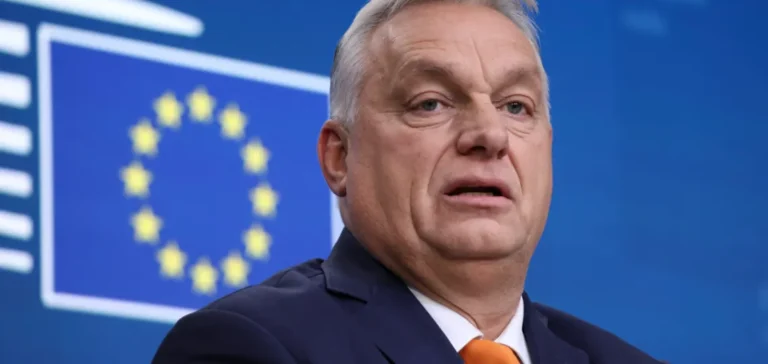
Le Premier ministre hongrois se rendra à Washington pour discuter avec Donald Trump des sanctions américaines contre le pétrole russe, dans un contexte de guerre en Ukraine et de dépendance persistante de la Hongrie aux hydrocarbures russes.

Share:

Comprehensive energy news coverage, updated nonstop

Annual subscription

8.25$/month*

*billed annually at 99$/year for the first year then 149,00$/year ​

Unlimited access • Archives included • Professional invoice

OTHER ACCESS OPTIONS

Monthly subscription

Unlimited access • Archives included

5.2$/month*
then 14.90$ per month thereafter

FREE ACCOUNT

3 articles offered per month

FREE

*Prices are excluding VAT, which may vary depending on your location or professional status

Since 2021: 35,000 articles • 150+ analyses per week

Le Premier ministre hongrois Viktor Orban rencontrera la semaine prochaine à Washington l’ancien président américain Donald Trump afin d’aborder les conséquences des sanctions américaines sur les exportations russes de pétrole. La visite intervient alors que les États-Unis ont récemment imposé des restrictions à Rosneft et Lukoil, deux des principaux producteurs russes d’hydrocarbures, accentuant les pressions sur les pays européens encore liés aux flux énergétiques russes.

La Hongrie, qui dépend largement des importations de pétrole et de gaz de Russie, s’inquiète des effets de ces mesures sur ses réserves énergétiques. Viktor Orban a déclaré vouloir discuter d’un système énergétique durable pour son pays, soulignant que l’arrêt des livraisons russes pourrait provoquer une flambée des prix et des ruptures d’approvisionnement. Il a annoncé son déplacement à Washington en marge d’une visite officielle à Rome.

La guerre en Ukraine continue de redessiner les équilibres énergétiques

Les nouvelles sanctions interviennent dans le cadre du conflit armé en Ukraine, déclenché par l’invasion russe en février 2022. Le 19e paquet de sanctions européennes vise également le secteur pétrolier russe, bien que la Hongrie bénéficie toujours d’exemptions sur les importations via les oléoducs. Le Premier ministre hongrois a souvent critiqué ces mesures européennes, jugeant qu’elles fragilisent les économies nationales sans faire reculer Moscou.

Le ministre hongrois des Affaires étrangères Peter Szijjarto a déclaré que Budapest évalue actuellement les implications légales et physiques des sanctions américaines, en particulier leur impact potentiel sur les flux énergétiques existants. Il a confirmé qu’un échange direct avec Donald Trump permettrait d’aborder ces préoccupations de manière bilatérale.

Budapest rejette la stratégie américaine de désengagement énergétique

L’ambassadeur des États-Unis auprès de l’Organisation du traité de l’Atlantique Nord (OTAN), Matthew Whitaker, a récemment affirmé que les pays européens encore dépendants de l’énergie russe devaient élaborer un plan de désengagement rapide. La déclaration, perçue comme une pression directe, a renforcé la volonté de la Hongrie de défendre ses intérêts énergétiques en dehors du cadre multilatéral.

Viktor Orban, qui se présente comme un allié de Donald Trump et entretient des relations ouvertes avec le président russe Vladimir Poutine, a évoqué la possibilité de solutions alternatives pour garantir la continuité des approvisionnements. Il a également déclaré envisager des mécanismes de contournement si les sanctions venaient à compromettre la stabilité énergétique de son pays.

Les flux pétroliers en Europe centrale menacés par les restrictions

Les sanctions contre Rosneft et Lukoil pourraient entraîner des perturbations logistiques importantes, y compris pour les livraisons transitant par des corridors encore autorisés. Pour la Hongrie, qui dépend du pipeline Druzhba pour ses importations, toute limitation de capacité ou entrave technique poserait un risque immédiat sur la sécurité d’approvisionnement.

Le gouvernement hongrois multiplie actuellement les contacts diplomatiques afin de s’assurer que les nouvelles mesures ne remettent pas en cause les conditions particulières accordées à Budapest par l’Union européenne. Selon les autorités hongroises, la réunion avec Donald Trump représente une tentative stratégique pour obtenir des garanties à court terme, tout en évitant une rupture brutale avec ses fournisseurs traditionnels.

Subsea7 has secured a subsea installation contract from LLOG for the Buckskin South project, scheduled for execution between 2026 and 2027, strengthening its position in the Gulf of Mexico and boosting its order book visibility.
Global crude oil production is expected to rise by 0.8 million barrels per day in 2026, with Brazil, Guyana and Argentina contributing 50% of the projected increase.
Woodbridge Ventures II Inc. signs definitive agreement with Greenflame Resources for a transformative merger, alongside a concurrent financing of up to $10mn.
Interceptions of ships linked to Venezuelan oil are increasing, pushing shipowners to suspend operations as PDVSA struggles to recover from a cyberattack that disrupted its logistical systems.
Harbour Energy acquires US offshore operator LLOG for $3.2bn, adding 271 million barrels in reserves and establishing a fifth operational hub in the Gulf of Mexico.
The agreement signed with Afreximbank marks a strategic shift for Heirs Energies, aiming to scale up its exploration and production operations on Nigeria's OML 17 oil block.
Oritsemeyiwa Eyesan’s appointment as head of Nigeria’s oil regulator marks a strategic shift as the country targets $10bn in upstream investment through regulatory reform and transparent licensing.
Baghdad states that all international companies operating in Kurdistan’s oil fields must transfer their production to state marketer SOMO, under the agreement signed with Erbil in September.
Chinese oil group CNOOC continues its expansion strategy with a new production start-up in the Pearl River Basin, marking its ninth offshore launch in 2025.
A train carrying over 1,200 tonnes of gasoline produced in Azerbaijan entered Armenia on December 19, marking the first commercial operation since recent conflicts, with concrete implications for regional transit.
US authorities intercepted a second oil tanker carrying Venezuelan crude, escalating pressure on Caracas amid accusations of trafficking and tensions over sanctioned oil exports.
California Resources Corporation completed an all-stock asset transfer with Berry Corporation, strengthening its oil portfolio in California and adding strategic exposure in the Uinta Basin.
The Ugandan government aims to authorise its national oil company to borrow $2 billion from Vitol to fund strategic projects, combining investments in oil infrastructure with support for national logistics needs.
British company BP appoints Meg O'Neill as CEO to lead its strategic refocus on fossil fuels, following the abandonment of its climate ambitions and the early departure of Murray Auchincloss.
The Venezuelan national oil company has confirmed the continuity of its crude exports, as the United States enforces a maritime blockade targeting sanctioned vessels operating around the country.
Baker Hughes will supply advanced artificial lift systems to Kuwait Oil Company to enhance production through integrated digital technologies.
The United States has implemented a full blockade on sanctioned tankers linked to Venezuela, escalating restrictions on the South American country's oil flows.
Deliveries of energy petroleum products fell by 4.5% in November, driven down by a sharp decline in diesel, while jet fuel continues its growth beyond pre-pandemic levels.
ReconAfrica is finalising preparations to test the Kavango West 1X well in Namibia, while expanding its portfolio in Angola and Gabon to strengthen its presence in sub-Saharan Africa.
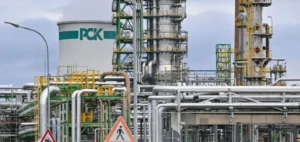
Shell has reopened a divestment process for its 37.5% stake in Germany's PCK Schwedt refinery, reviving negotiations disrupted by the Russia-Ukraine conflict and Western sanctions.

All the latest energy news, all the time

Annual subscription

8.25$/month*

*billed annually at 99$/year for the first year then 149,00$/year ​

Unlimited access - Archives included - Pro invoice

Monthly subscription

Unlimited access • Archives included

5.2$/month*
then 14.90$ per month thereafter

*Prices shown are exclusive of VAT, which may vary according to your location or professional status.

Since 2021: 30,000 articles - +150 analyses/week.