New Zealand approves the 147 MW Glorit solar project in the Auckland region

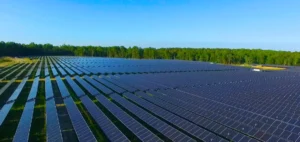
The independent commission approved development of the Glorit solar project, with a capacity of 147 megawatts (MW), north of Auckland, following a detailed assessment of environmental, land-use, and economic impacts.

Share:

Comprehensive energy news coverage, updated nonstop

Annual subscription

8.25$/month*

*billed annually at 99$/year for the first year then 149,00$/year ​

Unlimited access • Archives included • Professional invoice

OTHER ACCESS OPTIONS

Monthly subscription

Unlimited access • Archives included

5.2$/month*
then 14.90$ per month thereafter

FREE ACCOUNT

3 articles offered per month

FREE

*Prices are excluding VAT, which may vary depending on your location or professional status

Since 2021: 35,000 articles • 150+ analyses per week

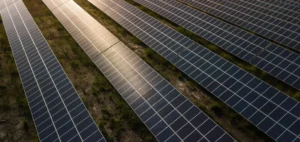
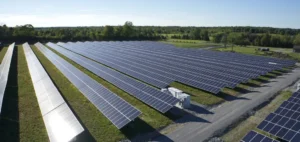
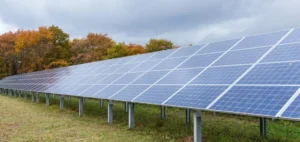
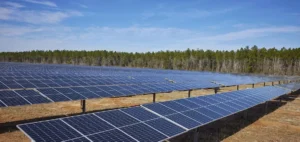
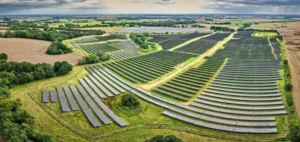
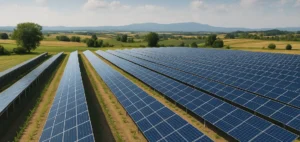
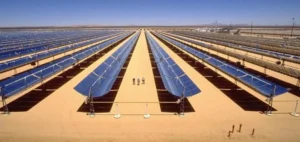
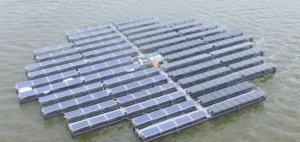
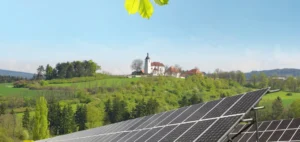
The Glorit solar project, led by Lodestone Energy, obtained its construction authorization after an in-depth deliberation by the environmental assessment commission. Located in the Rodney district, north of Auckland, the site will cover more than 190 hectares and be equipped with over 250,000 photovoltaic panels. The infrastructure will also include transformer stations, access roads, and energy storage systems to stabilize output on the local grid.

A strategic project for regional energy capacity

Approval of the Glorit Solar Scheme fits into the national strategy to diversify energy sources pursued by New Zealand authorities. The site will help strengthen security of supply in the Auckland region, where electricity demand is growing rapidly. According to the decision report, visual impact and effects on agricultural soils were deemed “moderate and manageable” in light of the expected benefits.

The approval conditions require Lodestone Energy to implement a strict environmental management plan, including biodiversity protection, erosion control, and progressive restoration of vegetative cover. Authorities also required mitigation measures for sensitive areas near Kaipara Harbour, particularly regarding catchments and aquatic fauna.

Economic conditions and monitoring

The project represents an investment estimated at more than NZD 200 million. Lodestone Energy must ensure monitoring of socio-economic impact on local communities and guarantee secure access to neighboring agricultural land. Construction and maintenance phases will mobilize around 200 direct and indirect jobs, according to the commission’s report.

The decision committee emphasized the importance of post-construction monitoring, including control of noise, dust, and light emissions. A series of periodic reports must be submitted to Auckland Council to ensure regulatory compliance. These obligations aim to manage site effects on the local population while maintaining coherence with the district’s urban planning.

A strong signal for future solar projects in Oceania

The green light for the Glorit project marks a significant step for large-scale solar infrastructure in New Zealand. This type of investment indicates a shift in the country’s electricity market structure, until now dominated by hydroelectric and geothermal assets.

The favorable outcome of the authorization process could serve as a reference for other projects of comparable scale in the north of the country. Local authorities specified that monitoring of cumulative impacts will be a long-term priority to ensure compatibility between power generation and preservation of rural areas.
Terra-Gen has closed $383.3mn in financing for the construction of its Lockhart III and IV solar units, adding 205 MW to California’s grid with commercial operations expected in 2026.
US developer Ecoplexus has closed a $300mn financing deal with KKR and SMBC to support over 13GW of solar and storage projects under development across the country.
EDP will supply 30% of Carrefour Polska’s energy needs through a PPA combining solar and wind, marking a step forward in the development of renewable capacity in Poland.
French public funding will support the construction of ten solar power plants with storage in Mauritania, as the country works to expand its grid to reach universal electricity access by 2030.
Recurrent Energy has received authorisation to develop Tillbridge, a hybrid 1.3 GW solar and battery project in England, strengthening its expansion strategy in the UK market.
Le Koweït a publié une demande de propositions pour la construction d'une centrale solaire de 500 MW, dont l’électricité sera injectée dans le réseau national sur la base d’un contrat de rachat de 30 ans.
Mori Building has completed three solar-plus-storage plants in Japan to supply its real estate assets through an intra-group partnership structured by TEPCO Energy Partner.
Japanese grid operator OCCTO allocated 75.4MWAC in its third solar auction for FY2025, with an average feed-in-premium price of 7.13 yen per kWh, marking a session that fell short of initial subscription targets.
Octillion has fully converted its electric vehicle battery production facility in Pune to solar power, initiating the rollout of an energy strategy aimed at achieving energy autonomy for all its India-based operations by 2027.
Westbridge Renewable Energy has secured final regulatory approval in Alberta for its Dolcy Solar project, marking the last step before construction can begin.
Chinese firm Sunman will build Australia’s largest solar module plant in the Hunter Valley, backed by AUD171 mn ($111.92 mn) in public funding.
Botswana has concluded a series of energy agreements with Omani public investors, including the development of a 500 MW solar power plant and projects in fuel storage and petroleum trading.
With 16.8 MWp of capacity, the Triticum plant in Bavaria marks a strategic investment for MaxSolar, strengthening the agrivoltaic model in the German energy landscape.
Greencells has signed a partnership with Belgian company 3E to transfer over 3 GW of solar and storage capacity to SynaptiQ, a central monitoring and analytics platform.
Spanish group Grenergy has signed an agreement to sell seven solar projects with a total capacity of 88 MW to Ecopetrol, as part of its asset rotation strategy.
Zenith Energy has launched a tender for the construction of three solar plants totalling 7 MWp in Italy, with expected bank financing covering up to 90% of costs.
JA Solar unveils a pioneering white paper on photovoltaic systems in arid regions, with a module designed to withstand extreme desert conditions and improve long-term energy yield.
Shikoku Electric Power lowers its acquisition threshold for solar projects to 500kWAC and calls for proposals to develop floating plants on reservoirs of at least 15,000m².
Canadian Solar has started delivering non-fossil certificates from a new 20 MWAC solar plant in Okayama under a 25-year virtual power purchase agreement with a Japanese company.
Ecopetrol has reached a conditional agreement to acquire seven companies holding photovoltaic projects across four Colombian departments, for a total potential of 88.2 MWp.

All the latest energy news, all the time

Annual subscription

8.25$/month*

*billed annually at 99$/year for the first year then 149,00$/year ​

Unlimited access - Archives included - Pro invoice

Monthly subscription

Unlimited access • Archives included

5.2$/month*
then 14.90$ per month thereafter

*Prices shown are exclusive of VAT, which may vary according to your location or professional status.

Since 2021: 30,000 articles - +150 analyses/week.