The European gas market is moving with a price floor supported by storage injections and the flexibility of the liquefied natural gas (LNG) chain. The Title Transfer Facility (TTF) reflects this dynamic: the curve holds a support zone around roughly €30/MWh, consistent with continued injections and ample LNG flows. Trans-Atlantic spreads, measured against the Argus Northeast Asia delivered ex-ship index (ANEA), steered cargoes toward Europe for most of the summer. Weak European industrial demand and the lack of structural momentum on consumption reinforce this supply-led balance.
LNG arbitrage and forward curves
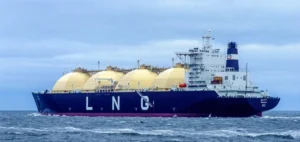
The spot market remained bounded: on the prompt, price ranges moved in a narrow corridor, while the forward curve eased on expectations of additional supply from new liquefaction trains. Profitability differentials generally favoured European discharge over Asia, with only a brief summer exception. European LNG imports rebounded to 32.9 billion cubic meters (Bcm) in the third quarter, near 2022 and 2023 levels. Arrivals from the United States stayed high, driven by rising North American output and the rerouting of cargoes not absorbed in Asia.
Start-ups and ramp-ups support availability: Plaquemines, with a nameplate capacity of 20 million tonnes per annum (Mtpa), lifted volumes through progressive activation of additional blocks; Corpus Christi (Stage 3) added one train in August, with another due by year-end; LNG Canada is accelerating the ramp-up of its second train. Golden Pass remains slated between the end of the year and early next year. Final Investment Decisions (FID) multiplied on the U.S. Gulf Coast, strengthening the prospect of a structural liquefaction surplus over 2026–2030.
European flows and infrastructure constraints
On pipelines, upside is limited. Russian volumes delivered via Turkish Stream to buyers in Central and Balkan Europe stood at 4.5 Bcm in the third quarter, near a flow of 49 million cubic meters per day (MMcm/d), close to the border capacity of 54 MMcm/d. Norwegian flows recovered to an average of 311 MMcm/d with room to rise toward 345 MMcm/d in winter, in line with paths published by the Norwegian Offshore Directorate (NOD) and Urgent Market Messages (UMM). From North Africa, shipments were broadly stable over the quarter, with modest seasonal upside. The Trans Adriatic Pipeline (TAP) ran near capacity, reducing additional flexibility.
European regasification continues to expand, even if some extensions have faced administrative or technical delays. New capacity is scheduled to be added in Belgium and the Netherlands by mid-2026; onshore terminals in Germany will follow, while the Floating Storage and Regasification Unit (FSRU) at Krk in Croatia increases capacity in two phases. By July 2026, the LNG import capacity of the EU-27 and the United Kingdom would reach about 286 Bcm per year, versus 207 Bcm at the start of 2022, improving the system’s ability to absorb global volumes.
Storage, EU rules and the path to balance
On 30 September, EU-27 stocks stood at 88 Bcm, around 83% full, below the 90% target that can now be achieved between 1 October and 1 December. The flexibility mechanism allows a 10-point reduction under difficult filling conditions, with a further 5 points at the Commission’s discretion in adverse markets. Given the injections required (about 7.4 Bcm to aim for 90%), meeting the aggregate target appears unlikely, and a start of winter just above 90 Bcm looks more plausible. These initial levels condition the magnitude of winter withdrawals and, in turn, the tightness of next summer’s refill.
The regulatory framework is also shifting on Russian supply: the EU process to end long-term contracts for pipeline gas and LNG by 2028 is progressing, while a sanctions package proposes a full ban on Russian LNG imports by 2027. These steps tighten potential dependencies and increase the importance of non-Russian LNG flexibility. Their effect will depend on entry-into-force timing and the degree of cargo competition during peak periods.
Demand, power generation and the price signal
European demand remains subdued: excluding temperature shocks, industry shows no structural rebound and is about 20 Bcm below its 2021 level on a rolling twelve-month basis. The Manufacturing Purchasing Managers’ Index (PMI) fell back below 50 in September, indicating contraction, and euro-area growth prospects remain modest. In power generation, gas accounted for roughly 15.3% of output in the quarter, a share contained by strong French nuclear availability and renewable expansion, despite episodes where concurrent weakness in hydro and wind underlined gas plants’ balancing role.
For winter, seasonal outlooks point to above-normal temperatures, especially in northern Europe, with precipitation likely to support hydro. In that configuration, residential-commercial gas demand could undershoot last winter, lowering withdrawals and maintaining downward pressure on the summer curve. Conversely, a prolonged cold spell or extended periods of low wind would tighten the balance and raise the call on Atlantic LNG.
What the market is watching
Three pivots guide the price signal: the ramp-up pace of North American and Canadian trains, the depth of European winter withdrawals given a season start below the last two years, and the Europe/Asia arbitrage measured by ANEA versus U.S. chain costs. A mild winter combined with liquefaction additions would stabilise the downward slope of summer 2026 and 2027 curves. A cold northern-hemisphere winter, alongside stronger Asian competition, would shift the equilibrium and support the TTF risk premium.