Rosatom begins excavation for small modular reactor project in Uzbekistan

The construction of Uzbekistan’s first small modular reactor (SMR) is underway, with 1.5mn m³ of earth being excavated in Jizzakh, marking a major milestone for the nuclear project led by Rosatom.

Share:

Comprehensive energy news coverage, updated nonstop

Annual subscription

8.25$/month*

*billed annually at 99$/year for the first year then 149,00$/year ​

Unlimited access • Archives included • Professional invoice

OTHER ACCESS OPTIONS

Monthly subscription

Unlimited access • Archives included

5.2$/month*
then 14.90$ per month thereafter

FREE ACCOUNT

3 articles offered per month

FREE

*Prices are excluding VAT, which may vary depending on your location or professional status

Since 2021: 35,000 articles • 150+ analyses per week

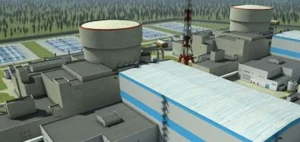
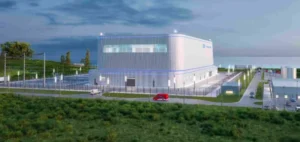
Excavation works have begun at the site of the future RITM-200N small modular reactor in Uzbekistan’s Jizzakh region. The project, led by Russian state-owned company Rosatom, involves the removal of 1.5mn cubic metres of soil to a depth of 13 metres, initiating construction of one of the world’s first land-based SMRs.

Close cooperation between Russian and Uzbek entities

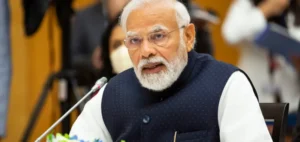
The ground-breaking ceremony was attended by several senior officials, including Pavel Bezrukov, Vice President and Project Director at Atomstroyexport JSC, Abdujamil Kalmuratov, Head of the Directorate for the Construction of a Nuclear Power Plant, and Ulugbek Mustafoyev, Governor of the Jizzakh region. Rosatom Director General Alexei Likhachev joined the event via video link, highlighting the project’s high level of localisation and its reliance on Uzbek subcontractors. The plant is designed for a minimum 60-year service life.

Preliminary works include 27 test and research boreholes along with engineering surveys. Technical documentation is expected to be submitted for review by the end of the year, with the first concrete pour scheduled for March 2026.

Project scales up with large reactor additions

Initially planned to include up to six SMRs, the project was expanded in late September during World Atomic Week in Moscow. A new agreement now includes two large-scale VVER-1000 reactors in addition to two 55 MWe RITM-200N units.

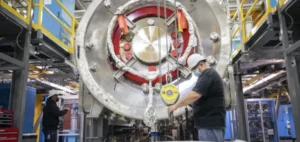
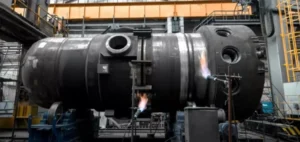
Rosatom began equipment manufacturing in May, casting a 205-tonne ingot of special alloy steel for the reactor pressure vessel. The RITM-200N is a pressurised water reactor derived from icebreaker technology, designed for 190 MWt and 60 years of operation. The first unit is expected to achieve first criticality by late 2029.

Talks continue for high-capacity reactor contracts

According to Russian news agency Tass, negotiations are ongoing for a contract signing in spring 2026 for the VVER-1000 units. One key condition being discussed is a workforce localisation rate of at least 70%.

The Uzbek project is Rosatom’s first export order for its SMR technology. The first land-based version is currently under construction in Yakutia, Russia, with commissioning planned for 2027.

The full-scope simulator for the Lianjiang nuclear project has successfully passed factory acceptance testing, paving the way for its installation at the construction site in China's Guangdong province.
A coalition of Danish industry groups, unions and investors launches a platform in support of modular nuclear power, aiming to develop firm low-carbon capacity to sustain industrial competitiveness.
The United Kingdom and TAE Technologies create a joint venture in Culham to produce neutral beams, a key component of fusion, with strategic backing from Google.
Texas-based developer Natura Resources receives new federal funding to test key components of its 100-megawatt modular reactor in partnership with Oak Ridge National Laboratory.
The Niigata regional assembly is deliberating on restarting unit 6 of the world’s largest nuclear plant, thirteen years after operations ceased following the Fukushima disaster.
Reactor Doel 2 was taken offline, becoming the fifth Belgian reactor to cease operations under the country’s gradual nuclear phase-out policy.
Rolls-Royce SMR has expanded its partnership with ÚJV Řež to accelerate the deployment of small modular reactors, targeting the construction of several units in the Czech Republic and abroad.
The Indian government aims to amend legislation to allow private companies to participate in civil nuclear development, a move positioned as critical to achieving the country’s long-term energy targets.
The VVER-1200 nuclear reactor at Xudabao 4 in China has completed installation of its final passive water tank, marking the end of modular construction for the second phase of the project.
Ottawa and Edmonton commit to a nuclear production roadmap by 2050, through a memorandum of understanding also covering carbon capture and an Indigenous-led pipeline project.
Niamey asserts control over its uranium resources by authorising open market sales of Somaïr’s production, formerly operated by France’s Orano, amid ongoing legal disputes.
Equinix has signed a strategic agreement with French start-up Stellaria to reserve 500 MWe of advanced nuclear capacity to power its future European AI data centres starting in 2035.
Bishkek plans to host a RITM-200N small modular reactor supplied by Rosatom to address electricity shortages and deepen energy ties with Moscow, despite the risks posed by Western sanctions.
The Niigata prefectural assembly will vote on the restart of Unit 6, potentially marking TEPCO’s first reactor relaunch since the 2011 Fukushima disaster.
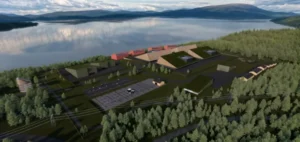
The Norwegian government has initiated a consultation with neighbouring countries on its modular nuclear power plant project in Aure and Heim, in accordance with the Espoo Convention.
Türkiye and South Korea have signed a memorandum of understanding to jointly explore nuclear power plant projects, marking a strategic step in the long-term development of Türkiye's energy infrastructure.
Asian Development Bank has amended its energy policy to enable funding for civil nuclear projects in developing member countries across the Asia-Pacific region.
First Hydrogen begins research with the University of Alberta to identify molten-salt mixtures simulating nuclear fuels for SMR prototypes.
Framatome has completed the manufacturing of the first nuclear fuel assemblies for the Barakah power plant, marking a key milestone in the supply agreement signed with Emirates Nuclear Energy Company in July.
A government-commissioned report proposes 47 measures to simplify nuclear regulation, reduce decommissioning costs and accelerate delivery of civilian and military projects.

All the latest energy news, all the time

Annual subscription

8.25$/month*

*billed annually at 99$/year for the first year then 149,00$/year ​

Unlimited access - Archives included - Pro invoice

Monthly subscription

Unlimited access • Archives included

5.2$/month*
then 14.90$ per month thereafter

*Prices shown are exclusive of VAT, which may vary according to your location or professional status.

Since 2021: 30,000 articles - +150 analyses/week.