Bill C-5 fuels uncertainty over the future of pipelines in Canada

Despite open statements of dialogue, the federal government maintains an ambiguous regulatory framework that hinders interprovincial oil projects, leaving the industry in doubt.

Share:

Comprehensive energy news coverage, updated nonstop

Annual subscription

8.25$/month*

*billed annually at 99$/year for the first year then 149,00$/year ​

Unlimited access • Archives included • Professional invoice

OTHER ACCESS OPTIONS

Monthly subscription

Unlimited access • Archives included

5.2$/month*
then 14.90$ per month thereafter

FREE ACCOUNT

3 articles offered per month

FREE

*Prices are excluding VAT, which may vary depending on your location or professional status

Since 2021: 35,000 articles • 150+ analyses per week

The implementation of Bill C-5 by the Canadian federal government raises new questions about the possibility of authorising new pipelines connecting Alberta to international markets. Presented as a softening of the previous regulatory framework that blocked numerous projects over the last decade, the legislation offers no clear guarantees for investors or energy project developers.

Strict conditions limit the framework’s applicability

The legislation introduces a conditional approach, primarily dependent on producers’ ability to finance domestic carbon dioxide (CO₂) emission reduction measures. Securing a permit also relies on provincial support, notably from Quebec, which holds a veto right over any project crossing its territory. This provision makes any eastward expansion particularly uncertain.

Regional blockages remain a major obstacle

In the spring, Quebec’s Premier expressed cautious openness to discussing pipelines, driven by economic fears over potential US tariffs. However, no official confirmation of support has materialised since. In British Columbia, the provincial government adopts an ambivalent stance: although less opposed than in the past to a project similar to the defunct Northern Gateway, it has issued no clear positive signals.

Previous cases leave little room for optimism

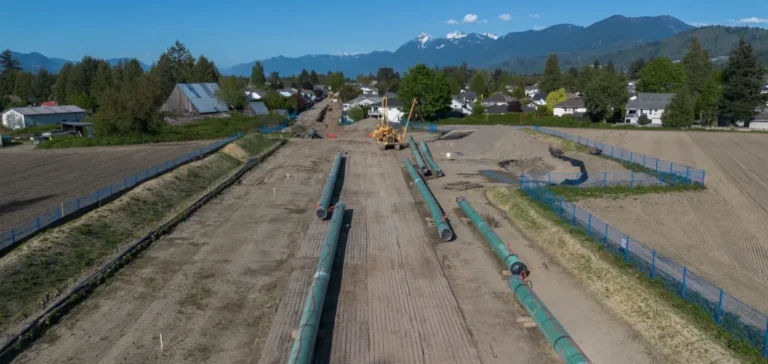
The example of the Trans Mountain Expansion (TMX) illustrates the post-approval challenges. Despite receiving political and financial backing, the project suffered repeated delays due to legal disputes and regulatory hurdles, resulting in cost overruns reaching CAD38bn ($27.5bn). Without guarantees that such situations will be avoided under Bill C-5, developers remain hesitant to commit capital.

Western provinces pursue their own strategies

In Alberta, the provincial government is multiplying diplomatic efforts to advocate for the oil sector’s demands while maintaining federal unity. The Premier recently approved a sovereignty referendum to strengthen her negotiation position with Ottawa. Meanwhile, Saskatchewan has opted for a confrontational strategy, refusing to shut down its coal-fired power plants by 2030 as mandated by the federal government.

The minister responsible for SaskPower, the local public utility, confirmed that the province would extend the use of coal until the transition to nuclear energy becomes technically and economically viable. This decision is supported locally by communities that rely on this sector for employment and economic stability.
Chevron has announced a capital expenditure range of $18 to $19 billion for 2026, focusing on upstream operations in the United States and high-potential international offshore projects.
ExxonMobil is shutting down its oldest ethylene steam cracker in Singapore, reducing local capacity to invest in its integrated Huizhou complex in China, amid regional overcapacity and rising operational costs.
Brazil, Guyana, Suriname and Argentina are expected to provide a growing share of non-OPEC+ oil supply, backed by massive offshore investments and continued exploration momentum.
The revocation of US licences limits European companies’ operations in Venezuela, triggering a collapse in crude oil imports and a reconfiguration of bilateral energy flows.
Bourbon has signed an agreement with ExxonMobil for the charter of next-generation Crewboats on Angola’s Block 15, strengthening a strategic cooperation that began over 15 years ago.
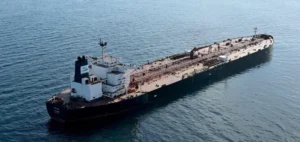
Faced with tighter legal frameworks and reinforced sanctions, grey fleet operators are turning to 15-year-old VLCCs and scrapping older vessels to secure oil routes to Asia.
Reconnaissance Energy Africa completed drilling at the Kavango West 1X onshore well in Namibia, where 64 metres of net hydrocarbon pay were detected in the Otavi carbonate section.
CNOOC Limited has started production at the Weizhou 11-4 oilfield adjustment project and its satellite fields, targeting 16,900 barrels per day by 2026.
The Adura joint venture merges Shell and Equinor’s UK offshore assets, becoming the leading independent oil and gas producer in the mature North Sea basin.
A Delaware court approved the sale of PDV Holding shares to Elliott’s Amber Energy for $5.9bn, a deal still awaiting a U.S. Treasury licence through OFAC.
A new $100mn fund has been launched to support Nigerian oil and gas service companies, as part of a national target to reach 70% local content by 2027.
Western measures targeting Rosneft and Lukoil deeply reorganise oil trade, triggering a discreet yet massive shift of Russian export routes to Asia without causing global supply disruption.
La Nigerian Upstream Petroleum Regulatory Commission ouvre la compétition pour 50 blocs d’exploration, répartis sur plusieurs zones stratégiques, afin de relancer les investissements dans l’amont pétrolier.
The Nigerian Upstream Petroleum Regulatory Commission opens bidding for 50 exploration blocks across strategic zones to revitalise upstream investment.
Serbia's only refinery, operated by NIS, has suspended production due to a shortage of crude oil, a direct consequence of US sanctions imposed on its majority Russian shareholder.
Crude prices increased, driven by rising tensions between the United States and Venezuela and drone attacks targeting Russian oil infrastructure in the Black Sea.
Amid persistent financial losses, Tullow Oil restructures its governance and accelerates efforts to reduce over $1.8 billion in debt while refocusing operations on Ghana.
The Iraqi government is inviting US oil companies to bid for control of the giant West Qurna 2 field, previously operated by Russian group Lukoil, now under US sanctions.
Two tankers under the Gambian flag were attacked in the Black Sea near Turkish shores, prompting a firm response from President Recep Tayyip Erdogan on growing risks to regional energy transport.
The British producer continues to downsize its North Sea operations, citing an uncompetitive tax regime and a strategic shift towards jurisdictions offering greater regulatory stability.

All the latest energy news, all the time

Annual subscription

8.25$/month*

*billed annually at 99$/year for the first year then 149,00$/year ​

Unlimited access - Archives included - Pro invoice

Monthly subscription

Unlimited access • Archives included

5.2$/month*
then 14.90$ per month thereafter

*Prices shown are exclusive of VAT, which may vary according to your location or professional status.

Since 2021: 30,000 articles - +150 analyses/week.