Jihadist attacks resume in Palma, threatening TotalEnergies’ gas project in Mozambique

A jihadist attack targeted Palma, a strategic area in northern Mozambique, marking a return of insecurity near TotalEnergies' suspended gas project since 2021.

Share:

Comprehensive energy news coverage, updated nonstop

Annual subscription

8.25$/month*

*billed annually at 99$/year for the first year then 149,00$/year ​

Unlimited access • Archives included • Professional invoice

OTHER ACCESS OPTIONS

Monthly subscription

Unlimited access • Archives included

5.2$/month*
then 14.90$ per month thereafter

FREE ACCOUNT

3 articles offered per month

FREE

*Prices are excluding VAT, which may vary depending on your location or professional status

Since 2021: 35,000 articles • 150+ analyses per week

Three people were killed and eleven children abducted in jihadist attacks in Cabo Delgado province, northern Mozambique. These events, which occurred in Palma and nearby Nangade, were confirmed by local sources and conflict-monitoring NGOs. Palma lies in close proximity to a major liquefied natural gas project led by French company TotalEnergies.

Palma once again targeted by insurgents

During the night of October 9 to 10, around fifteen armed insurgents entered several homes in Palma. According to a local military source, the attackers killed one person and abducted seven girls before capturing four boys fleeing the scene. The jihadist group Islamic State claimed responsibility for the attack via a statement issued shortly after the event. This marks the first incursion reported in Palma since the March 2021 attack that killed over 800 people and led to the suspension of TotalEnergies’ $20bn gas operations.

Increase in incidents across the province

Approximately 100 kilometres away, in Nangade, the attackers killed two civilians, set fire to a church and several homes, and looted properties before fleeing. These attacks are part of a rising trend in security incidents across Cabo Delgado and neighbouring Nampula provinces since the beginning of the year. More than 500 security-related events have been reported, including raids, killings, kidnappings, and looting.

Persistent insecurity around gas investments

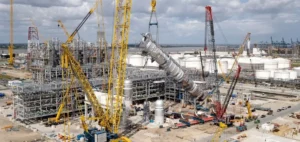
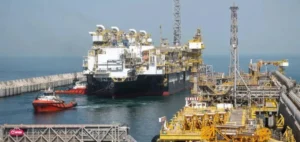
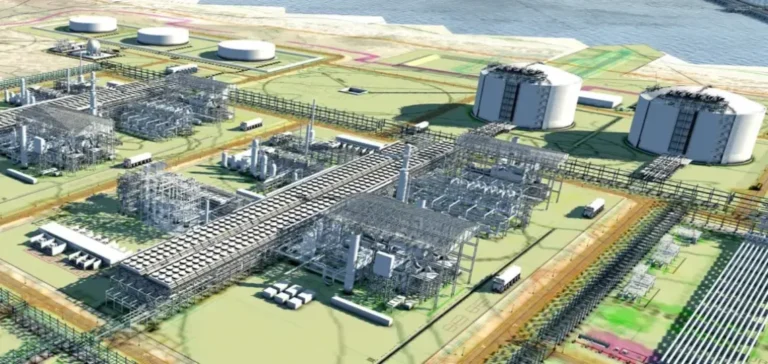
Cabo Delgado is home to large natural gas reserves, attracting significant international investment, including the $20bn liquefied natural gas project led by TotalEnergies. Since the 2021 attack, operations have been halted, and the renewed violence could further delay their resumption. A security expert working for an international NGO stated that there is likely a connection between the announcement of the project’s relaunch and the recent attack, highlighting ongoing risks in the area.

Humanitarian consequences and pressure on economic actors

According to data from the United Nations High Commissioner for Refugees (UNHCR), over 110,000 people have been displaced in Mozambique in 2025, including 22,000 in a single week in late September. Although vital to the national economy, gas infrastructure remains vulnerable amid a context where the Mozambican army and its regional allies, notably Rwanda, struggle to contain the insurgency. Security developments in the area remain a critical factor for future decisions by companies operating in Mozambique’s energy sector.

Turkmenistan is leveraging the Global Gas Centre to build commercial links in Europe and South Asia, as it responds to its current dependence on China and a shifting post-Russian gas market.
Budapest contests the European agreement to ban Russian natural gas imports by 2027, claiming the measure is incompatible with its economic interests and the European Union's founding treaties.
The European Union has enshrined in law a complete ban on Russian gas by 2027, forcing utilities, operators, traders and states to restructure contracts, physical flows and supply strategies under strict regulatory pressure.
The partial exploitation of associated gas from the Badila field by Perenco supplies electricity to Moundou, highlighting the logistical and financial challenges of gas development in Chad.
A new regulation requires gas companies to declare the origin, volume and duration of their contracts, as the EU prepares to end Russian imports.
Saudi Aramco has launched production at the unconventional Jafurah gas field, initiating an investment plan exceeding $100bn to substitute domestic crude and increase exportable flows under OPEC+ constraints.
By mobilising long-term contracts with BP and new infrastructure, PLN is driving Indonesia’s shift toward prioritising domestic LNG use, at the centre of a state-backed investment programme supported by international lenders.
TotalEnergies, TES and three Japanese companies will develop an industrial-scale e-gas facility in the United States, targeting 250 MW capacity and 75,000 tonnes of annual output by 2030.
Argentinian consortium Southern Energy will supply up to two million tonnes of LNG per year to Germany’s Sefe, marking the first South American alliance for the European importer.
The UK government has ended its financial support for TotalEnergies' liquefied natural gas project in Mozambique, citing increased risks and a lack of national interest in continuing its involvement.
Faced with a climate- and geopolitically-constrained winter, Beijing announces expected record demand for electricity and gas, placing coal, LNG and UHV grids at the centre of a national energy stress test.
The Iraqi government and Kurdish authorities have launched an investigation into the drone attack targeting the Khor Mor gas field, which halted production and caused widespread electricity outages.
PetroChina internalises three major gas storage sites through two joint ventures with PipeChina, representing 11 Gm³ of capacity, in a CNY40.02bn ($5.43bn) deal consolidating control over its domestic gas network.
The European Union is facilitating the use of force majeure to exit Russian gas contracts by 2028, a risky strategy for companies still bound by strict legal clauses.
Amid an expected LNG surplus from 2026, investors are reallocating positions toward the EU carbon market, betting on tighter supply and a bullish price trajectory.
Axiom Oil and Gas is suing Tidewater Midstream for $110mn over a gas handling dispute tied to a property for sale in the Brazeau region, with bids due this week.
Tokyo Gas has signed a 20-year agreement with US-based Venture Global to purchase one million tonnes per year of liquefied natural gas starting in 2030, reinforcing energy flows between Japan and the United States.
Venture Global accuses Shell of deliberately harming its operations over three years amid a conflict over spot market liquefied natural gas sales outside long-term contracts.
TotalEnergies ends operations of its Le Havre floating LNG terminal, installed after the 2022 energy crisis, due to its complete inactivity since August 2024.
Golar LNG has completed a $1.2bn refinancing for its floating LNG unit Gimi, securing extended financing terms and releasing net liquidity to strengthen its position in the liquefied natural gas market.

All the latest energy news, all the time

Annual subscription

8.25$/month*

*billed annually at 99$/year for the first year then 149,00$/year ​

Unlimited access - Archives included - Pro invoice

Monthly subscription

Unlimited access • Archives included

5.2$/month*
then 14.90$ per month thereafter

*Prices shown are exclusive of VAT, which may vary according to your location or professional status.

Since 2021: 30,000 articles - +150 analyses/week.