Kyoto Group commissions world’s largest industrial thermal storage unit in Hungary

Norwegian-based Kyoto has launched a 56 MWh thermal storage system at KALL Ingredients in Hungary, designed to replace natural gas with renewable-based industrial heat.

Share:

Comprehensive energy news coverage, updated nonstop

Annual subscription

8.25$/month*

*billed annually at 99$/year for the first year then 149,00$/year ​

Unlimited access • Archives included • Professional invoice

OTHER ACCESS OPTIONS

Monthly subscription

Unlimited access • Archives included

5.2$/month*
then 14.90$ per month thereafter

FREE ACCOUNT

3 articles offered per month

FREE

*Prices are excluding VAT, which may vary depending on your location or professional status

Since 2021: 35,000 articles • 150+ analyses per week

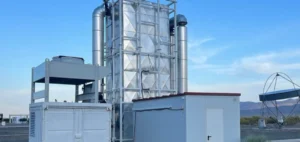
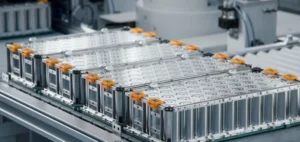
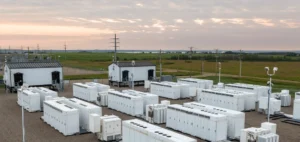
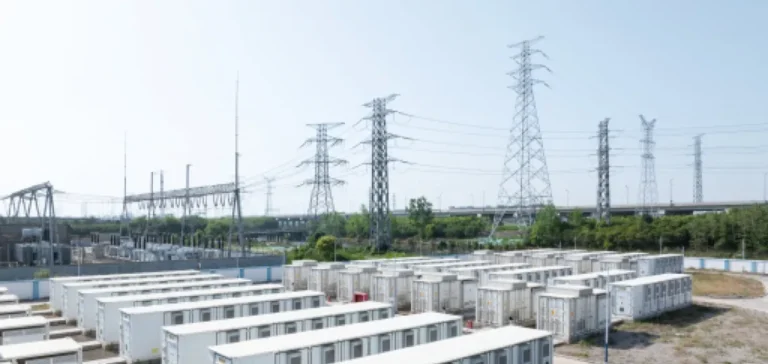
Kyoto Group has commissioned a 56 MWh thermal storage unit at KALL Ingredients’ corn processing facility in Tiszapüspöki, Hungary. This is the world’s largest industrial thermal energy storage system based on available data. The system, named Heatcube, will generate more than 30 GWh of process heat annually, replacing natural gas and cutting up to 8,000 tons of carbon dioxide emissions.

KALL Ingredients operates one of the newest corn processing plants in Europe, with a capacity of up to 530,000 tons of corn per year. The site produces starches, alcohol for pharmaceutical and food use, sweeteners, and feed ingredients. The Heatcube technology will now be used to supply steam for the plant’s industrial processes.

A fifteen-year operating model

The installation is based on a Heat-as-a-Service (HaaS) business model implemented via a single-purpose vehicle in Hungary. The project was funded by Kyotherm as majority investor, with Energiabörze as the energy trading partner and minority investor, and Kyoto Group as the technology provider. The agreement between the parties covers a 15-year term.

The Heatcube system operates using intermittent renewable energy to heat molten salt above 400°C, storing the thermal energy for later release as high-temperature steam. Each module offers a storage capacity ranging from 39 MWh to 104 MWh, with a maximum discharge power of 14 MW.

Participation in flexibility markets

In addition to supplying industrial steam, the unit will participate in Hungary’s flexibility markets. It will leverage stored energy in response to grid conditions, particularly during renewable generation peaks. This flexibility aims to improve grid management and reduce energy costs for industrial users.

The Heatcube commissioning followed Thermal Energy Day, a conference organised by Kyoto Group in Budapest. The event gathered industry players such as McKinsey & Company, Aurora Energy Research, and BASF to discuss challenges and developments in industrial heat and energy storage.

California-based Korbel Winery is now equipped with an integrated energy storage and intelligent control system, installed by Energy Toolbase and BPi, to optimise usage and address local grid constraints.
The 200 MW Greenwater battery storage project enters execution phase following a $400mn bank financing, marking a strategic milestone in the Pacific Northwest’s energy infrastructure development.
Solar with batteries becomes a bankability lever in three key ASEAN markets, where the focus shifts from cost reduction to the monetisation of energy flexibility.
Energy group RWE launches construction of its largest UK storage system, with 700 MWh capacity, at its Pembroke power station in Wales.
The Australian government opens Tender 8 to secure 16 GWh of storage, for the first time including aggregated portfolios of 5 to 30 MW within the National Electricity Market.
With a strategic investment in a 200 MWh facility, European Energy strengthens its industrial position in Denmark and energises the Nordic battery storage market.
The Spanish renewable energy producer significantly increased its investments and revenue while achieving more than half of its asset rotation target for the 2025–2027 period.
Chinese manufacturer EVE Energy has signed a three-year memorandum of understanding with Sweden’s Vimab BESS AB to supply batteries and energy storage solutions in Northern Europe.
Huawei's full-lifecycle battery safety rating system has been officially validated by a national technical committee, marking a key milestone for large-scale energy storage deployment.
AMPYR Australia and InCommodities have signed a 15-year partnership for the Bulabul BESS project, marking the Danish trader’s first long-term commitment in the Australian energy storage market.
Tokyo Gas and Okaya & Co. will begin construction in December 2025 of a 25 MW/75 MWh battery energy storage system in Hokkaido, with commercial operations expected in 2028 or later.
US-based CETY has been awarded a $10mn contract to build a battery energy storage system in New York State, marking the first in a series of planned installations across the region.
French energy group Engie wins its second-largest global battery storage project with a capacity of 280 MW, awarded by a state-owned company in Gujarat, India.
Nostromo’s IceBrick system becomes the first behind-the-meter thermal storage device to participate in California’s wholesale energy market, in partnership with Olivine, marking a milestone for commercial buildings.
Pacific Green has received approval from the Victorian government for its second energy storage park in Australia, a 1GW project to be developed over 36 months in Portland’s industrial zone.
TagEnergy launches a 150 MW storage project at the Golden Plains wind farm site, strengthening its investment strategy in Australia's energy infrastructure.
CATL, Sun Village and Marubeni Power Retail have signed an agreement to develop 2.4GWh of grid-scale storage capacity in Japan, without a defined schedule, leveraging investment, construction and commercial management synergies.
Northland Power has acquired two energy storage projects in Poland from Greenvolt Power Group, consolidating a strategic partnership in a transitioning market.
The global battery energy storage systems market anticipates 28.8% annual growth through 2033, supported by industrial electrification, government incentives and grid modernisation efforts.
Group1 and Michigan Potash & Salt Company have signed an agreement to create a domestic potassium-based battery supply chain, relying on local mining and production free from critical metals.

All the latest energy news, all the time

Annual subscription

8.25$/month*

*billed annually at 99$/year for the first year then 149,00$/year ​

Unlimited access - Archives included - Pro invoice

Monthly subscription

Unlimited access • Archives included

5.2$/month*
then 14.90$ per month thereafter

*Prices shown are exclusive of VAT, which may vary according to your location or professional status.

Since 2021: 30,000 articles - +150 analyses/week.