Chinese refineries cut Iranian crude purchases by 46% in September

Import quotas exhaustion and falling demand push Chinese independent refineries to sharply reduce Iranian crude volumes, affecting supply levels and putting downward pressure on prices.

Share:

Comprehensive energy news coverage, updated nonstop

Annual subscription

8.25$/month*

*billed annually at 99$/year for the first year then 149,00$/year ​

Unlimited access • Archives included • Professional invoice

OTHER ACCESS OPTIONS

Monthly subscription

Unlimited access • Archives included

5.2$/month*
then 14.90$ per month thereafter

FREE ACCOUNT

3 articles offered per month

FREE

*Prices are excluding VAT, which may vary depending on your location or professional status

Since 2021: 35,000 articles • 150+ analyses per week

Chinese independent refineries, mainly located in the eastern province of Shandong, are significantly reducing their Iranian crude oil imports due to exhausted annual import quotas and weakened demand. According to industry sources based in Qingdao and Shandong, volumes are expected to drop to around 1 million barrels per day in September, down from 1.86 million in August.

Volume collapse and price pressure

Data from S&P Global Commodity Insights shows that only 2.47 million metric tonnes of Iranian crude, equivalent to about 600,000 barrels per day, were discharged for independent refiners in September. Over the first eight months of the year, these refineries had imported an average of 1.37 million barrels per day, a 19% increase compared to the same period in 2024. The sudden drop in September directly reflects the impact of quota limits.

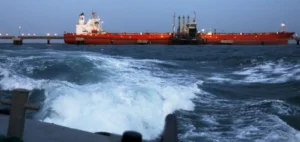
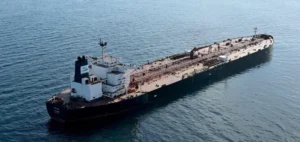
Iranian crude cargoes are often transferred ship-to-ship off Southeast Asia before arriving in China. They are then recorded as originating from Malaysia or Indonesia in official customs data, which does not report any imports directly from Iran.

Quota constraints and declining buyer interest

The declining appetite for Iranian crude has led to price weakening. Iranian Light crude was offered at a discount of $6 to $6.50 per barrel against ICE Brent futures, while Iranian Heavy was trading at a discount of $8 to $8.50 per barrel, according to refinery sources in Shandong. Few new contracts have been concluded, indicating a hesitant market.

“Supply remains sufficient, but only a few refiners still have quotas available. It’s easy to push prices down when there are few actual buyers,” said a Qingdao-based crude trader, speaking anonymously.

Impact on Venezuelan crude

The price pressure is not limited to Iranian oil. Venezuelan Merey crude, also popular among Chinese refiners, was offered at a discount of $7.50 to $8 per barrel, down from levels seen in late August. An independent refinery in Zibo indicated that some October-delivery volumes remain unsold, even as trading for November should have started.

The recent resumption of Venezuelan shipments to the United States, made possible by Chevron’s license reinstatement, could provide slight price support. However, persistently weak demand continues to weigh on the market.

No expectation of additional quotas

The main reason behind the drop remains the exhaustion of import quotas, according to several market sources. Many refineries had structured their annual operations around an eleven-month cycle, expecting additional quotas to cover December needs.

However, hopes for extra quotas are fading. The likely absence of new allocations is forcing several refiners to consider cutting throughput, turning to alternative supplies like fuel oil or domestic crude, or temporarily halting operations.

Oil prices climbed, driven by Ukrainian strikes on Russian infrastructure and the lack of diplomatic progress between Moscow and Washington over the Ukraine conflict.
ExxonMobil is shutting down its oldest ethylene steam cracker in Singapore, reducing local capacity to invest in its integrated Huizhou complex in China, amid regional overcapacity and rising operational costs.
Brazil, Guyana, Suriname and Argentina are expected to provide a growing share of non-OPEC+ oil supply, backed by massive offshore investments and continued exploration momentum.
The revocation of US licences limits European companies’ operations in Venezuela, triggering a collapse in crude oil imports and a reconfiguration of bilateral energy flows.
Bourbon has signed an agreement with ExxonMobil for the charter of next-generation Crewboats on Angola’s Block 15, strengthening a strategic cooperation that began over 15 years ago.
Reconnaissance Energy Africa completed drilling at the Kavango West 1X onshore well in Namibia, where 64 metres of net hydrocarbon pay were detected in the Otavi carbonate section.
CNOOC Limited has started production at the Weizhou 11-4 oilfield adjustment project and its satellite fields, targeting 16,900 barrels per day by 2026.
The Adura joint venture merges Shell and Equinor’s UK offshore assets, becoming the leading independent oil and gas producer in the mature North Sea basin.
A Delaware court approved the sale of PDV Holding shares to Elliott’s Amber Energy for $5.9bn, a deal still awaiting a U.S. Treasury licence through OFAC.
A new $100mn fund has been launched to support Nigerian oil and gas service companies, as part of a national target to reach 70% local content by 2027.
Western measures targeting Rosneft and Lukoil deeply reorganise oil trade, triggering a discreet yet massive shift of Russian export routes to Asia without causing global supply disruption.
The Nigerian Upstream Petroleum Regulatory Commission opens bidding for 50 exploration blocks across strategic zones to revitalise upstream investment.
La Nigerian Upstream Petroleum Regulatory Commission ouvre la compétition pour 50 blocs d’exploration, répartis sur plusieurs zones stratégiques, afin de relancer les investissements dans l’amont pétrolier.
Serbia's only refinery, operated by NIS, has suspended production due to a shortage of crude oil, a direct consequence of US sanctions imposed on its majority Russian shareholder.
Crude prices increased, driven by rising tensions between the United States and Venezuela and drone attacks targeting Russian oil infrastructure in the Black Sea.
Amid persistent financial losses, Tullow Oil restructures its governance and accelerates efforts to reduce over $1.8 billion in debt while refocusing operations on Ghana.
The Iraqi government is inviting US oil companies to bid for control of the giant West Qurna 2 field, previously operated by Russian group Lukoil, now under US sanctions.
Two tankers under the Gambian flag were attacked in the Black Sea near Turkish shores, prompting a firm response from President Recep Tayyip Erdogan on growing risks to regional energy transport.
The British producer continues to downsize its North Sea operations, citing an uncompetitive tax regime and a strategic shift towards jurisdictions offering greater regulatory stability.
Dangote Refinery says it can fully meet Nigeria’s petrol demand from December, while requesting regulatory, fiscal and logistical support to ensure delivery.

All the latest energy news, all the time

Annual subscription

8.25$/month*

*billed annually at 99$/year for the first year then 149,00$/year ​

Unlimited access - Archives included - Pro invoice

Monthly subscription

Unlimited access • Archives included

5.2$/month*
then 14.90$ per month thereafter

*Prices shown are exclusive of VAT, which may vary according to your location or professional status.

Since 2021: 30,000 articles - +150 analyses/week.