EDF lowers expected output of Flamanville EPR to 1,585 MW

EDF anticipates a 35 MW decrease in output for the Flamanville EPR between 2026 and 2031, citing a degraded performance level with no official technical explanation to date.

Share:

Comprehensive energy news coverage, updated nonstop

Annual subscription

8.25€/month*

*billed annually at 99€/year for the first year then 149,00€/year ​

Unlimited access • Archives included • Professional invoice

OTHER ACCESS OPTIONS

Monthly subscription

Unlimited access • Archives included

5.2€/month*
then 14.90€ per month thereafter

FREE ACCOUNT

3 articles offered per month

FREE

*Prices are excluding VAT, which may vary depending on your location or professional status

Since 2021: 35,000 articles • 150+ analyses per week

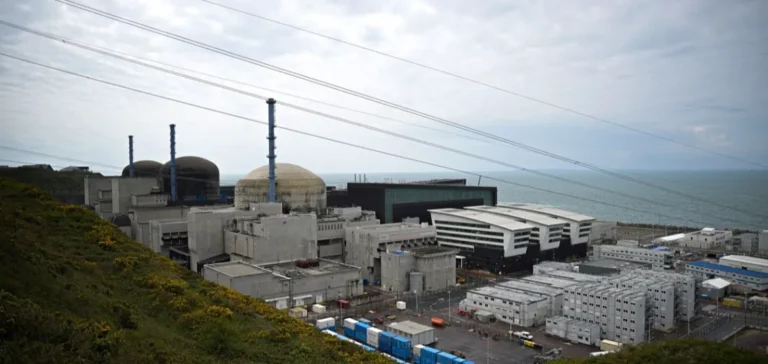
French utility Électricité de France (EDF) has revised downward the expected output of its Flamanville EPR, which is currently in the testing phase. The group informed the Commission de régulation de l’énergie (CRE), France’s energy regulatory authority, that for the period between 2026 and 2031, it expects a maximum power output of 1,585 megawatts (MW), instead of the previously announced 1,620 MW in official public data. This projection is based on an assumption of lower final efficiency than originally anticipated, although no technical details currently substantiate this adjustment.

A power deviation with financial implications

This adjustment, disclosed in a CRE report published on 30 September, was released without technical documentation confirming any structural limitation or voluntary output restriction. The CRE stated that EPR testing is still ongoing, and in the absence of validated information, it continues to base its analysis on the theoretical power output of 1,620 MW. This figure is notably used to calculate nuclear production costs for electricity pricing projections.

The 35 MW difference represents a decrease of approximately 2.2% compared to the initial announced capacity. According to estimates relayed in the press, this reduced output could represent an annual revenue shortfall of around EUR15mn ($15.79mn), if maintained over the plant’s expected 60-year operational lifespan. EDF has not confirmed these figures but stated that the exact power rating will only be known after the full power ramp-up phase is completed.

Ongoing testing of critical components

The Flamanville 3 reactor was connected to the grid in December 2024, following more than 12 years of delays linked to technical and industrial issues. EDF had initially aimed to reach 100% power output during summer 2025. This milestone was postponed to autumn due to further adjustments to the turbogenerator, a key component in converting steam energy into electricity.

Abnormal heating was detected on this equipment earlier in the year. EDF carried out adjustments to the turbine and indicated that their impact would be assessed during the power ramp-up phase. The unit is currently offline for additional valve work and is scheduled to restart on 17 October. The group also stated that the discrepancy between publicly disclosed figures and those used in internal simulations is not expected to have any significant impact.

The full-scope simulator for the Lianjiang nuclear project has successfully passed factory acceptance testing, paving the way for its installation at the construction site in China's Guangdong province.
A coalition of Danish industry groups, unions and investors launches a platform in support of modular nuclear power, aiming to develop firm low-carbon capacity to sustain industrial competitiveness.
The United Kingdom and TAE Technologies create a joint venture in Culham to produce neutral beams, a key component of fusion, with strategic backing from Google.
Texas-based developer Natura Resources receives new federal funding to test key components of its 100-megawatt modular reactor in partnership with Oak Ridge National Laboratory.
The Niigata regional assembly is deliberating on restarting unit 6 of the world’s largest nuclear plant, thirteen years after operations ceased following the Fukushima disaster.
Reactor Doel 2 was taken offline, becoming the fifth Belgian reactor to cease operations under the country’s gradual nuclear phase-out policy.
Rolls-Royce SMR has expanded its partnership with ÚJV Řež to accelerate the deployment of small modular reactors, targeting the construction of several units in the Czech Republic and abroad.
The Indian government aims to amend legislation to allow private companies to participate in civil nuclear development, a move positioned as critical to achieving the country’s long-term energy targets.
The VVER-1200 nuclear reactor at Xudabao 4 in China has completed installation of its final passive water tank, marking the end of modular construction for the second phase of the project.
Ottawa and Edmonton commit to a nuclear production roadmap by 2050, through a memorandum of understanding also covering carbon capture and an Indigenous-led pipeline project.
Niamey asserts control over its uranium resources by authorising open market sales of Somaïr’s production, formerly operated by France’s Orano, amid ongoing legal disputes.
Equinix has signed a strategic agreement with French start-up Stellaria to reserve 500 MWe of advanced nuclear capacity to power its future European AI data centres starting in 2035.
Bishkek plans to host a RITM-200N small modular reactor supplied by Rosatom to address electricity shortages and deepen energy ties with Moscow, despite the risks posed by Western sanctions.
The Niigata prefectural assembly will vote on the restart of Unit 6, potentially marking TEPCO’s first reactor relaunch since the 2011 Fukushima disaster.
The Norwegian government has initiated a consultation with neighbouring countries on its modular nuclear power plant project in Aure and Heim, in accordance with the Espoo Convention.
Türkiye and South Korea have signed a memorandum of understanding to jointly explore nuclear power plant projects, marking a strategic step in the long-term development of Türkiye's energy infrastructure.
Asian Development Bank has amended its energy policy to enable funding for civil nuclear projects in developing member countries across the Asia-Pacific region.
First Hydrogen begins research with the University of Alberta to identify molten-salt mixtures simulating nuclear fuels for SMR prototypes.
Framatome has completed the manufacturing of the first nuclear fuel assemblies for the Barakah power plant, marking a key milestone in the supply agreement signed with Emirates Nuclear Energy Company in July.
A government-commissioned report proposes 47 measures to simplify nuclear regulation, reduce decommissioning costs and accelerate delivery of civilian and military projects.

All the latest energy news, all the time

Annual subscription

8.25€/month*

*billed annually at 99€/year for the first year then 149,00€/year ​

Unlimited access - Archives included - Pro invoice

Monthly subscription

Unlimited access • Archives included

5.2€/month*
then 14.90€ per month thereafter

*Prices shown are exclusive of VAT, which may vary according to your location or professional status.

Since 2021: 30,000 articles - +150 analyses/week.