Argentina targets Brazil for gas exports despite Bolivian fees

Argentina aims to boost gas sales to Brazil by 2030, but high transit fees imposed by Bolivia require significant public investment to secure alternative routes.

Share:

Comprehensive energy news coverage, updated nonstop

Annual subscription

8.25€/month*

*billed annually at 99€/year for the first year then 149,00€/year ​

Unlimited access • Archives included • Professional invoice

OTHER ACCESS OPTIONS

Monthly subscription

Unlimited access • Archives included

5.2€/month*
then 14.90€ per month thereafter

FREE ACCOUNT

3 articles offered per month

FREE

*Prices are excluding VAT, which may vary depending on your location or professional status

Since 2021: 35,000 articles • 150+ analyses per week

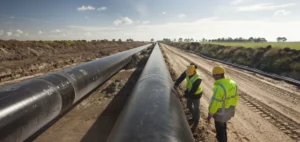
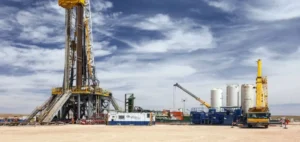
Argentina plans to triple its natural gas exports to Brazil, backed by rising production in the Vaca Muerta formation. This strategy comes amid a structural surplus that is pushing the government and operators to seek regional outlets. However, high transit costs through Bolivia threaten the project’s profitability and could require substantial public investment in new infrastructure.

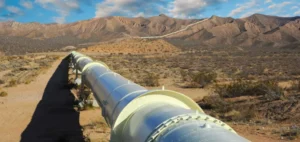
Bolivia currently charges between $1.40 and $1.90 per million British thermal units (MMBtu) to transport Argentine gas over 1,200 kilometres to Brazil, compared with $0.50/MMBtu over a similar distance in Argentina. According to Daniel Ridelener, chief executive officer of Transportadora de Gas del Norte, this disparity undermines the competitiveness of Argentine deliveries. He believes that starting with an initial export volume of 8 million cubic metres per day (m³/d) would lay a solid foundation for further development of cross-border trade.

Excess production to be channelled

Gas production at Vaca Muerta currently reaches 100 million m³/d, with a target of 250 million m³/d by 2030. Domestic demand in Argentina, estimated at 140 million m³/d, is not sufficient to absorb the surplus. Brazil, the main target market, has expressed interest in importing up to 30 million m³/d of Argentine gas over the same period.

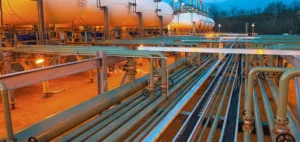
Although spot deliveries have taken place via Bolivia this year, no long-term export agreements have yet been finalised. To meet its goals, Argentina would need to invest approximately $1.6bn in developing its transport infrastructure, including internal capacity upgrades and regional interconnections.

Alternative scenarios to the Bolivian option

Transit through Bolivia offers the advantage of requiring no new construction, thanks to existing excess pipeline capacity. However, Bolivia’s ongoing decline in gas production — from 60.8 to 28.6 million m³/d between 2014 and 2024 — may strengthen Argentina’s position in future tariff negotiations. Bolivia’s presidential runoff election, scheduled for October 19, could also influence the upcoming talks.

Meanwhile, two alternative projects are under consideration. The first involves using an existing pipeline between Argentina and Uruguaiana, in southern Brazil, and building a 550-kilometre extension to Porto Alegre. From there, an existing line could be upgraded to deliver the gas to São Paulo. The second scenario considers building a new 1,000-kilometre pipeline through Paraguay, which seeks to expand its electricity generation and fertiliser production facilities.

Mobilising regional public investment

The profitability of these projects largely depends on the price gap between the two countries. In Brazil, industrial users pay between $15 and $20/MMBtu, compared with $5 to $6/MMBtu in Argentina. This pricing differential creates a viable margin to justify large-scale investment, including through public financing mechanisms.

According to Ridelener, these infrastructures will only materialise if coordination among governments secures financing and guarantees viable transit tariffs. The project could thus become a driver of regional cooperation in energy and logistics, within a framework shaped by public investment.

ENGIE activates key projects in Belgium, including an 875 MW gas-fired plant in Flémalle and a battery storage system in Vilvoorde, to strengthen electricity supply security and grid flexibility.
Hungary has signed a contract with US company Chevron to import 400mn m³ of LNG per year, while maintaining a structural dependence on Russian gas through a long-term agreement with Gazprom.
Chevron Australia awards Subsea7 a major contract for subsea installation on the Gorgon Stage 3 project, with offshore operations scheduled for 2028 at 1,350 metres depth.
Ovintiv has entered into an agreement with Pembina Pipeline Corporation to secure 0.5 million tonnes per annum of LNG liquefaction capacity over 12 years, strengthening its export outlook to Asian markets.
TotalEnergies has completed the sale of a minority stake in a Malaysian offshore gas block to PTTEP, while retaining its operator role and a majority share.
The European Union will apply its methane emissions rules more flexibly to secure liquefied natural gas supplies from 2027.
Venezuela has ended all energy cooperation with Trinidad and Tobago after the seizure of an oil tanker carrying crude by the United States, accusing the archipelago of participating in the military operation in the Caribbean.
National Fuel has secured $350mn in a private placement of common stock with accredited investors to support the acquisition of CenterPoint’s regulated gas business in Ohio.
GTT appoints François Michel as CEO starting January 5, separating governance roles after strong revenue and profit growth in 2024.
The United States is requesting a derogation from EU methane rules, citing the Union’s energy security needs and the technical limits of its liquefied natural gas export model.
Falcon Oil & Gas and its partner Tamboran have completed stimulation of the SS2-1H horizontal well in the Beetaloo Sub-basin, a key step ahead of initial production tests expected in early 2026.
Gasunie Netherlands and Gasunie Germany have selected six industrial suppliers under a European tender to supply pipelines for future natural gas, hydrogen and CO₂ networks.
The ban on Russian liquefied natural gas requires a legal re-evaluation of LNG contracts, where force majeure, change-in-law and logistical restrictions are now major sources of disputes and contractual repricing.
The US House adopts a reform that weakens state veto power over gas pipeline projects by strengthening the federal role of FERC and accelerating environmental permitting.
Morocco plans to commission its first liquefied natural gas terminal in Nador by 2027, built around a floating unit designed to strengthen national import capacity.
An explosion on December 10 on the Escravos–Lagos pipeline forced NNPC to suspend operations, disrupting a crucial network supplying gas to power stations in southwestern Nigeria.
At an international forum, Turkmenistan hosted several regional leaders to discuss commercial cooperation, with a strong focus on gas and alternative export corridors.
The Australian government has launched the opening of five offshore gas exploration blocks in the Otway Basin, highlighting a clear priority for southeast supply security amid risks of shortages by 2028, despite an ambitious official climate policy.
BlackRock sold 7.1% of Spanish company Naturgy for €1.7bn ($1.99bn) through an accelerated bookbuild managed by JPMorgan, reducing its stake to 11.42%.
The British company begins the initial production phase of Morocco's Tendrara gas field, activating a ten-year contract with Afriquia Gaz amid phased technical investments.

All the latest energy news, all the time

Annual subscription

8.25€/month*

*billed annually at 99€/year for the first year then 149,00€/year ​

Unlimited access - Archives included - Pro invoice

Monthly subscription

Unlimited access • Archives included

5.2€/month*
then 14.90€ per month thereafter

*Prices shown are exclusive of VAT, which may vary according to your location or professional status.

Since 2021: 30,000 articles - +150 analyses/week.