KOGAS signs 3.3 mtpa of US LNG for ten years starting in 2028

Korea Gas Corporation commits to 3.3 mtpa of US LNG from 2028 for ten years, complementing new contracts to cover expired volumes and diversify supply sources and price indexation.

Share:

Comprehensive energy news coverage, updated nonstop

Annual subscription

8.25$/month*

*billed annually at 99$/year for the first year then 149,00$/year ​

Unlimited access • Archives included • Professional invoice

OTHER ACCESS OPTIONS

Monthly subscription

Unlimited access • Archives included

5.2$/month*
then 14.90$ per month thereafter

FREE ACCOUNT

3 articles offered per month

FREE

*Prices are excluding VAT, which may vary depending on your location or professional status

Since 2021: 35,000 articles • 150+ analyses per week

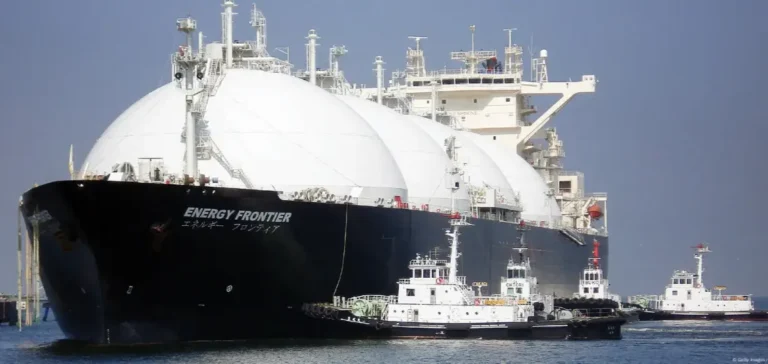
Korea Gas Corporation (KOGAS) has formalized an agreement for 3.3 million tons per year of liquefied natural gas (LNG) from the United States, with contractual deliveries starting in 2028 for a ten-year period. The cargoes will be supported by existing North American offtakes and based on Delivered Ex Ship (DES) terms. The pricing index will include Henry Hub (HH), the US gas benchmark, reinforcing direct exposure to the North American gas market.

A response to expiring contracts

This new agreement comes as several long-term contracts of KOGAS reach their end. The 4.1 mtpa contract with Oman LNG expired at the end of 2024, and another 4.92 mtpa contract with QatarEnergy also concluded in 2024. Additional volumes of about 3.3 mtpa will expire in 2025 and 2026. These expirations represent more than 12 mtpa to be replaced.

To mitigate this impact, KOGAS has signed a separate contract with BP Singapore for up to 9.8 million tons over eleven years, with operations expected to start in 2026. Another contract with Woodside covers 0.5 mtpa over ten years starting in 2026. In addition, an agreement with QatarEnergy signed in 2025 secures 2.0 mtpa over twenty years.

Alignment with new US liquefaction capacity

The 2028 start date coincides with the ramp-up of new US liquefaction projects. Corpus Christi Stage 3 and Port Arthur LNG together are expected to add more than 20 million tons of export capacity by the end of the decade. Integrating KOGAS volumes into this window reduces logistical risk and strengthens execution capacity.

KOGAS already holds a long-term FOB (Free On Board) contract with a US exporter for 3.5 mtpa signed in 2012 and running until 2037. This provides commercial flexibility, while the new DES agreement ensures direct delivery into South Korea. The combination of FOB and DES strengthens portfolio resilience against market fluctuations.

Price structures and logistics

The introduction of Henry Hub in the pricing structure reduces KOGAS’s reliance on oil-linked formulas such as Brent. According to US gas price projections, HH plus a fixed premium is positioned close to Brent-indexed contracts at 11.3–11.5%. This diversification smooths exposure to global cycles and secures competitive volumes.

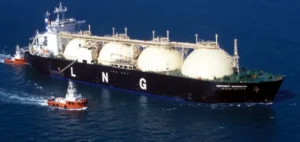
On the logistics side, 3.3 mtpa represents roughly 45 cargoes per year in standard 170,000 m³ LNG carriers. These flows complement those already secured from BP and Woodside, forming a bridge for the 2026–2028 period. This balanced contracting approach ensures continuity before the new US volumes begin while maintaining stability in South Korea’s LNG imports.

Canadian company NG Energy finalises the sale of 40% of its stake in the Sinú-9 block to Maurel & Prom for $150mn, consolidating a joint venture on one of Colombia's largest gas fields.
Falcon Oil & Gas has secured shareholder approval to sell its majority stake in its Australian subsidiary to Tamboran group, clearing a key hurdle in a broader divestment transaction.
Quantum Capital Group sells nearly 90% of Cogentrix assets to Vistra for $4.7bn, marking a strategic repositioning of gas-fired assets in the United States.
Vital Energy has completed a strategic land acquisition in western Alberta, increasing its regional exposure to nine sections and supporting its development outlook in the Charlie Lake reservoir.
Eni and Repsol are facing difficulties recovering payments for gas deliveries to Venezuela, with an outstanding balance of $6bn and no clear engagement from U.S. authorities on the matter.
Chevron has launched production at the South N’dola field in Block 0 offshore Angola, leveraging existing infrastructure to support its investment strategy in offshore hydrocarbons.
The UK's $1.15bn funding withdrawal exposes the Mozambique LNG project to international political reversals, highlighting structural risks for large African energy projects reliant on foreign backers.
Osaka Gas has launched operations at the first unit of its new gas-fired power plant in Himeji, marking a key step in expanding its national electricity production capacity.
In response to rising domestic demand, Sonatrach adopts a five-year plan focused on increasing production, securing infrastructure, and maintaining export commitments.
Pipeline natural gas deliveries from Russia to the European Union dropped by 44% in 2025, reaching their lowest level in five decades following the end of transit via Ukraine.
AltaGas has finalised a labour agreement with union ILWU Local 523B, ending a 28-day strike at its Ridley Island propane terminal, a key hub for Canadian exports to Asia.
Amber Grid has signed an agreement to maintain gas transit to Russia’s Kaliningrad exclave, with a daily capacity cap of 10.5 mn m³ until the end of 2030, under a framework regulated by the European Union.
Lebanon engages in a memorandum of understanding with Egypt to import natural gas and support its electricity production, with infrastructure rehabilitation and active funding searches required to secure delivery.
Australian producer Woodside has signed a binding agreement with Turkish state-owned company BOTAŞ for the delivery of 5.8 billion cubic metres of LNG starting in 2030.
Condor Energies has completed a $13.65mn private financing to deploy a second drilling rig and intensify a 12-well gas programme in Uzbekistan scheduled for 2026.
After a hiatus of more than four years, Myanmar has resumed liquefied natural gas deliveries, receiving a half-cargo in November to supply two state-funded power generation projects.
The Australian government will require up to 25% of gas extracted on the east coast to be reserved for the domestic market from 2027, in response to supply tensions and soaring prices.
Baker Hughes will deliver six gas refrigeration trains for Commonwealth LNG’s 9.5 mtpa export project in Louisiana, under a contract with Technip Energies.
Shanghai Electric begins a combined-cycle expansion project across four Iraqi provinces, aiming to boost energy efficiency by 50% without additional fuel consumption.
Zefiro Methane, through its subsidiary Plants & Goodwin, completes an energy conversion project in Pennsylvania and plans a new well decommissioning operation in Louisiana, expanding its presence to eight US states.

All the latest energy news, all the time

Annual subscription

8.25$/month*

*billed annually at 99$/year for the first year then 149,00$/year ​

Unlimited access - Archives included - Pro invoice

Monthly subscription

Unlimited access • Archives included

5.2$/month*
then 14.90$ per month thereafter

*Prices shown are exclusive of VAT, which may vary according to your location or professional status.

Since 2021: 30,000 articles - +150 analyses/week.