

Hungary Seeks U.S. Support After New Disruptions on the Druzhba Pipeline

Amid repeated disruptions on the Druzhba pipeline, attributed to Ukrainian strikes, Hungary has requested U.S. support to secure its oil supply.

Share:

Comprehensive energy news coverage, updated nonstop

Annual subscription

8.25$/month*

*billed annually at 99$/year for the first year then 149,00$/year ​

Unlimited access • Archives included • Professional invoice

OTHER ACCESS OPTIONS

Monthly subscription

Unlimited access • Archives included

5.2$/month*
then 14.90$ per month thereafter

FREE ACCOUNT

3 articles offered per month

FREE

*Prices are excluding VAT, which may vary depending on your location or professional status

Since 2021: 35,000 articles • 150+ analyses per week

The Hungarian government has formally requested assistance from the United States following renewed interruptions to its oil supply. According to Prime Minister Viktor Orban, these disruptions were caused by strikes targeting Russian energy infrastructure. The head of government stated that the U.S. president expressed support, although the exact nature of this assistance was not disclosed.

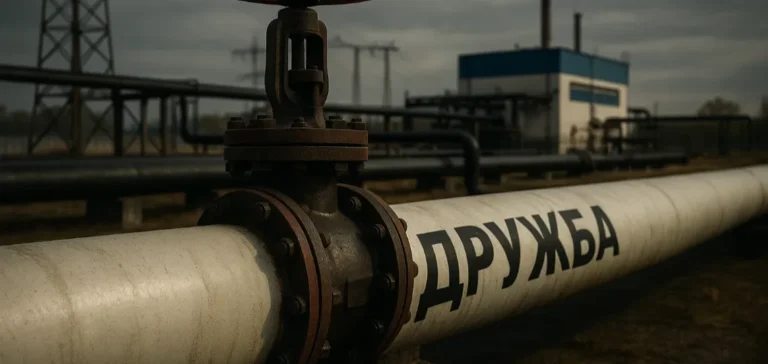
Hungary relies primarily on the Druzhba pipeline (meaning “friendship” in Russian), a network commissioned in the 1960s that connects Russia to Central Europe. While the European Union banned most Russian oil imports in 2022, this pipeline received a temporary exemption to allow landlocked countries such as Hungary and Slovakia time to secure alternatives.

Repeated Disruptions and Regional Tensions

In recent days, Hungary’s supply via Druzhba has been interrupted three times. The Unechsky district in Russia’s Bryansk region was hit by a Ukrainian strike, according to regional governor Aleksandr Bogomaz. Although the pipeline was not specifically mentioned, a major pumping station is located in that district.

In response, Hungary and Slovakia sent a joint letter to the European Commission. They called for action against what they described as repeated attacks on energy infrastructure. Hungarian Foreign Minister Peter Szijjarto labeled these incidents as a direct threat to energy security and criticized Brussels for its lack of response.

Divergent International Reactions

Responding to Hungary’s accusations, Ukrainian Deputy Foreign Minister Andriï Sybiha argued that responsibility for the disruptions lay with Moscow, stressing that Russia initiated the conflict. He urged Hungary to address its supply concerns to its Russian partners.

Hungarian oil company MOL stated that supply security remained ensured despite recent events. No major disruptions have been reported on Hungary’s domestic market so far.

Pressure on European Sanctions Policy

Hungarian and Slovak leaders have repeatedly questioned the effectiveness of European sanctions against Russia, arguing that such measures jeopardize their own energy security. Although a minority view within the European Union, this stance underscores ongoing concerns about regional dependence on Russian imports.

The Trump administration announces its intention to dictate Venezuela's decisions and control the marketing of its oil. Between 30 and 50 million barrels would be ceded to the United States, according to the American president.
The American group launches a private bond offering of $405 million. The 9.75% notes due 2031 will enable the repurchase of two previous issues with higher rates.
Petrobras suspended operations at an offshore well in the Equatorial Margin after a fluid leak occurred 175 kilometres from the coast, with no reported impact on safety or the environment.
Arrested in January 2025 without official explanation, former Nigerien oil minister Mahaman Moustapha Barké was released after nearly a year in detention, as tensions with Benin over oil exports remain high.
Reconnaissance Energy Africa secures C$20mn ($15.1mn) to advance production testing at Kavango West 1X in Namibia and exploration work on the Ngulu block in Gabon.
Chevron and Quantum Energy Partners have submitted a joint bid to acquire Lukoil’s international assets, valued at $22bn, strengthening US control over key energy infrastructure.
The suspension of Venezuelan exports to Asia is pushing Chinese independent refiners to prioritise Iranian heavy crude, currently sold at a significant discount to Brent.
The abrupt ousting of power in Venezuela is shifting political dynamics but leaves the oil industry facing legal, technical and commercial hurdles despite the prospect of US sanctions relief.
The United States has decided to import and resell 50 million barrels of embargoed Venezuelan oil, triggering a price drop and a strong diplomatic reaction from China, Caracas' main energy partner.
Shell has reached a deal with Chevron to acquire a 35% stake in two ultra-deepwater offshore oil blocks off the coast of Angola, marking a new strategic investment in the Sub-Saharan African country.
Chevron remains the only operator shipping oil from Venezuela, while cargoes bound for China have been halted for a fifth consecutive day, increasing pressure on local storage capacity.
Donald Trump says US oil companies could restart production in Venezuela within two years following the removal of Nicolás Maduro, despite the scale of investment required.
Nexera Energy has acquired producing oil properties in South Texas as part of a financial settlement with Hagco Energy and Hugocellr involving more than $600,000 in unpaid fees.
The group of major oil producers extends its stability strategy despite a drop in prices of more than 18% in 2025 and projected supply surplus for the coming year.
Amid Venezuela’s political transition, the African Energy Chamber urges international players to prioritise stability to secure oil investment and restore national production.
The Libya Energy & Economic Summit 2026 will host five leaders from the legal and advisory sectors to support the opening of the national oil market and strengthen regional cooperation.
Norwegian group Borr Drilling has announced two contractual commitments for its Ran and Odin rigs, extending its activities in the Americas through 2027.
Lane42 Investment Partners has completed the acquisition of Aqua Terra Permian, a wastewater infrastructure operator in the Permian Basin, aiming to expand its footprint in strategic midstream services.
Brent crude fell to its lowest level since 2021, as persistent oversupply throughout 2025 weighed on prices despite isolated geopolitical tensions and China’s strategic stockpiling.
India’s crude imports from Russia could hit an eighteen-month low as Reliance Industries anticipates no shipments in January due to logistical and commercial disruptions.

All the latest energy news, all the time

Annual subscription

8.25$/month*

*billed annually at 99$/year for the first year then 149,00$/year ​

Unlimited access - Archives included - Pro invoice

Monthly subscription

Unlimited access • Archives included

5.2$/month*
then 14.90$ per month thereafter

*Prices shown are exclusive of VAT, which may vary according to your location or professional status.

Since 2021: 30,000 articles - +150 analyses/week.