
Abu Dhabi National Oil Company Logistics & Services (ADNOC L&S) recorded exceptional financial performance in the second quarter of 2025, with revenues reaching $1.258 billion, a 40% year-on-year increase. Net profit rose 14% to $236 million, significantly exceeding analyst estimates of $198.5 million according to LSEG data. This performance comes amid heightened volatility in maritime freight markets, where tanker charter rates have experienced significant fluctuations. EBITDA (Earnings Before Interest, Taxes, Depreciation and Amortization) surged 31% to $400 million, maintaining a robust 30% margin.
The Navig8 Effect Transforms the Shipping Segment
The 80% acquisition of Navig8 for approximately one billion dollars, finalized in January 2025, constitutes the main driver of this spectacular growth. The shipping segment saw its revenues more than double, rising from $153 million to $415 million, despite what Nicholas Gleeson, Chief Financial Officer of ADNOC L&S, describes as “softer” charter rates in the second quarter. This acquisition brings not only a modern fleet of 32 tankers, but also Integr8 Fuels, one of the world’s largest bunker traders with an annual volume of 6.3 million metric tons. The company, which employs over 50 traders across 12 global offices, manages fuel supplies for 850 customers, thereby strengthening ADNOC L&S’s position in the global maritime value chain.
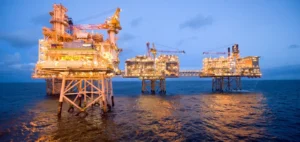
The integrated logistics segment maintained its growth trajectory with revenues of $628 million, supported by high utilization and attractive rates on Jack-up Barges. Engineering, procurement and construction projects, notably the Hail & Ghasha offshore development and the G-island artificial island construction, contributed significantly to this performance. The Hail & Ghasha project, representing a total investment of $16.94 billion, aims to produce 1.5 billion standard cubic feet per day of natural gas by 2030 with a net-zero carbon footprint. ADNOC L&S plays a central role in this mega-project by providing the necessary offshore logistics infrastructure, including specialized barges and support vessels.
Strategic Expansion of the Gas Fleet
The company continues its ambitious fleet expansion program with the expected delivery of its first Very Large Ethane Carrier (VLEC) and the third of its six liquefied natural gas (LNG) carriers in the third quarter of 2025. This expansion is part of a $1.9 billion investment for nine VLECs and four Very Large Ammonia Carriers (VLACs), positioning AW Shipping, ADNOC L&S’s joint venture with Wanhua Chemical Group, among the world’s largest ethane carrier fleets. Each VLEC has a capacity of 99,000 cubic meters and can operate on ethane or conventional fuels, while VLACs offer a capacity of 93,000 cubic meters for ammonia transport. These vessels are deployed on 20-year charter contracts, generating guaranteed revenues of $4 billion over 180 aggregated contract years.
The 15-year strategic agreement signed with Borouge in June 2025, with a minimum guaranteed value of $531 million, illustrates ADNOC L&S’s service diversification. The company will manage up to 70% of Borouge’s annual petrochemical production, deploying at least two dedicated feeder vessels to transport products from Al Ruwais to the deepwater ports of Jebel Ali in Dubai and Khalifa Port in Abu Dhabi. This collaboration takes on particular significance with the Borouge 4 expansion, which will add 1.4 million tons of annual capacity by 2026, making the complex the world’s largest polyolefin site.
Navigating a Complex Tanker Market
Tanker market prospects remain nuanced according to Gleeson, who anticipates improvement in the second half of 2025. Eight nations from the Organization of Petroleum Exporting Countries Plus (OPEC+) have begun reintroducing 2.2 million barrels per day of crude oil to the market since April 2025, after several postponements. This gradual supply increase, combined with the potential reduction of the “shadow fleet” carrying sanctioned oil, could support freight rates. The shadow fleet, estimated between 1,100 and 1,400 vessels according to various sources, continues to create market inefficiencies by extending voyage distances and mobilizing capacity that would otherwise be available for conventional trade.
Western sanctions have significantly reconfigured global oil trade flows. In July 2025, the European Union banned imports of refined products made from Russian crude oil, lowered its price cap to $47.60 per barrel from $60 previously, and blacklisted over 100 shadow fleet tankers. The United States sanctioned an additional 183 vessels in January 2025, bringing to approximately 35% the proportion of the dark fleet under Western sanctions. These measures paradoxically create opportunities for compliant operators like ADNOC L&S, whose vessels benefit from a compliance premium in a market where insurance and transparency become competitive advantages.
The company raised its guidance for fiscal year 2025, now anticipating net income growth in a “low to mid-double-digit” range versus an initial forecast of “low double-digit” growth. Revenues are expected to grow in the high 20% range for the year. With over $26 billion in future revenues already contracted and additional investment capacity of $3 billion by 2029, ADNOC L&S has the financial means to pursue its international expansion. The company maintains its medium-term net debt/EBITDA ratio target between 2.0 and 2.5 times, while preserving its progressive dividend policy with an expected payout of $287 million for 2025, up 5% from 2024.