Chinese manufacturers accelerate global expansion, Wood Mackenzie reports, to overcome trade barriers

The proliferation of Chinese industrial sites abroad, analysed by Wood Mackenzie, allows renewable energy players to expand their hold on the sector despite intensified global protectionist measures.

Share:

Comprehensive energy news coverage, updated nonstop

Annual subscription

8.25$/month*

*billed annually at 99$/year for the first year then 149,00$/year ​

Unlimited access • Archives included • Professional invoice

OTHER ACCESS OPTIONS

Monthly subscription

Unlimited access • Archives included

5.2$/month*
then 14.90$ per month thereafter

FREE ACCOUNT

3 articles offered per month

FREE

*Prices are excluding VAT, which may vary depending on your location or professional status

Since 2021: 35,000 articles • 150+ analyses per week

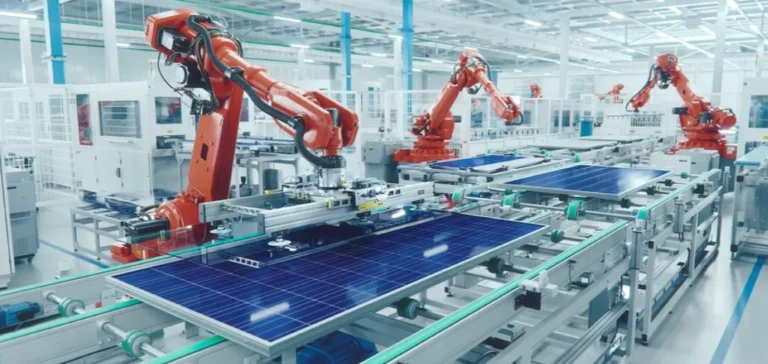
Chinese manufacturers specialising in wind, solar, and energy storage have significantly increased their international footprint in 2024, according to analysis by Wood Mackenzie. Thirty-five new factories have been inaugurated outside China this year, bringing the total number of overseas industrial sites to 114, mainly in the Middle East, Asia-Pacific and Europe. This strategy aims to bypass the rise in customs duties and trade restrictions imposed by numerous foreign markets.

Global expansion in response to protectionist measures

According to Wood Mackenzie data, exports of Chinese renewable sector products rose by 20% in 2024, despite more than 20 markets implementing regulatory barriers. Faced with customs tariffs as high as 696% on certain solar panels, Chinese manufacturers are shifting their strategy towards local production, in order to meet local content requirements while retaining access to key markets. Wind turbine export volumes increased by 72%, while solar modules and batteries saw growth of 11% and 28% respectively.

Industrial dominance and competitive gap

Wood Mackenzie notes that China controls more than 80% of global capacity for wind turbine, solar panel and energy storage battery production. This industrial leadership translates into substantial price differences: wind turbines manufactured by Chinese companies outside China are on average 28% cheaper than their Western equivalents, while the gap reaches 4% for solar modules and 31% for batteries. This aggressive pricing policy makes Chinese products attractive to global developers seeking competitive solutions.

Belt and Road Initiative and growing influence

Investment within the Belt and Road Initiative framework has intensified, with 369 international energy projects carried out between 2015 and 2024, representing 34% growth over ten years, according to the Wood Mackenzie report. Projections suggest that China could control nearly 80% of solar and wind capacity in the main markets targeted by this initiative by 2030. Investments are now focused on the Middle East, Asia-Pacific and the Caspian region, transforming these areas into industrial centres and distribution hubs for both local and global demand.

Deployment models and supply chain adaptation

The report identifies four economic models enabling Chinese groups to strengthen their presence: creation of subsidiaries, direct investments, partnerships with Western manufacturers or white-label production. This diversification helps to circumvent protectionist mechanisms while maintaining control over logistics chains. Countries with stable political environments in Asia, the Middle East and Latin America attract the majority of new facilities, while Europe is becoming less attractive due to regulatory complexity and high entry costs.

Increased competition and margin pressure

Despite higher export volumes, Wood Mackenzie notes a 13% drop in revenues from Chinese renewable equipment exports in 2024. Sales of solar modules fell by 29% and those of batteries by 5%, as a result of heightened competition and falling market prices. National policies such as the European Union’s Net Zero Industry Act or the United States’ Inflation Reduction Act are, according to the report, helping to accelerate the international deployment of Chinese manufacturers, who are adapting their supply chains to establish themselves in a competitive and fragmented environment.

The increasing sophistication of Chinese industrial strategies and the reorganisation of value chains reflect the sector’s rapid transformation, as global markets seek to respond to competitive pressure and local requirements.
Singapore’s Sembcorp Industries has entered the Australian energy market with the acquisition of Alinta Energy in a deal valued at AU$6.5bn ($4.3bn), including debt.
Potentia Energy has secured $553mn in financing to optimise its operational renewable assets and support the delivery of six new projects totalling over 600 MW of capacity across Australia.
Drax plans to convert its 1,000-acre site in Yorkshire into a data centre by 2027, repurposing former coal infrastructure and existing grid connections.
EDF has inaugurated a synchronous compensator in Guadeloupe to enhance the stability of an isolated power grid, an unprecedented initiative aiming to reduce dependence on thermal plants and the risk of prolonged outages.
NGE and the Agence Régionale Énergie Climat Occitanie form a partnership to develop a heating and cooling network designed to support economic activity in the Magna Porta zone, with locally integrated production solutions.
GEODIS and EDF have signed a strategic partnership to cut emissions from logistics and energy flows, with projects planned in France and abroad.
The American oil group now plans to invest $20 billion in low-emission technologies by 2030, down from the $30 billion initially announced one year earlier.
BHP sells a minority stake in its Western Australia Iron Ore power network to Global Infrastructure Partners for $2 billion, retaining strategic control while securing long-term funding for its mining expansion.
More than $80bn in overseas cleantech investments in one year reveal China’s strategy to export solar and battery overcapacity while bypassing Western trade barriers by establishing industrial operations across the Global South.
Exxaro increases its energy portfolio in South Africa with new wind and solar assets to secure power supply for operations and expand its role in independent generation.
Plenitude acquires full ownership of ACEA Energia for up to €587mn, adding 1.4 million customers to its portfolio and reaching its European commercial target ahead of schedule.
ABB invests in UK-based start-up OctaiPipe to strengthen its smart energy-saving solutions for data centre infrastructure.
Enbridge has announced a 3% increase in its annual dividend for 2026 and expects steady revenue growth, with up to CAD20.8bn ($15.2bn) in EBITDA and CAD10bn ($7.3bn) in capital investment.
Axess Group has signed a memorandum of understanding with ARO Drilling to deliver asset integrity management services across its fleet, integrating digital technologies to optimise operations.
South African state utility Eskom expects a second consecutive year of profit, supported by tariff increases, lower debt levels and improved operations.
Equans Process Solutions brings together its expertise to support highly technical industrial sectors with an integrated offer covering the entire project lifecycle in France and abroad.
Zenith Energy centres its strategy on a $572.65mn ICSID claim against Tunisia, an Italian solar portfolio and uranium permits, amid financial strain and reliance on capital markets.
Ivanhoe Mines expects a 67% increase in electricity consumption at its copper mine in DRC, supported by new hydroelectric, solar and imported supply sources.
Q ENERGY France and the Association of Rural Mayors of France have entered a strategic partnership to develop local electrification and support France's energy sovereignty through rural territories.
ACWA Power, Badeel and SAPCO have secured $8.2bn in financing to develop seven solar and wind power plants with a combined capacity of 15 GW in Saudi Arabia, under the national programme overseen by the Ministry of Energy.

All the latest energy news, all the time

Annual subscription

8.25$/month*

*billed annually at 99$/year for the first year then 149,00$/year ​

Unlimited access - Archives included - Pro invoice

Monthly subscription

Unlimited access • Archives included

5.2$/month*
then 14.90$ per month thereafter

*Prices shown are exclusive of VAT, which may vary according to your location or professional status.

Since 2021: 30,000 articles - +150 analyses/week.