Tanzania and Russia launch a $1.2bn uranium plant in Namtumbo

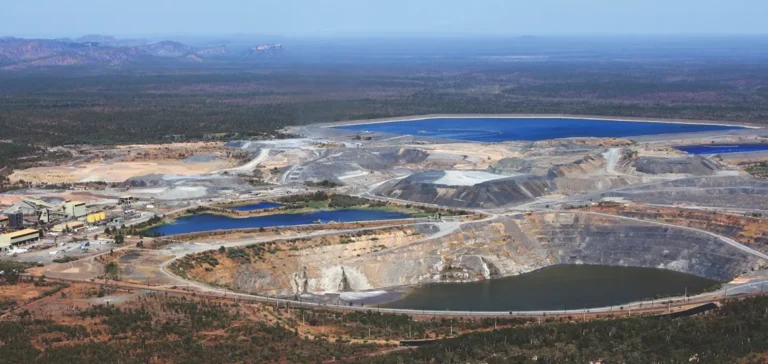
Tanzania, together with Russia, is starting construction of a uranium plant in Namtumbo for $1.2bn, aiming to boost mining revenues and secure a place in the global nuclear industry.

Share:

Comprehensive energy news coverage, updated nonstop

Annual subscription

8.25£/month*

*billed annually at 99£/year for the first year then 149,00£/year ​

Unlimited access • Archives included • Professional invoice

OTHER ACCESS OPTIONS

Monthly subscription

Unlimited access • Archives included

5.2£/month*
then 14.90£ per month thereafter

FREE ACCOUNT

3 articles offered per month

FREE

*Prices are excluding VAT, which may vary depending on your location or professional status

Since 2021: 35,000 articles • 150+ analyses per week

Tanzania has begun construction of a uranium processing plant in Namtumbo, the result of a partnership with Russian state-owned company Rosatom. This industrial project, totalling $1.2bn (USD), is intended to strengthen the country’s capabilities in strategic raw materials and increase export revenues. President Samia Suluhu Hassan officially inaugurated the site, in the presence of representatives of the mining industry and local authorities.

Industrial deployment and Tanzania’s ambitions
Operation and management of the plant have been assigned to Mantra Tanzania Limited, a subsidiary of Rosatom. The facility is designed to process around 300,000 tonnes of uranium over a period of twenty years, with large-scale industrial production scheduled to begin in 2026. According to the Ministry of Mines, Tanzania aims to become the third-largest uranium producer on the African continent, behind Niger and Namibia, and to join the world’s top ten producers. The Mkuju River deposit is estimated to contain 139mn tonnes of reserves, securing an estimated exploitation period of twenty-two years.

Economic impact and environmental regulation
The Tanzanian government expects significant revenue through taxes, royalties and the export of processed ore. The State relies on this project to create new jobs, develop local expertise and increase foreign currency inflows. The President reiterated the need to strictly comply with the regulatory framework, instructing Mantra Tanzania Limited to rigorously apply the Environmental Impact Assessment (EIA) and the authorities to strengthen supervision.

Environmental concerns in the Selous area
The project’s location, near the Selous Reserve and Nyerere National Park, has raised concerns among wildlife conservation organisations for more than a decade, particularly regarding elephant migration corridors connecting Tanzania and Mozambique. To address these issues, a 350 sq km area was removed from the reserve and allocated to mining activities. Mantra Tanzania Limited paid $800,000 to the Ministry of Natural Resources to finance anti-poaching efforts and support conservation programmes.

Tanzania continues its strategy of enhancing the value of its mining resources while highlighting the need for strict management of environmental impacts in protected areas.

Work has begun at the Bailong and Lufeng sites with concrete poured for the nuclear islands, marking the start of construction for two CAP1000 reactors.
French group Orano receives USD900mn in public support to establish a new uranium enrichment facility in Tennessee, as part of a broader US nuclear sector revival plan.
Japan’s nuclear restart effort stalls after Chubu Electric acknowledged a possibly flawed seismic risk estimate at its Hamaoka facility under regulatory review.
Russia has connected its first 1,250 MW VVER-TOI reactor at the Kursk II nuclear power plant to the grid, signalling a key step toward full commissioning by 2034.
Chubu Electric acknowledged a methodological discrepancy in the seismic evaluation of two nuclear reactors, a situation that could weigh on the restart of nuclear operations in Japan.
Denison Mines is set to commit CAD600mn ($437mn) to build Phoenix, the first large-scale uranium mine developed in Canada in over a decade, with production expected by mid-2028.
A memorandum of understanding between four companies opens the way for industrial development around compact nuclear reactors, integrating hydrogen production, synthetic fuels, and digital infrastructure.
The Idaho Advanced Energy Consortium secured approval for its five strategic projects, now competing for $75mn in funding under the US Tech Hub programme.
Duke Energy has filed a permit application to assess the feasibility of a nuclear reactor in Stokes County on an existing power generation site, without committing to immediate construction.
The South Korean nuclear regulator has approved the launch of the 1,400-megawatt Saeul 3 reactor, beginning with a six-month pilot phase before full commercial operation.
Ankara confirmed new Russian funding for the Akkuyu project, Turkey’s first nuclear site, strengthening its energy ties with Moscow and advancing its domestic nuclear ambitions.
Niger’s military regime disputes theft allegations by French prosecutors after uranium stock vanished from a nationalised site previously operated by Orano.
Rosatom successfully completed a series of tests on its high-temperature gas-cooled reactor fuel, validating its performance at up to 1,700 °C under prolonged irradiation conditions.
Videberg Kraft AB becomes the first company to request government support to build two new reactors at the Ringhals site, under the national nuclear investment framework adopted in 2025.
The European Commission opens an in-depth investigation into Prague's public funding of a major nuclear project, which could reach €30bn ($32.88bn), with guaranteed revenues over forty years.
Niigata's assembly officially backs the restart of the Kashiwazaki-Kariwa site, marking a key step in Japan’s return to nuclear energy following the 2011 Fukushima disaster.
The Japanese government plans to fund up to 30% of loans required for nuclear projects, aiming to accelerate reactor restarts and double the share of nuclear energy in its energy mix by 2040.
French nuclear reactor developer Newcleo has submitted its lead-cooled small modular reactor design to Euratom, initiating the first regulatory phase to integrate nuclear non-proliferation safeguards at the European level.
French state utility EDF has increased the maximum estimated cost for building six new nuclear reactors to €72.8 billion ($85.29 billion), representing a 40% rise over the original figure.
US-based Holtec has signed a memorandum of understanding with Hungary’s energy group MVM to assess the deployment of its SMR-300 technology, strengthening bilateral nuclear cooperation and opening prospects for a new market in Central Europe.

All the latest energy news, all the time

Annual subscription

8.25£/month*

*billed annually at 99£/year for the first year then 149,00£/year ​

Unlimited access - Archives included - Pro invoice

Monthly subscription

Unlimited access • Archives included

5.2£/month*
then 14.90£ per month thereafter

*Prices shown are exclusive of VAT, which may vary according to your location or professional status.

Since 2021: 30,000 articles - +150 analyses/week.