Equinor records $955mn impairment on Empire Wind project off New York

Equinor announces a significant impairment on its offshore wind project Empire Wind, due to regulatory changes and tariffs, affecting its quarterly results.

Share:

Comprehensive energy news coverage, updated nonstop

Annual subscription

8.25$/month*

*billed annually at 99$/year for the first year then 149,00$/year ​

Unlimited access • Archives included • Professional invoice

OTHER ACCESS OPTIONS

Monthly subscription

Unlimited access • Archives included

5.2$/month*
then 14.90$ per month thereafter

FREE ACCOUNT

3 articles offered per month

FREE

*Prices are excluding VAT, which may vary depending on your location or professional status

Since 2021: 35,000 articles • 150+ analyses per week

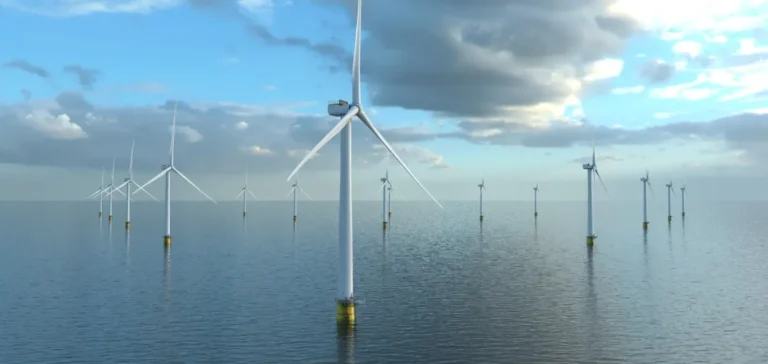
Norwegian energy group Equinor has recorded a $955mn impairment on its Empire Wind project off the coast of New York, due to regulatory changes in the United States and increased exposure to tariffs. This decision follows a temporary suspension of the project by U.S. authorities, a suspension that has since been lifted, allowing work on the site to resume.

Temporary suspension and government negotiations
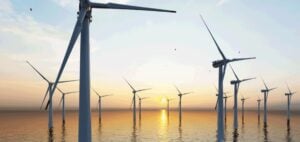
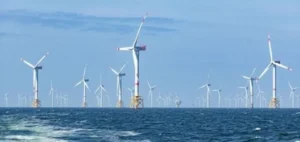
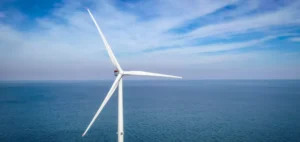
Empire Wind, comprising fifty-four turbines, had its first phase interrupted by the U.S. Department of the Interior, citing insufficient prior analysis. The project, estimated at $2.5bn, had the potential to power five hundred thousand homes in Brooklyn. Discussions took place between Norwegian and U.S. authorities to clarify the regulatory conditions and evaluate the financial stakes of the initiative.

After a reexamination, U.S. authorities authorized the resumption of work in May, making it possible to continue developing Empire Wind 1. Despite this restart, the impairment announced by Equinor reflects the lasting impact of regulatory and tariff uncertainties on the project’s profitability.

Financial impact and quarterly performance
Of the total impairment amount, $763mn pertains to the first phase of Empire Wind 1 and the South Brooklyn Marine terminal, with the remainder linked to the lease of Empire Wind 2, the project’s second phase. This accounting move had a direct impact on the group’s second-quarter results, with a 29% drop in net profit year-on-year, down to $1.3bn.

Equinor’s adjusted operating income stands at $6.5bn, compared to nearly $7.5bn during the same period last year. The decline in oil prices was not enough to offset the increase in natural gas prices and the rise in hydrocarbon production, which reached 2.1mn barrels of oil equivalent per day.

Challenges for the offshore wind sector
The evolution of U.S. regulations and the pressure from tariffs highlight the complexity of developing large-scale offshore wind projects. Managing financial risks and adapting business models are becoming key areas for international energy groups investing in this sector.

According to Equinor’s management, the resumption of the Empire Wind 1 project is part of a strategy to continue renewable energy activities despite the persistent challenges in the North American market.
Ocean Winds has deployed a LiDAR buoy off Gippsland to collect accurate data on wind and currents, a key step in its 1.3 GW offshore wind project in Australia.
TerraWind Renewables acquires five projects totalling 255MW in northern Japan, bringing its onshore wind development capacity to 327MW and targeting first commercial operation in 2028.
A consortium led by EDF power solutions has signed a 20-year agreement with Nama PWP to develop a 120 MW wind farm in southeastern Oman, with commissioning scheduled for Q3 2027.
Microsoft expands its partnership with Iberdrola through two new power purchase agreements in Spain, reinforcing its European energy strategy while deepening the use of cloud and artificial intelligence solutions from the US group.
Casa dos Ventos awards Vestas the supply, construction and maintenance of a 184-turbine complex in the state of Piauí, with an investment exceeding $1.01bn.
Warsaw tests long-term support for offshore wind with a structured tender to maximise competition, reduce financial risk and reassure a supply chain under pressure across Europe.
TotalEnergies has sold 50% of a portfolio of wind and solar projects in Greece to Asterion Industrial Partners, valued at €508mn ($554mn), while retaining operational control and the main share of electricity marketing.
Italy’s offshore wind rollout remains at a standstill, freezing over 18 GW of pending projects and weakening national renewable energy targets.
OX2 has started construction on three new onshore wind farms in Finland, bringing its total installed capacity in the country to 750 MW, a record level for a private energy sector player.
EDF power solutions announces commercial operation of the San Kraal wind farm, the first unit of the 420MW Koruson 1 project, with full commissioning expected in early 2026.
Q ENERGY has announced the entry of three local and citizen-based partners into the capital of the Ventajou wind farm, marking its first strategic equity opening to institutional and community investors.
The Norwegian government has allocated two areas of the Utsira Nord project to the Equinor–Vårgrønn and EDF–Deep Wind Offshore consortia, launching a preparatory phase before a competitive state aid auction.
German group RWE has replaced 27 old turbines with three new high-performance units at its Muel wind farm, doubling energy output and earning ZeroWaste certification.
Synera Renewable Energy Group has signed a long-term power purchase agreement with Taiwan Smart Electricity & Energy, securing a portion of generation from the Formosa 4 wind farm.
Italian group Agsm Aim has completed the acquisition of four wind farms in Apulia totalling 52.6 MW, marking a new step in its national growth strategy in the renewable energy production sector.
Twenty-five years after the opening of the first offshore wind farm at Blyth, offshore wind now provides nearly a fifth of the United Kingdom’s electricity and supports a domestic industry employing 40,000 people.
Edison plans to launch over 500 MW of new wind and solar construction sites in Italy in 2026, backed by a €600mn ($647mn) investment, as part of its strategic growth plan in renewable energy.
GE Vernova will equip the Gurbanesti wind farm with 42 onshore 6.1 MW turbines in a second deal with Greenvolt in Romania, consolidating a combined capacity of around 500 MW.
RWE has secured contracts for four renewable energy projects totalling 68 MW in Italy, with construction set to begin in 2026, reinforcing its expansion strategy in the market.
RWE and TotalEnergies will install 66 Reef cubes® around the foundations of 11 turbines at the OranjeWind wind farm, marking one of the largest applications of artificial reefs in the North Sea.

All the latest energy news, all the time

Annual subscription

8.25$/month*

*billed annually at 99$/year for the first year then 149,00$/year ​

Unlimited access - Archives included - Pro invoice

Monthly subscription

Unlimited access • Archives included

5.2$/month*
then 14.90$ per month thereafter

*Prices shown are exclusive of VAT, which may vary according to your location or professional status.

Since 2021: 30,000 articles - +150 analyses/week.