South Africa: Eskom Under Pressure from Residential Solar Growth

Facing chronic power outages, South African households are increasingly turning to solar self-generation, jeopardizing Eskom's pricing model and widening energy-access inequalities between affluent neighborhoods and disadvantaged areas.

Share:

Comprehensive energy news coverage, updated nonstop

Annual subscription

8.25$/month*

*billed annually at 99$/year for the first year then 149,00$/year ​

Unlimited access • Archives included • Professional invoice

OTHER ACCESS OPTIONS

Monthly subscription

Unlimited access • Archives included

5.2$/month*
then 14.90$ per month thereafter

FREE ACCOUNT

3 articles offered per month

FREE

*Prices are excluding VAT, which may vary depending on your location or professional status

Since 2021: 35,000 articles • 150+ analyses per week

The energy crisis that has been affecting South Africa for several years is driving an increasing number of residential consumers towards private solar systems. Initially a marginal trend, solar self-generation has grown significantly and now poses a direct threat to the financial stability of the country’s main electricity provider, Eskom. According to data from Eskom’s 2023-2024 annual report, electricity sales to the residential sector dropped by 3.2% in one year, contributing to an overall sales decline of 5.6%. The state-owned utility reported a record annual deficit of 55.3 billion rand (approximately $3 billion), significantly up from 26.2 billion rand the previous year.

Impact of Self-Generation on Eskom’s Business Model

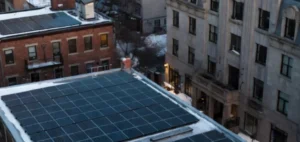
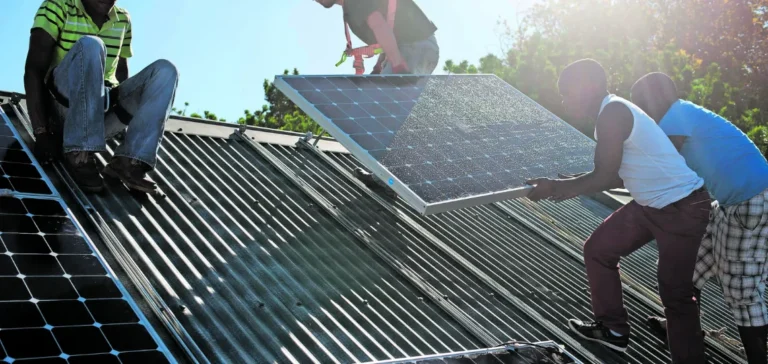
Between March 2022 and July 2024, the rooftop solar installation capacity in South Africa surged from 983 MW to approximately 5,790 MW, according to figures reported by energy expert Anton Eberhard from the University of Cape Town. This shift translates directly into lost revenue from historically solvent customer segments, as these are precisely the customers with the highest tariffs who are massively adopting self-generation solutions. Consequently, Eskom’s sales decline directly undermines its internal tariff equalization mechanism, where revenue generated from solvent users traditionally finances network costs in economically disadvantaged areas.

Moreover, the tariff increase approved by the National Energy Regulator of South Africa (NERSA), reaching 18.65% in April 2023, may paradoxically accelerate this trend towards self-generation. While intended primarily to offset Eskom’s operational losses, the price hike further motivates consumers to disconnect from the public grid, creating a potentially damaging cycle for the public company’s economic viability.

Satellite Monitoring of Solar Installations

To address this shift and protect its tariff base, Eskom has implemented an active regulatory strategy since early 2025, targeting unregistered solar installations. According to Central News, Eskom now uses satellite imagery combined with advanced data analytics to detect undeclared Small-Scale Embedded Generation (SSEG) systems. This surveillance enables Eskom to impose registration fees and potential fines of up to 50,000 rand on affected consumers. Many municipalities, notably in KwaZulu-Natal, are adopting similar methods to strengthen their control over illegal solar installations, as highlighted by the South African newspaper The Mercury.

However, the deterrent effect of these measures remains limited compared to the substantial savings households gain from solar installations. Additional costs imposed by Eskom, such as mandatory migration to the Homeflex tariff, nevertheless push some households to reconsider their energy strategies, slightly reducing the momentum observed since 2022, according to a recent analysis published by BusinessTech.

Marked Geographic and Economic Disparities

Residential investments in solar energy also reveal significant disparities among South African neighborhoods. A study by Oxford University published in April 2025 indicates that in Johannesburg, the affluent suburb of Rietrivier Estate averages thirteen solar panels per home, compared to just one in Benoni, and none in Thembisa, a low-income area. This marked disparity underscores the unequal investment capacity among South African households, deepening gaps in reliable and stable energy access.

Public programs supporting residential self-generation remain limited to a few major cities and wealthy municipalities. Stats SA (South Africa’s national statistics agency) reports that only 21 of the country’s 257 municipalities had implemented domestic solar installations by the end of 2022, benefiting around 150,000 households mainly located in the developed provinces of Gauteng and Western Cape. Thus, lower-income households remain predominantly dependent on Eskom and exposed to continuously rising tariffs.

The near-term outlook remains uncertain, with private electricity generation—including residential installations and independent producers—projected to surpass Eskom’s production by 2025, according to an analysis from investment bank Morgan Stanley.

T1 Energy will supply Treaty Oak with 900MW of solar modules over three years, leveraging domestically produced cells from Austin to meet increasing regulatory requirements.
Solarpro commissions Hungary’s largest photovoltaic plant using 700,000 advanced modules supplied by LONGi, with an expected annual output of 470 GWh.
UK-based manufacturer Awendio Solaris plans to build a 2.5 GW solar industrial platform, expandable to 5 GW, in Quebec, targeting North American markets with a 100% regional supply chain.
Technique Solaire has secured €40mn ($43.5mn) in junior debt from BNP Paribas Asset Management to structure two solar portfolios totalling 392 MWp across France, Spain and the Netherlands.
EDF Power Solutions UK has appointed METLEN to lead engineering and construction for the 400MW Longfield solar farm in Essex, with commissioning scheduled for 2030.
Independent power producer Neoen has secured six agrivoltaic projects totalling 124 MWp, reinforcing its position as the leading winner in French solar tenders since 2021.
As the photovoltaic industry enters a phase of deep restructuring, the duel between TOPCon 4.0 and heterojunction technologies is redefining manufacturers’ margins. In 2026, reducing production costs becomes the primary strategic lever for global market leaders.
JA Solar and Trinasolar top Wood Mackenzie’s latest semiannual ranking despite a sector-wide net loss of $2.2 billion. Industrial leaders are strengthening their grip on global photovoltaic module supply through rigorous financial discipline.
BayWa r.e. has finalised the sale of a 46 MW floating solar park, the country’s largest, to a Dutch public-local consortium, marking a new step in the decentralised structuring of the solar market in the Netherlands.
The ATUM Solar industrial complex, located in Ain Sokhna, will include three factories—two of 2 GW capacity—backed by a $220mn investment from an international consortium.
AMEA Power has completed the commercial commissioning of a 120 MWp solar project in Kairouan, marking a national first in Tunisia for a renewable energy installation of this scale.
The Gerus plant becomes the first solar installation in Namibia to sell electricity directly on the Southern African Power Pool regional market.
Japanese conglomerate Tokyu teams up with Global Infrastructure Management and Clean Energy Connect to build 800 low-voltage solar plants totalling 70MWDC, under an off-site power purchase agreement for its facilities.
Pivot Energy has secured $225mn in funding from three banking partners to support a portfolio of 60 community solar power plants across nine US states.
Voltalia has started building a 43-megawatt hybrid plant in Sainte-Anne, combining solar, battery storage and bioenergy to meet growing electricity demand in western French Guiana.
Masdar’s exit ends ReNew Energy's privatisation attempt, despite offer rising to $8.15 per share.
California surpassed 52.3% of electricity from renewables and large hydro in 2024, marking a major energy milestone while increasing pressure on storage, permitting and curtailed production.
European Energy France has secured two wins in tenders issued by the French Energy Regulatory Commission for its agrivoltaic parks in Saint-Voir, with a combined capacity of 14.3 MWp and commissioning expected by late 2027.
TotalEnergies will supply Google with 1TWh of renewable electricity from a 20MW solar plant in Malaysia under a 21-year power purchase agreement.
Enviromena secured approval for its Fillongley solar farm after a local council’s refusal was overturned, despite conflicts of interest tied to public funds used to oppose the project.

All the latest energy news, all the time

Annual subscription

8.25$/month*

*billed annually at 99$/year for the first year then 149,00$/year ​

Unlimited access - Archives included - Pro invoice

Monthly subscription

Unlimited access • Archives included

5.2$/month*
then 14.90$ per month thereafter

*Prices shown are exclusive of VAT, which may vary according to your location or professional status.

Since 2021: 30,000 articles - +150 analyses/week.