The United States imposes new sanctions on Iranian oil exported to China

The Trump administration has announced new sanctions targeting Iran's oil export network to China amid ongoing nuclear talks between Washington and Tehran.

Share:

Comprehensive energy news coverage, updated nonstop

Annual subscription

8.25$/month*

*billed annually at 99$/year for the first year then 149,00$/year ​

Unlimited access • Archives included • Professional invoice

OTHER ACCESS OPTIONS

Monthly subscription

Unlimited access • Archives included

5.2$/month*
then 14.90$ per month thereafter

FREE ACCOUNT

3 articles offered per month

FREE

*Prices are excluding VAT, which may vary depending on your location or professional status

Since 2021: 35,000 articles • 150+ analyses per week

The United States has imposed additional measures against Iran by sanctioning an international network facilitating the export of millions of barrels of crude oil to China. According to a statement from the Department of State, the action aims to cut off funding for Iran’s military and nuclear activities.

U.S. authorities stated that revenues from these oil exports support the development of ballistic missiles and drones in Iran, while also fuelling nuclear proliferation and terrorist operations. The network is accused of operating on behalf of the Iranian armed forces and its front company, Sepehr Energy.

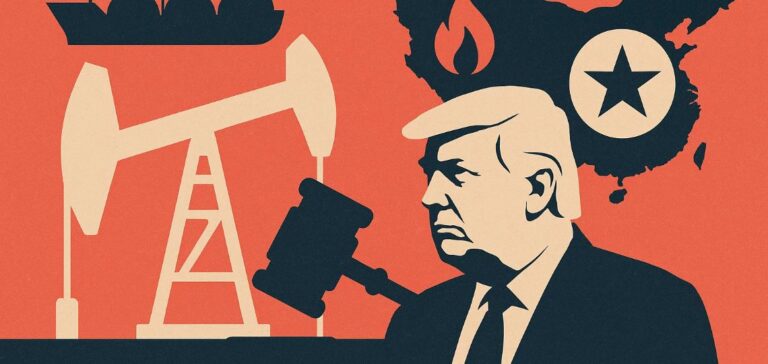
The sanctions are part of the “maximum pressure” policy reintroduced by the Trump administration since returning to office. The strategy is intended to restrict Iran’s access to financial resources deemed necessary for advancing its defence programmes and its involvement in destabilising activities on a global scale.

The fourth round of negotiations between the United States and Iran, focusing on the nuclear issue, concluded in Muscat (Oman) without a breakthrough. Despite the lack of progress, both sides expressed cautious optimism, noting that further discussions are planned to try to reach a new agreement.

Context of the current situation

Since the unilateral withdrawal of the United States from the Joint Comprehensive Plan of Action (JCPOA) in 2018, tensions between Washington and Tehran have remained high. The Trump administration is seeking a new deal that would prevent Iran from acquiring nuclear weapons, a goal Iran has consistently denied pursuing.

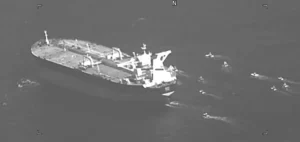
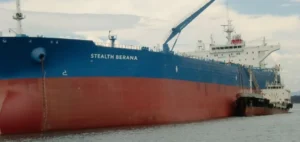
The sanctions also target companies and individuals involved in transporting Iranian oil, a vital sector for the Islamic Republic’s economy. The U.S. government continues to implement coercive measures to prevent Iran’s trading partners from breaching international restrictions.

Implications for the global oil market

The new sanctions could significantly impact crude oil trade between Iran and China. Despite sanctions, Iran remains a strategic supplier for some Asian markets. The effectiveness of U.S. sanctions could also affect trade relations between China and the United States, further straining geopolitical tensions in the region.

Iran’s crude oil exports have declined over the years, but China, its main trading partner, remains a key player in regional energy flows. The intensification of sanctions may prompt a shift in commercial strategies among oil producers in Asia and across global markets.
A new $100mn fund has been launched to support Nigerian oil and gas service companies, as part of a national target to reach 70% local content by 2027.
Western measures targeting Rosneft and Lukoil deeply reorganise oil trade, triggering a discreet yet massive shift of Russian export routes to Asia without causing global supply disruption.
The Nigerian Upstream Petroleum Regulatory Commission opens bidding for 50 exploration blocks across strategic zones to revitalise upstream investment.
La Nigerian Upstream Petroleum Regulatory Commission ouvre la compétition pour 50 blocs d’exploration, répartis sur plusieurs zones stratégiques, afin de relancer les investissements dans l’amont pétrolier.
Serbia's only refinery, operated by NIS, has suspended production due to a shortage of crude oil, a direct consequence of US sanctions imposed on its majority Russian shareholder.
Crude prices increased, driven by rising tensions between the United States and Venezuela and drone attacks targeting Russian oil infrastructure in the Black Sea.
Amid persistent financial losses, Tullow Oil restructures its governance and accelerates efforts to reduce over $1.8 billion in debt while refocusing operations on Ghana.
The Iraqi government is inviting US oil companies to bid for control of the giant West Qurna 2 field, previously operated by Russian group Lukoil, now under US sanctions.
Two tankers under the Gambian flag were attacked in the Black Sea near Turkish shores, prompting a firm response from President Recep Tayyip Erdogan on growing risks to regional energy transport.
The British producer continues to downsize its North Sea operations, citing an uncompetitive tax regime and a strategic shift towards jurisdictions offering greater regulatory stability.
Dangote Refinery says it can fully meet Nigeria’s petrol demand from December, while requesting regulatory, fiscal and logistical support to ensure delivery.
BP reactivated the Olympic pipeline, critical to fuel supply in the U.S. Northwest, after a leak that led to a complete shutdown and emergency declarations in Oregon and Washington state.
President Donald Trump confirmed direct contact with Nicolas Maduro as tensions escalate, with Caracas denouncing a planned US operation targeting its oil resources.
Zenith Energy claims Tunisian authorities carried out the unauthorised sale of stored crude oil, escalating a longstanding commercial dispute over its Robbana and El Bibane concessions.
TotalEnergies restructures its stake in offshore licences PPL 2000 and PPL 2001 by bringing in Chevron at 40%, while retaining operatorship, as part of a broader refocus of its deepwater portfolio in Nigeria.
Aker Solutions has signed a six-year frame agreement with ConocoPhillips for maintenance and modification services on the Eldfisk and Ekofisk offshore fields, with an option to extend for another six years.
Iranian authorities intercepted a vessel carrying 350,000 litres of fuel in the Persian Gulf, tightening control over strategic maritime routes in the Strait of Hormuz.
North Atlantic France finalizes the acquisition of Esso S.A.F. at the agreed per-share price and formalizes the new name, North Atlantic Energies, marking a key step in the reorganization of its operations in France.
Greek shipowner Imperial Petroleum has secured $60mn via a private placement with institutional investors to strengthen liquidity for general corporate purposes.
Ecopetrol plans between $5.57bn and $6.84bn in investments for 2026, aiming to maintain production, optimise infrastructure and ensure profitability despite a moderate crude oil market.

All the latest energy news, all the time

Annual subscription

8.25$/month*

*billed annually at 99$/year for the first year then 149,00$/year ​

Unlimited access - Archives included - Pro invoice

Monthly subscription

Unlimited access • Archives included

5.2$/month*
then 14.90$ per month thereafter

*Prices shown are exclusive of VAT, which may vary according to your location or professional status.

Since 2021: 30,000 articles - +150 analyses/week.