enCore Energy accelerates Alta Mesa uranium project expansion with 32 operational wells

US-based enCore Energy continues to optimise its uranium project in Texas with a record installation rate and strengthened leadership team.

Share:

Comprehensive energy news coverage, updated nonstop

Annual subscription

8.25$/month*

*billed annually at 99$/year for the first year then 149,00$/year ​

Unlimited access • Archives included • Professional invoice

OTHER ACCESS OPTIONS

Monthly subscription

Unlimited access • Archives included

5.2$/month*
then 14.90$ per month thereafter

FREE ACCOUNT

3 articles offered per month

FREE

*Prices are excluding VAT, which may vary depending on your location or professional status

Since 2021: 35,000 articles • 150+ analyses per week

enCore Energy Corp. has announced further progress in expanding its Alta Mesa uranium production site in Texas, with 32 wells currently installed and operational. The company expects uranium-bearing solution to be piped to the site’s Central Processing Plant starting on April 23. The current installation pace, under two days per well, marks the fastest rate recorded in the project’s history.

Facility optimisation and timeline reduction

The wellfield development includes 15 extraction wells and 17 injection wells. In parallel, enCore has completed the integration of PathCAD™ modelling software, a tool designed to enhance wellfield flow management and planning. The company believes the software will improve operational efficiency and optimise uranium extraction.

The initial plan to develop a new wellfield, named PAA-8, was revised following delineation drilling. New data indicated that mineralisation partially overlaps with the previously operated PAA-3 wellfield. Consequently, the area has been renamed the PAA-3 Extension, a strategic change expected to shorten permitting timelines and reduce installation costs.

Capacity increase and operational continuity

The Alta Mesa site spans over 200,000 acres of private land and mineral rights and is operated under a 70/30 joint venture with Australian firm Boss Energy Limited. The Central Processing Plant can produce up to 1.5 million lbs. of uranium annually, with an additional drying capacity of 0.5 million lbs. From 2005 to 2013, it had already yielded nearly 5 million lbs. of uranium.

The company also confirmed that training and procedural updates for wellfield optimisation are ongoing. These enhancements are expected to extend the productive life of current wellfields and increase the effectiveness of future operations.

Strategic appointment in operations

As part of this expansion, enCore Energy has promoted Dain McCoig to Senior Vice President of Operations. Mr. McCoig, a licensed engineer in Texas and Alabama and graduate of the Colorado School of Mines, previously served as Director of Operations. He was notably responsible for overseeing the technical restarts of the Rosita and Alta Mesa facilities.

“Since joining in 2023, Dain has played a pivotal role in reactivating these plants,” said William M. Sheriff, Executive Chairman of enCore Energy, in a statement released on April 22. The company also confirmed the departure of Peter Luthiger from operational duties.
Six European nuclear authorities have completed the second phase of a joint review of the Nuward modular reactor, a key step toward aligning regulatory frameworks for small nuclear reactors across Europe.
Driven by off-grid industrial heat demand and decarbonisation mandates, the global small modular reactor market is set to grow 24% annually through 2030, with installed capacity expected to triple within five years.
US fusion energy leaders have called on the federal government to redirect public funding towards their projects, arguing that large-scale investment is needed to stay competitive with China.
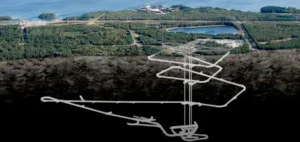
Santee Cooper has approved a memorandum of understanding with Brookfield Asset Management to assess the feasibility of restarting two unfinished nuclear reactors, with a potential $2.7 billion payment and 550 MW capacity stake.
Helical Fusion has signed a landmark agreement with Aoki Super to supply electricity from fusion, marking a first in Japan’s energy sector and a commercial step forward for the helical stellarator technology.
India’s nuclear capacity is expected to grow by more than 13,000 MW by 2032, driven by ongoing heavy water reactor construction, new regional projects and small modular reactor development by the Bhabha Atomic Research Centre.
NextEra Energy has lifted its earnings estimates for 2025 and 2026, supported by power demand linked to long‑term contracts previously signed with Google and Meta to supply their artificial intelligence data centres with low‑carbon electricity.
London launches a complete regulatory overhaul of its nuclear industry to shorten authorisation timelines, expand eligible sites, and lower construction and financing costs.
Finland's Ministry of Economic Affairs extends the deadline to June 2026 for the regulator to complete its review of the operating licence for the Olkiluoto spent nuclear fuel repository.
Framatome will replace several digital control systems at the Columbia plant in the United States under a contract awarded by Energy Northwest.
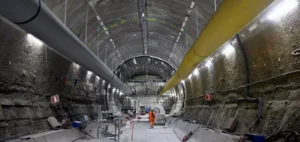
The conditional green light from the nuclear regulator moves Cigéo into its final regulatory stage, while shifting the risks towards financing, territorial negotiations and industrial execution.
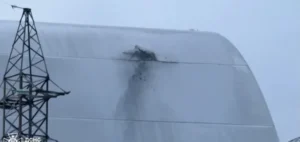
The drone strike confirmed by the IAEA on the Chernobyl site vault exposes Ukraine to a nuclear risk under armed conflict, forcing the EBRD to finance partial restoration while industry standards must now account for drone threats.
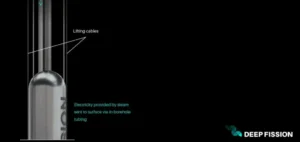
Deep Fission is installing a 15 MWe pressurised reactor 1.6 km underground at Great Plains Industrial Park, under the Department of Energy’s accelerated pilot programme, targeting criticality by July 4, 2026.
EDF commits to supply 33 MW of nuclear electricity to Verkor over 12 years, enabling the battery manufacturer to stabilise energy costs ahead of launching its first Gigafactory.
The full-scope simulator for the Lianjiang nuclear project has successfully passed factory acceptance testing, paving the way for its installation at the construction site in China's Guangdong province.
A coalition of Danish industry groups, unions and investors launches a platform in support of modular nuclear power, aiming to develop firm low-carbon capacity to sustain industrial competitiveness.
The United Kingdom and TAE Technologies create a joint venture in Culham to produce neutral beams, a key component of fusion, with strategic backing from Google.
Texas-based developer Natura Resources receives new federal funding to test key components of its 100-megawatt modular reactor in partnership with Oak Ridge National Laboratory.
The Niigata regional assembly is deliberating on restarting unit 6 of the world’s largest nuclear plant, thirteen years after operations ceased following the Fukushima disaster.
Reactor Doel 2 was taken offline, becoming the fifth Belgian reactor to cease operations under the country’s gradual nuclear phase-out policy.

All the latest energy news, all the time

Annual subscription

8.25$/month*

*billed annually at 99$/year for the first year then 149,00$/year ​

Unlimited access - Archives included - Pro invoice

Monthly subscription

Unlimited access • Archives included

5.2$/month*
then 14.90$ per month thereafter

*Prices shown are exclusive of VAT, which may vary according to your location or professional status.

Since 2021: 30,000 articles - +150 analyses/week.