Cuba bets on 55 solar parks with Chinese backing to address energy crisis

In Cienfuegos, Cuba is deploying an ambitious photovoltaic programme supported by China to reduce its dependence on oil and stabilise its failing power grid.

Share:

Comprehensive energy news coverage, updated nonstop

Annual subscription

8.25$/month*

*billed annually at 99$/year for the first year then 149,00$/year ​

Unlimited access • Archives included • Professional invoice

OTHER ACCESS OPTIONS

Monthly subscription

Unlimited access • Archives included

5.2$/month*
then 14.90$ per month thereafter

FREE ACCOUNT

3 articles offered per month

FREE

*Prices are excluding VAT, which may vary depending on your location or professional status

Since 2021: 35,000 articles • 150+ analyses per week

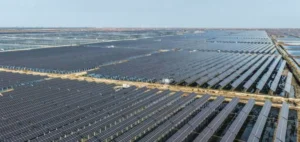
Near the unfinished structures of a Soviet-era nuclear power plant, the Cuban government is overseeing the installation of 44,000 solar panels at the “La Yuca” photovoltaic park in the central province of Cienfuegos. This project is part of a national plan to commission 55 similar sites from 2025, with the objective of diversifying energy supply sources and reducing the use of fossil fuels, which remain essential to the operation of the country’s eight ageing thermal power stations.

Ageing infrastructure and chronic shortfalls

Minister of Energy and Mines Vicente de la O Levy acknowledged that more than half of Cuba’s fuel resources are consumed by electricity production. In statements to the state-run newspaper Granma, he said this expense exceeds that for food and medicine. Power outages, sometimes lasting several days, have become frequent: in the past six months alone, the national grid has suffered four complete blackouts due to technical failures or fuel shortages.

Cienfuegos, a strategic site for nuclear development in the 1980s, has been selected to host five of the upcoming solar parks. The area is home to critical infrastructure including a refinery, an industrial port, and a thermal power plant, making it a key node in the island’s energy network.

Discreet yet vital financial support from Beijing

The entire programme, estimated at several hundred million dollars, is being carried out with logistical and financial assistance from the People’s Republic of China. At the “La Yuca” site, containers marked with Chinese characters are visible, indicating the origin of imported equipment. However, Cuban authorities have not disclosed the exact figures involved in the investment.

Authorities are targeting an installed capacity of 1,200 megawatts (MW) by the end of 2025, a significant effort to cover a daily electricity generation deficit estimated at 1,500 MW. Nevertheless, residents in the affected regions continue to face prolonged service interruptions. In the community near the park, local women report adjusting their routines to limited electricity availability, resorting to charcoal for cooking and organising household chores during power windows.

Lack of storage and nuclear legacy

Jorge Piñón, a researcher at the University of Texas, noted that the programme’s success also depends on the deployment of storage capacity, which is currently lacking. The first containers intended for battery systems have already arrived on the island, but have not yet been equipped. This limitation reduces the ability to provide stable power, particularly at night.

Not far from “La Yuca”, the abandoned structure of the Cuban-Soviet nuclear project remains a symbol of a previous attempt at energy independence. Fifteen kilometres away, the dome constructed to house a nuclear reactor is still standing, bearing inscriptions in Russian. Former physicist Eliecer Machin, who trained in the Soviet Union, still lives in the “nuclear city” built for power plant staff and now survives by raising pigs.
The gradual exit from CfD contracts is turning stable assets into infrastructures exposed to higher volatility, challenging expected returns and traditional financing models for the renewable sector.
The Canadian government introduces major legislative changes to the Energy Efficiency Act to support its national strategy and adapt to the realities of digital commerce.
Quebec becomes the only Canadian province where a carbon price still applies directly to fuels, as Ottawa eliminated the public-facing carbon tax in April 2025.
New Delhi launches a 72.8 bn INR incentive plan to build a 6,000-tonne domestic capacity for permanent magnets, amid rising Chinese export restrictions on critical components.
The rise of CfDs, PPAs and capacity mechanisms signals a structural shift: markets alone no longer cover 10–30-year financing needs, while spot prices have surged 400% in Europe since 2019.
Germany plans to finalise the €5.8bn ($6.34bn) purchase of a 25.1% stake in TenneT Germany to strengthen its control over critical national power grid infrastructure.
The Ghanaian government is implementing a reform of its energy system focused on increasing the use of local natural gas, aiming to reduce electricity production costs and limit the sector's financial imbalance.
On the 50th anniversary of its independence, Suriname announced a national roadmap including major public investment to develop its offshore oil reserves.
In its latest review, the International Energy Agency warns of structural blockages in South Korea’s electricity market, calling for urgent reforms to close the gap on renewables and reduce dependence on imported fossil fuels.
China's power generation capacity recorded strong growth in October, driven by continued expansion of solar and wind, according to official data from the National Energy Administration.
The 2026–2031 offshore programme proposes opening over one billion acres to oil exploration, triggering a regulatory clash between Washington, coastal states and legal advocacy groups.
The government of Mozambique is consolidating its gas transport and regasification assets under a public vehicle, anchoring the strategic Beira–Rompco corridor to support Rovuma projects and respond to South Africa’s gas dependency.
The British system operator NESO initiates a consultation process to define the methodology of eleven upcoming regional strategic plans aimed at coordinating energy needs across England, Scotland and Wales.
The Belém summit ends with a technical compromise prioritising forest investment and adaptation, while avoiding fossil fuel discussions and opening a climate–trade dialogue likely to trigger new regulatory disputes.
The Asian Development Bank and the Kyrgyz Republic have signed a financing agreement to strengthen energy infrastructure, climate resilience and regional connectivity, with over $700mn committed through 2027.
A study from the Oxford Institute for Energy Studies finds that energy-from-waste with carbon capture delivers nearly twice the climate benefit of converting waste into aviation fuel.
Signed for 25 years, the new concession contract between Sipperec, EDF and Enedis covers 87 municipalities in the Île-de-France region and commits the parties to managing and developing the public electricity distribution network until 2051.
The French Energy Regulatory Commission publishes its 2023–2024 report, detailing the crisis impact on gas and electricity markets and the measures deployed to support competition and rebuild consumer trust.
Gathered in Belém, states from Africa, Asia, Latin America and Europe support the adoption of a timeline for the gradual withdrawal from fossil fuels, despite expected resistance from several producer countries.
The E3 and the United States submit a resolution to the IAEA to formalise Iran's non-cooperation following the June strikes, consolidating the legal basis for tougher energy and financial sanctions.

All the latest energy news, all the time

Annual subscription

8.25$/month*

*billed annually at 99$/year for the first year then 149,00$/year ​

Unlimited access - Archives included - Pro invoice

Monthly subscription

Unlimited access • Archives included

5.2$/month*
then 14.90$ per month thereafter

*Prices shown are exclusive of VAT, which may vary according to your location or professional status.

Since 2021: 30,000 articles - +150 analyses/week.