TotalEnergies withdraws from Maya solar project in French Guiana amid new PPE priorities

TotalEnergies’ withdrawal from the Maya project highlights a strategic shift in French Guiana towards distribution and territorial balance, at the expense of solar production around Cayenne.

Share:

Comprehensive energy news coverage, updated nonstop

Annual subscription

8.25€/month*

*billed annually at 99€/year for the first year then 149,00€/year ​

Unlimited access • Archives included • Professional invoice

OTHER ACCESS OPTIONS

Monthly subscription

Unlimited access • Archives included

5.2€/month*
then 14.90€ per month thereafter

FREE ACCOUNT

3 articles offered per month

FREE

*Prices are excluding VAT, which may vary depending on your location or professional status

Since 2021: 35,000 articles • 150+ analyses per week

The Maya photovoltaic project, led since 2019 by TotalEnergies in French Guiana, has been officially abandoned following the release of the revised multiannual energy programme (programmation pluriannuelle de l’énergie, PPE) for 2023–2028. The energy group’s decision comes as the strategic document sets a new direction focused on securing the power distribution network and geographically rebalancing infrastructure towards the western part of the territory.

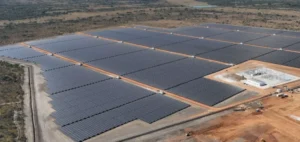
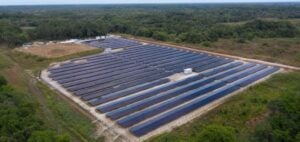
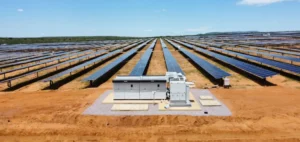
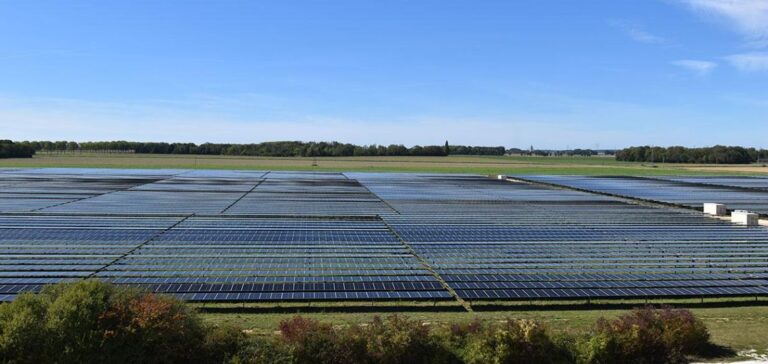
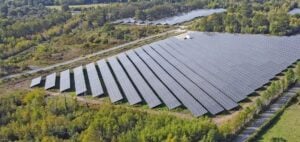
Planned near Cayenne, the Maya project was to combine a solar power plant with storage capacity for a total output of 20 MW. Its cancellation is linked to the revised PPE’s lack of scheduled dispatchable generation projects around Cayenne. The document notes that the initially proposed capacity guarantees for the urban area are no longer deemed necessary, particularly given the ongoing construction of EDF’s 120 MW biofuel-powered plant in Larivot.

A territorial shift in energy project focus

The Collectivité Territoriale de Guyane (CTG) stated in the PPE that the primary goal remains to achieve 100% decarbonised electricity production by 2027 for coastal towns connected to the grid. However, the focus has shifted to the western part of the department, historically underserved in terms of energy infrastructure. In response, investment plans include doubling the existing high-voltage line serving Saint-Laurent-du-Maroni, as well as building two additional substations in the area.

This redirection has drawn criticism from several private-sector actors. During the presentation of the PPE’s key orientations, Arnaud Flament, Director of Voltalia Guyane and representative of the Syndicat des énergies renouvelables (SER), pointed to a lack of consultation in drafting the document, stating it appeared mostly finalised and difficult to amend.

A strategy prioritising distribution over production

Alongside the geographical redistribution of priorities, the energy planning document emphasises network stabilisation, citing its fragility due to inadequate grid coverage. The new high-voltage line is scheduled for commissioning by 2033, as part of a broader investment effort estimated at €5.716bn by that deadline. This figure encompasses operating, maintenance and infrastructure development costs, shared between local authorities and private companies.

Despite the abandonment of the Maya project, the PPE maintains growth targets for the solar sector, with planned capacity of 150 MW by 2028 and 175 MW by 2033, up from the current 114 MW. Solar energy remains the segment expected to see the most significant growth within the Guianese energy mix, with no new hydroelectric developments or notable expansion of other sources foreseen.
As the photovoltaic industry enters a phase of deep restructuring, the duel between TOPCon 4.0 and heterojunction technologies is redefining manufacturers’ margins. In 2026, reducing production costs becomes the primary strategic lever for global market leaders.
JA Solar and Trinasolar top Wood Mackenzie’s latest semiannual ranking despite a sector-wide net loss of $2.2 billion. Industrial leaders are strengthening their grip on global photovoltaic module supply through rigorous financial discipline.
BayWa r.e. has finalised the sale of a 46 MW floating solar park, the country’s largest, to a Dutch public-local consortium, marking a new step in the decentralised structuring of the solar market in the Netherlands.
The ATUM Solar industrial complex, located in Ain Sokhna, will include three factories—two of 2 GW capacity—backed by a $220mn investment from an international consortium.
AMEA Power has completed the commercial commissioning of a 120 MWp solar project in Kairouan, marking a national first in Tunisia for a renewable energy installation of this scale.
The Gerus plant becomes the first solar installation in Namibia to sell electricity directly on the Southern African Power Pool regional market.
Japanese conglomerate Tokyu teams up with Global Infrastructure Management and Clean Energy Connect to build 800 low-voltage solar plants totalling 70MWDC, under an off-site power purchase agreement for its facilities.
T1 Energy has begun construction of a solar cell facility in Milam County, Texas, representing an investment of up to $425mn, aimed at strengthening U.S. industrial autonomy in the photovoltaic supply chain.
Pivot Energy has secured $225mn in funding from three banking partners to support a portfolio of 60 community solar power plants across nine US states.
Voltalia has started building a 43-megawatt hybrid plant in Sainte-Anne, combining solar, battery storage and bioenergy to meet growing electricity demand in western French Guiana.
Masdar’s exit ends ReNew Energy's privatisation attempt, despite offer rising to $8.15 per share.
California surpassed 52.3% of electricity from renewables and large hydro in 2024, marking a major energy milestone while increasing pressure on storage, permitting and curtailed production.
European Energy France has secured two wins in tenders issued by the French Energy Regulatory Commission for its agrivoltaic parks in Saint-Voir, with a combined capacity of 14.3 MWp and commissioning expected by late 2027.
TotalEnergies will supply Google with 1TWh of renewable electricity from a 20MW solar plant in Malaysia under a 21-year power purchase agreement.
Enviromena secured approval for its Fillongley solar farm after a local council’s refusal was overturned, despite conflicts of interest tied to public funds used to oppose the project.
According to Wood Mackenzie, the global solar inverter market will face two consecutive years of contraction after record shipments in 2024, driven by regulatory tensions in China, Europe and the United States.
The UK government has assigned a GBP135mn ($180mn) budget for solar energy in its seventh CfD auction round, aiming to support up to 4 GW of installed capacity.
SEG Solar launches a strategic industrial project in Indonesia with 3GW capacity to support the supply chain of its photovoltaic modules for the US market.
Vietnam's Boviet Solar has launched two industrial sites in North Carolina to produce solar cells and modules, with over 1,300 jobs created and a total investment of $400mn.
Acciona Energía sells 49% of its U.S. solar portfolio and all of two Mexican wind farms in a $1bn deal, reinforcing its asset rotation strategy.

All the latest energy news, all the time

Annual subscription

8.25€/month*

*billed annually at 99€/year for the first year then 149,00€/year ​

Unlimited access - Archives included - Pro invoice

Monthly subscription

Unlimited access • Archives included

5.2€/month*
then 14.90€ per month thereafter

*Prices shown are exclusive of VAT, which may vary according to your location or professional status.

Since 2021: 30,000 articles - +150 analyses/week.