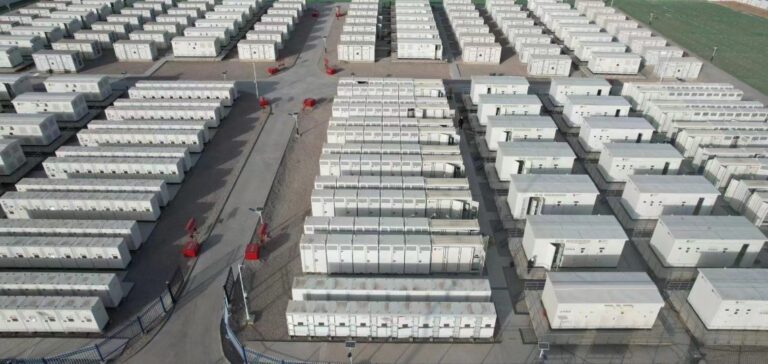
The LFP Battery Market Is Set to Grow at a 9.9% CAGR, Driven by EVs and Renewable Energy Storage

The global market for lithium iron phosphate (LFP) batteries is expected to reach USD 16.54 billion by 2031, with a compound annual growth rate (CAGR) of 9.9%, driven by growing demand from electric vehicles (EVs) and renewable energy storage systems.

Share:

Comprehensive energy news coverage, updated nonstop

Annual subscription

8.25€/month*

*billed annually at 99€/year for the first year then 149,00€/year ​

Unlimited access • Archives included • Professional invoice

OTHER ACCESS OPTIONS

Monthly subscription

Unlimited access • Archives included

5.2€/month*
then 14.90€ per month thereafter

FREE ACCOUNT

3 articles offered per month

FREE

*Prices are excluding VAT, which may vary depending on your location or professional status

Since 2021: 35,000 articles • 150+ analyses per week

The global market for lithium iron phosphate (LFP) batteries is experiencing significant growth, with projections indicating substantial expansion in the coming years. In 2024, the market was valued at USD 8.618 billion. Current forecasts suggest that this figure will reach USD 16.54 billion by 2031, reflecting a compound annual growth rate (CAGR) of 9.9% during the forecast period.

The Demand from Electric Vehicles as a Primary Driver

This growth is primarily attributed to the increasing demand for electric vehicles (EVs), which require safe and cost-effective energy solutions. LFP batteries offer robust thermal stability, reducing fire risks and improving overall reliability. Their relatively lower cost makes them attractive for mass-market EV models, facilitating broader adoption and bridging affordability gaps.

Applications in Renewable Energy Storage

In addition to EVs, LFP batteries play a crucial role in renewable energy storage systems. Their stable performance, even under harsh conditions, makes them suitable for use with intermittent energy sources such as solar and wind. Their long lifespan and deep discharge capabilities allow for consistent power output, promoting grid stability and reducing curtailment.

Economic Benefits and Enhanced Safety

The economic advantages of LFP batteries are also significant. Their composition relies on abundant and less expensive materials, which reduces production costs compared to other lithium-ion variants. This affordability broadens market accessibility and drives higher adoption rates, particularly in price-sensitive sectors such as public transportation and residential energy storage.

Safety is another key factor driving the growing adoption of LFP batteries. Their chemistry inherently presents a lower risk of thermal runaway and improved chemical stability compared to other types of lithium-ion batteries. This robust safety profile is appealing to industries requiring reliable and safe energy sources, including public transport, backup power systems, and large-scale energy storage.

Future Outlook and Innovations

Industry players are focusing on improving chemistry, manufacturing processes, and strategic partnerships to remain competitive. At the same time, public and private entities are pushing for robust infrastructure to accommodate the growing demand for electric mobility, residential storage, and commercial solutions. With increased attention to sustainability, the low toxicity and long operational life of LFP batteries make them a prime candidate for various applications, encouraging further innovation.

In conclusion, LFP batteries are expected to continue playing a central role in the global energy transition, supported by their stable performance, cost-effectiveness, and environmental benefits.
A court in Illinois has dismissed a lawsuit filed against ECA Solar, removing legal barriers to the construction of a planned solar facility outside the city limits of Morris.
Mitsubishi HC Capital Energy and Ecokaku will develop 10 MW of non-subsidised solar power plants annually in Japan, targeting direct contracts with industrial buyers through long-term power purchase agreements.
Canadian company NU E Power plans to fund the development of its solar projects in Lethbridge and feasibility studies in Mongolia, Malaysia, and Africa through a $1.8mn private placement.
Citicore Renewable Energy Corporation signed a PHP3.975bn ($71mn) project finance loan with Bank of the Philippine Islands to accelerate the completion of its 113MW solar power plant in Pangasinan province.
U.S. clean energy capacity growth hits quarterly record, but industry players raise concerns over a slowing market amid regulatory instability.
Norwegian producer Scatec launches commercial operation of its 273 MW solar plant in Western Cape under a 20-year power purchase agreement.
Scatec has signed two shareholder agreements for its 1.1GW hybrid project in Egypt, reducing its economic interest while retaining operational control.
The French subsidiary of Solarwatt has filed for court-ordered restructuring, hit by reduced public subsidies and a downturn in the residential solar segment.
Zelestra sells its Latin American platform to Promigas, including 1.4 GW of operational or under-construction assets and 2.1 GW of advanced-stage projects in Chile, Peru and Colombia.
Over 140 solar sector companies have urged Congress to lift a directive from the Department of the Interior blocking permit approvals, putting hundreds of energy projects in the United States at risk.
Un terminal portuaire en Espagne alliera réfrigération industrielle haute performance et production solaire pour optimiser les coûts énergétiques et les capacités logistiques de PTP Ibérica, avec un démarrage prévu d’ici mi-2026.
Toshiba’s subsidiary commits to acquiring non-fossil certificates from a floating solar power plant operated by OTS in Japan, under a virtual power purchase agreement coordinated by Digital Grid.
Terra-Gen has closed $383.3mn in financing for the construction of its Lockhart III and IV solar units, adding 205 MW to California’s grid with commercial operations expected in 2026.
US developer Ecoplexus has closed a $300mn financing deal with KKR and SMBC to support over 13GW of solar and storage projects under development across the country.
EDP will supply 30% of Carrefour Polska’s energy needs through a PPA combining solar and wind, marking a step forward in the development of renewable capacity in Poland.
French public funding will support the construction of ten solar power plants with storage in Mauritania, as the country works to expand its grid to reach universal electricity access by 2030.
Recurrent Energy has received authorisation to develop Tillbridge, a hybrid 1.3 GW solar and battery project in England, strengthening its expansion strategy in the UK market.
Le Koweït a publié une demande de propositions pour la construction d'une centrale solaire de 500 MW, dont l’électricité sera injectée dans le réseau national sur la base d’un contrat de rachat de 30 ans.
Mori Building has completed three solar-plus-storage plants in Japan to supply its real estate assets through an intra-group partnership structured by TEPCO Energy Partner.
Japanese grid operator OCCTO allocated 75.4MWAC in its third solar auction for FY2025, with an average feed-in-premium price of 7.13 yen per kWh, marking a session that fell short of initial subscription targets.

All the latest energy news, all the time

Annual subscription

8.25€/month*

*billed annually at 99€/year for the first year then 149,00€/year ​

Unlimited access - Archives included - Pro invoice

Monthly subscription

Unlimited access • Archives included

5.2€/month*
then 14.90€ per month thereafter

*Prices shown are exclusive of VAT, which may vary according to your location or professional status.

Since 2021: 30,000 articles - +150 analyses/week.