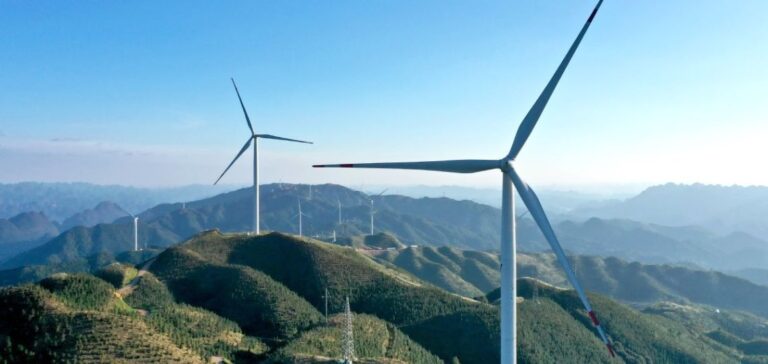
Hydro-Québec Facing Contestation: The Rise of Wind Energy at the Heart of Tensions

Hydro-Québec accelerates its wind energy development with massive investments and large-scale projects. However, this expansion has sparked growing opposition from local communities demanding more transparency and consultation.

Share:

Comprehensive energy news coverage, updated nonstop

Annual subscription

8.25$/month*

*billed annually at 99$/year for the first year then 149,00$/year ​

Unlimited access • Archives included • Professional invoice

OTHER ACCESS OPTIONS

Monthly subscription

Unlimited access • Archives included

5.2$/month*
then 14.90$ per month thereafter

FREE ACCOUNT

3 articles offered per month

FREE

*Prices are excluding VAT, which may vary depending on your location or professional status

Since 2021: 35,000 articles • 150+ analyses per week

Hydro-Québec is planning an ambitious increase in wind energy, aiming to add between 1,000 and 1,500 megawatts (MW) per year by 2035. This strategy comes in response to high energy demand and the need to diversify its energy mix. The public company believes that wind energy could account for up to 25% of its electricity generation in the next decade.

An Intensive Development Plan

Last year, Hydro-Québec launched several calls for tenders to encourage the development of new wind farms. The company aims to enter into contracts with private developers and local communities to harness the province’s wind energy potential. Among the flagship projects is a 3,000 MW wind farm planned for the Saguenay-Lac-Saint-Jean region, involving investments worth billions of dollars.

Partnerships with Indigenous communities and local municipalities are at the core of Hydro-Québec’s strategy. The company argues that these collaborations lead to better social acceptance and economic benefits for the regions involved.

Growing Local Opposition

However, this rapid wind energy expansion is meeting significant opposition. Several citizen committees and local organizations are criticizing the lack of consultation and decision-making processes that overlook the impacts on territories and local populations. The Regroupement vigilance énergie Québec (RVÉQ), which represents several collectives, is calling for a moratorium and the establishment of a generic Bureau d’audiences publiques sur l’environnement (BAPE) to assess the long-term effects of wind energy deployment in Quebec.

Major concerns revolve around the use of agricultural land, ecosystem impacts, and the distribution of economic benefits. Some farmers argue that the installation of wind turbines exacerbates land ownership inequalities, while others worry about the effects on landscapes and biodiversity.

Financial and Strategic Issues

The economic model adopted by Hydro-Québec is also sparking debate. Some experts are pointing out the partial privatization of wind energy production and fear that the benefits may not fully reach the community. The Fédération de l’UPA de Chaudière-Appalaches has specifically expressed concerns about the impact of wind development on agricultural operations, advocating for better project oversight.

On the other hand, Hydro-Québec defends its approach by highlighting the benefits of wind energy for the province’s energy independence. The company emphasizes that diversifying the energy mix is necessary to meet growing demand, especially to power high-energy industries like data centers and battery manufacturing plants.

An Intensifying Debate

As new calls for tenders are expected this year, the debate over wind energy’s expansion in Quebec continues to intensify. Future government decisions and the conclusions of ongoing environmental studies could influence the trajectory of this rapidly growing sector. Hydro-Québec will need to navigate regulatory, economic, and social challenges to successfully implement its wind energy ambitions while addressing the concerns of citizens and local stakeholders.
The Trump administration has ordered the immediate halt of five major offshore wind construction sites in the Atlantic, citing national security threats and drawing mixed reactions from industry and political circles.
The Québec government has approved three wind projects totalling 792 MW to meet growing energy demand and support regional economies in Bas-Saint-Laurent and Capitale-Nationale.
French group ENGIE has officially commissioned the Serra do Assuruá complex in the State of Bahia, making it its largest onshore wind project worldwide.
RWE signed a 15-year power purchase agreement with Indiana Michigan Power for the Prairie Creek project, aimed at supporting Indiana’s growing electricity demand starting in 2028.
EDP has signed a long-term electricity supply agreement with Energa for a 322 MW hybrid portfolio combining wind and solar, marking one of the largest contracts of its kind in Poland.
Ocean Winds has deployed a LiDAR buoy off Gippsland to collect accurate data on wind and currents, a key step in its 1.3 GW offshore wind project in Australia.
TerraWind Renewables acquires five projects totalling 255MW in northern Japan, bringing its onshore wind development capacity to 327MW and targeting first commercial operation in 2028.
A consortium led by EDF power solutions has signed a 20-year agreement with Nama PWP to develop a 120 MW wind farm in southeastern Oman, with commissioning scheduled for Q3 2027.
Casa dos Ventos awards Vestas the supply, construction and maintenance of a 184-turbine complex in the state of Piauí, with an investment exceeding $1.01bn.
Warsaw tests long-term support for offshore wind with a structured tender to maximise competition, reduce financial risk and reassure a supply chain under pressure across Europe.
TotalEnergies has sold 50% of a portfolio of wind and solar projects in Greece to Asterion Industrial Partners, valued at €508mn ($554mn), while retaining operational control and the main share of electricity marketing.
Italy’s offshore wind rollout remains at a standstill, freezing over 18 GW of pending projects and weakening national renewable energy targets.
German manufacturer Nordex has secured an order for 34 turbines for a 200 MW project in the Canadian province of New Brunswick, marking its first entry into this region.
OX2 has started construction on three new onshore wind farms in Finland, bringing its total installed capacity in the country to 750 MW, a record level for a private energy sector player.
Italian group Enel has acquired two onshore wind farms in Germany for an enterprise value of €80mn ($86.5mn), strengthening its presence in a stable and strategic market as part of a targeted asset transfer.
EDF power solutions announces commercial operation of the San Kraal wind farm, the first unit of the 420MW Koruson 1 project, with full commissioning expected in early 2026.
Q ENERGY has announced the entry of three local and citizen-based partners into the capital of the Ventajou wind farm, marking its first strategic equity opening to institutional and community investors.
The Norwegian government has allocated two areas of the Utsira Nord project to the Equinor–Vårgrønn and EDF–Deep Wind Offshore consortia, launching a preparatory phase before a competitive state aid auction.
German group RWE has replaced 27 old turbines with three new high-performance units at its Muel wind farm, doubling energy output and earning ZeroWaste certification.
Synera Renewable Energy Group has signed a long-term power purchase agreement with Taiwan Smart Electricity & Energy, securing a portion of generation from the Formosa 4 wind farm.

All the latest energy news, all the time

Annual subscription

8.25$/month*

*billed annually at 99$/year for the first year then 149,00$/year ​

Unlimited access - Archives included - Pro invoice

Monthly subscription

Unlimited access • Archives included

5.2$/month*
then 14.90$ per month thereafter

*Prices shown are exclusive of VAT, which may vary according to your location or professional status.

Since 2021: 30,000 articles - +150 analyses/week.