Europe’s Nuclear Revival: Accelerating SMR Development

After years of focusing on renewable energy, the European Union is channeling resources into developing small modular reactors (SMRs) and strengthening its nuclear infrastructure.

Share:

Comprehensive energy news coverage, updated nonstop

Annual subscription

8.25$/month*

*billed annually at 99$/year for the first year then 149,00$/year ​

Unlimited access • Archives included • Professional invoice

OTHER ACCESS OPTIONS

Monthly subscription

Unlimited access • Archives included

5.2$/month*
then 14.90$ per month thereafter

FREE ACCOUNT

3 articles offered per month

FREE

*Prices are excluding VAT, which may vary depending on your location or professional status

Since 2021: 35,000 articles • 150+ analyses per week

The European Union (EU) is initiating a significant shift toward nuclear energy with a clear political commitment and concrete initiatives. This strategic pivot occurs amidst growing economic, geopolitical, and energy transition challenges.

After a decade dominated by investments in renewable energy, Europe now acknowledges the need to diversify its decarbonized energy sources. According to Attila Steiner, Hungarian State Secretary for Energy and Climate, nuclear energy is “inevitable” to ensure energy independence and achieve climate goals. Hungary, holding the EU presidency in 2024, played a key role in aligning the 27 member states around a unified approach.

A New Model for SMRs

The European Commission announced the creation of the SMR Alliance (Small Modular Reactors) in February 2024. This consortium brings together businesses, financial institutions, research centers, and NGOs to accelerate the deployment of these technologies. The goal is to install the first modular reactors in Europe by the early 2030s, meeting demands for both speed and industrial standardization.

Massimo Garribba, Deputy Director-General for Energy at the European Commission, emphasized that Europe must “catch up” with Asia and the United States, which have invested heavily in nuclear energy over the past two decades.

Financing and Competitiveness

The EU is also exploring innovative financing mechanisms. Among them, a “competitiveness fund” proposed by Commission President Ursula von der Leyen could include direct support for nuclear projects. Discussions around this fund are planned for the 2028–2034 budget, with initial projects potentially proposed by 2025.

The role of the European Investment Bank (EIB) is also under review. Historically focused on renewables, the EIB is now considering investments in SMRs, offering new momentum for the European nuclear sector.

Legal and Reputational Challenges

Challenges remain, however. Nuclear energy’s reputation, often marred by cost overruns and delays, needs rebuilding. Alan Woods, Director at Rolls Royce SMR, stressed that a standardized approach with units built in factories is essential to convince investors and ensure timely delivery.

Moreover, legal adjustments are necessary to address specific issues surrounding SMRs, particularly safety and liability concerns. As Ximena Vasquez-Maignan, legal counsel at White & Case, noted, while Europe’s legal framework is robust, it requires adaptation to tackle these emerging challenges.

Geopolitical Motivations

This pivot toward nuclear energy also serves as a strategic response to recent energy crises exacerbated by Russia’s 2022 invasion of Ukraine. Disruptions in natural gas supplies and the urgency to accelerate decarbonization have prompted a reevaluation of energy priorities in Europe.

Simultaneously, national and European elections have strengthened political coalitions favoring nuclear energy, marking a decline in influence for Green parties that remain skeptical about this technology.
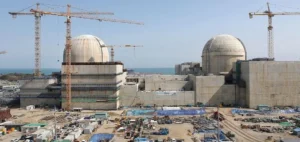
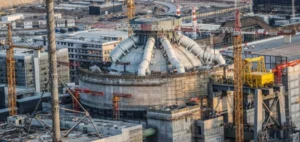
The South Korean nuclear regulator has approved the launch of the 1,400-megawatt Saeul 3 reactor, beginning with a six-month pilot phase before full commercial operation.
Ankara confirmed new Russian funding for the Akkuyu project, Turkey’s first nuclear site, strengthening its energy ties with Moscow and advancing its domestic nuclear ambitions.
Rosatom successfully completed a series of tests on its high-temperature gas-cooled reactor fuel, validating its performance at up to 1,700 °C under prolonged irradiation conditions.
Videberg Kraft AB becomes the first company to request government support to build two new reactors at the Ringhals site, under the national nuclear investment framework adopted in 2025.
The European Commission opens an in-depth investigation into Prague's public funding of a major nuclear project, which could reach €30bn ($32.88bn), with guaranteed revenues over forty years.
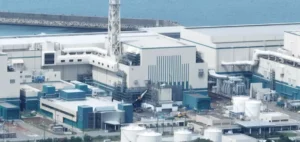
Niigata's assembly officially backs the restart of the Kashiwazaki-Kariwa site, marking a key step in Japan’s return to nuclear energy following the 2011 Fukushima disaster.
The Japanese government plans to fund up to 30% of loans required for nuclear projects, aiming to accelerate reactor restarts and double the share of nuclear energy in its energy mix by 2040.
French nuclear reactor developer Newcleo has submitted its lead-cooled small modular reactor design to Euratom, initiating the first regulatory phase to integrate nuclear non-proliferation safeguards at the European level.
French state utility EDF has increased the maximum estimated cost for building six new nuclear reactors to €72.8 billion ($85.29 billion), representing a 40% rise over the original figure.
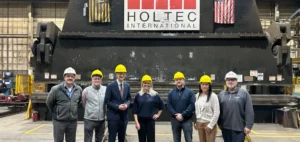
US-based Holtec has signed a memorandum of understanding with Hungary’s energy group MVM to assess the deployment of its SMR-300 technology, strengthening bilateral nuclear cooperation and opening prospects for a new market in Central Europe.
California-based startup Radiant has secured $300mn to build its first factory in Tennessee and prepare for the mass production of miniature nuclear reactors for off-grid applications.
Terra Innovatum has increased its interactions with the Nuclear Regulatory Commission to advance licensing of its SOLO™ micro-modular reactor, despite the partial shutdown of the US federal government.
The US nuclear regulator has extended the operating licences of three Illinois reactors by 20 years, strengthening Constellation's long-term industrial outlook for the Clinton and Dresden sites.
The SATURNE Industrial Chair aims to develop innovative uranium extraction methods, with joint funding from Orano and the National Research Agency over a four-year period.
US-based X-energy has signed a reservation agreement with South Korea's Doosan Enerbility to secure key components for its small modular nuclear reactors.
Niger expands its mining alliances with Uranium One to develop new sites, while the Dasa project continues seeking financing despite clear political backing.
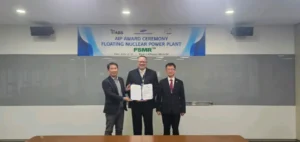
Samsung Heavy Industries has received Approval in Principle for a floating nuclear plant featuring two SMART100 reactors, marking a step toward the commercialisation of offshore small modular reactors.
The Indian government proposes a unified legal framework for nuclear energy, aiming to boost private investment and increase installed capacity to 100 GW by 2047.
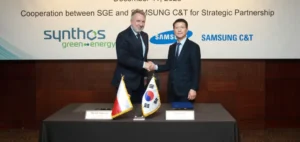
Samsung C&T strengthens its presence in modular nuclear energy in Europe by signing an agreement with Synthos Green Energy to develop up to 24 SMRs in Poland and several Central European countries.
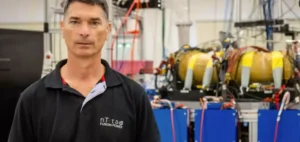
Israeli firm nT-Tao and Ben-Gurion University have developed a nonlinear control system that improves energy stability in fusion plasmas, strengthening the technical foundation of their future compact reactors.

All the latest energy news, all the time

Annual subscription

8.25$/month*

*billed annually at 99$/year for the first year then 149,00$/year ​

Unlimited access - Archives included - Pro invoice

Monthly subscription

Unlimited access • Archives included

5.2$/month*
then 14.90$ per month thereafter

*Prices shown are exclusive of VAT, which may vary according to your location or professional status.

Since 2021: 30,000 articles - +150 analyses/week.