Launch of Sinopec’s Ethylene Complex in Tianjin: A Strategic Step for China’s Petrochemical Industry

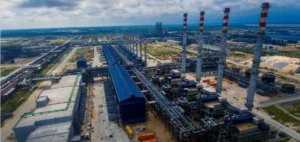
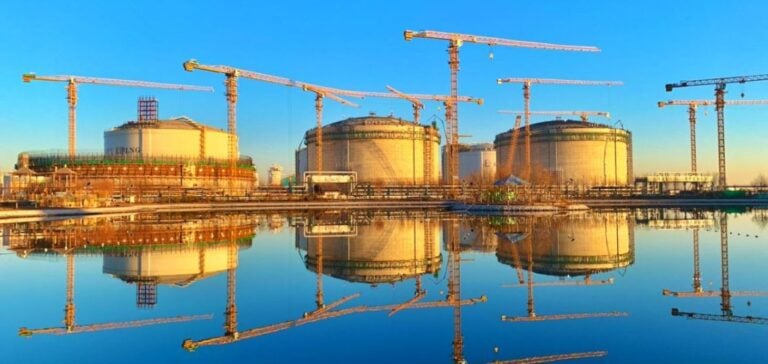
Sinopec's Tianjin Nangang complex, developed with INEOS, enhances China's petrochemical capabilities with integrated production of 1.2 million tons annually. This project marks a turning point in strategic partnerships and industrial self-sufficiency.

Share:

Comprehensive energy news coverage, updated nonstop

Annual subscription

8.25$/month*

*billed annually at 99$/year for the first year then 149,00$/year ​

Unlimited access • Archives included • Professional invoice

OTHER ACCESS OPTIONS

Monthly subscription

Unlimited access • Archives included

5.2$/month*
then 14.90$ per month thereafter

FREE ACCOUNT

3 articles offered per month

FREE

*Prices are excluding VAT, which may vary depending on your location or professional status

Since 2021: 35,000 articles • 150+ analyses per week

The launch of the Tianjin Nangang ethylene complex by Sinopec demonstrates China’s commitment to strengthening its petrochemical industry while engaging in strategic international partnerships. This initiative reinforces China’s global position and offers promising prospects for the petrochemical market.

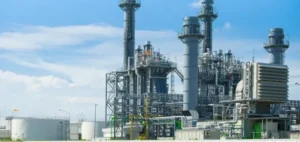
The project, a collaboration between Sinopec and INEOS, features an ethane cracking capacity of 1.2 million tons per year, making it one of the most modern facilities in China. This infrastructure also includes twelve derivative units, such as:

– **High-Density Polyethylene (HDPE):** With an annual capacity of 500,000 tons, addressing the needs of various industrial sectors.
– **Acrylonitrile Butadiene Styrene (ABS):** Essential for automotive and electronic industries, with production of 300,000 tons per year.

This integrated configuration optimizes the supply chain and reduces production costs, enhancing China’s competitiveness.

A Strategic Long-Term Partnership

This complex is the result of a 50/50 joint venture between Sinopec and INEOS, signed in August 2023. This collaboration reflects a shared strategic vision to address growing demand. The partnership also aims to:

– **Reduce dependence on imports:** The project enhances China’s energy self-sufficiency by increasing local production capacity.
– **Attract foreign investments:** INEOS, a major global player in chemistry, partners with Sinopec to stimulate the development of similar projects in China.

A Global Impact on the Petrochemical Market

With this new facility, China strengthens its position in the export of petrochemical products while influencing global market dynamics. Notable effects include:

– **Increased global supply:** Enhanced capacity in Tianjin helps stabilize supply fluctuations.
– **Cost reduction:** Large-scale local production improves China’s competitiveness in international markets.
– **Energy efficiency:** Despite high energy consumption, the technologies used in the complex aim to minimize environmental impact.

Challenges and Opportunities

Despite the undeniable benefits of the complex, several challenges remain:

1. **Environmental regulations:** Growing pressure on China to adopt more sustainable practices could complicate the expansion of similar projects.
2. **Global competition:** Ongoing investments in the United States and other countries stimulate increased competition.
3. **Price volatility:** Fluctuations in raw material prices directly influence profitability.

Despite these challenges, this project represents a key opportunity for the petrochemical sector, consolidating China’s ability to meet growing demand while attracting strategic partnerships.

The Ugandan government aims to authorise its national oil company to borrow $2 billion from Vitol to fund strategic projects, combining investments in oil infrastructure with support for national logistics needs.
British company BP appoints Meg O'Neill as CEO to lead its strategic refocus on fossil fuels, following the abandonment of its climate ambitions and the early departure of Murray Auchincloss.
The Venezuelan national oil company has confirmed the continuity of its crude exports, as the United States enforces a maritime blockade targeting sanctioned vessels operating around the country.
Baker Hughes will supply advanced artificial lift systems to Kuwait Oil Company to enhance production through integrated digital technologies.
The United States has implemented a full blockade on sanctioned tankers linked to Venezuela, escalating restrictions on the South American country's oil flows.
Deliveries of energy petroleum products fell by 4.5% in November, driven down by a sharp decline in diesel, while jet fuel continues its growth beyond pre-pandemic levels.
ReconAfrica is finalising preparations to test the Kavango West 1X well in Namibia, while expanding its portfolio in Angola and Gabon to strengthen its presence in sub-Saharan Africa.
Shell has reopened a divestment process for its 37.5% stake in Germany's PCK Schwedt refinery, reviving negotiations disrupted by the Russia-Ukraine conflict and Western sanctions.
Aliko Dangote accuses Nigeria’s oil regulator of threatening local refineries by enabling refined fuel imports, while calling for a corruption probe against its director.
Shell Offshore approves a strategic investment to extend the life of the Kaikias field through a waterflood operation, with first injection planned for 2028 from the Ursa platform.
Oil prices drop amid progress in Ukraine talks and expectations of oversupply, pushing West Texas Intermediate below $55 for the first time in nearly five years.
The US energy group plans to allocate $1.3bn to growth and $1.1bn to asset maintenance, with a specific focus on natural gas liquids and refining projects.
Venezuelan state oil group PDVSA claims it was targeted by a cyberattack attributed to foreign interests, with no impact on main operations, amid rising tensions with the United States.
BUTEC has finalised the financing of a 50 MW emergency power project in Burkina Faso, structured under a BOOT contract and backed by Banque Centrale Populaire Group.
BW Energy has signed a long-term lease agreement with Minsheng Financial Leasing for its Maromba B platform, covering $274mn of the project’s CAPEX, with no payments due before first oil.
Shell will restart offshore exploration on Namibia’s PEL 39 block in April 2026 with a five-well drilling programme targeting previously discovered zones, despite a recent $400mn impairment.
Iranian authorities intercepted a vessel suspected of fuel smuggling off the coast of the Gulf of Oman, with 18 South Asian crew members on board, according to official sources.
Harbour Energy will acquire Waldorf Energy Partners’ North Sea assets for $170mn, increasing its stakes in the Catcher and Kraken fields, while Capricorn Energy settles part of its claims.
The Big Beautiful Gulf 1 sale attracted more than $300mn in investments, with a focused strategy led by BP, Chevron and Woodside on high-yield blocks.
The United States intercepted an oil tanker loaded with Venezuelan crude and imposed new sanctions on maritime entities, increasing pressure on Nicolas Maduro’s regime and its commercial networks in the Caribbean.

All the latest energy news, all the time

Annual subscription

8.25$/month*

*billed annually at 99$/year for the first year then 149,00$/year ​

Unlimited access - Archives included - Pro invoice

Monthly subscription

Unlimited access • Archives included

5.2$/month*
then 14.90$ per month thereafter

*Prices shown are exclusive of VAT, which may vary according to your location or professional status.

Since 2021: 30,000 articles - +150 analyses/week.