Dutch court rejects climate NGOs’ appeal against Shell

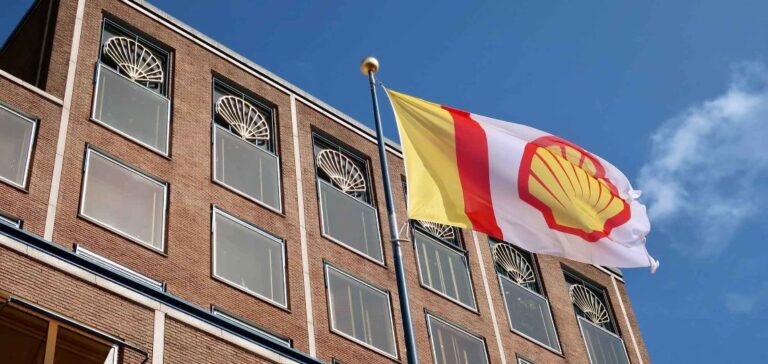
The Hague's Court of Appeal overturned a historic decision obliging Shell to reduce its CO2 emissions, rejecting the environmental NGOs' appeal, which denounced the multinational's inaction on climate.

Share:

Comprehensive energy news coverage, updated nonstop

Annual subscription

8.25$/month*

*billed annually at 99$/year for the first year then 149,00$/year ​

Unlimited access • Archives included • Professional invoice

OTHER ACCESS OPTIONS

Monthly subscription

Unlimited access • Archives included

5.2$/month*
then 14.90$ per month thereafter

FREE ACCOUNT

3 articles offered per month

FREE

*Prices are excluding VAT, which may vary depending on your location or professional status

Since 2021: 35,000 articles • 150+ analyses per week

The Hague’s Court of Appeal ruled in favor of Shell this Tuesday, dismissing claims by climate defense groups such as Milieudefensie and Greenpeace, which sought to compel the oil giant to adopt stricter CO2 reduction targets. This decision reverses the judgment rendered in 2021 by a Dutch court, which had ordered Shell to reduce its net CO2 emissions by at least 45% by 2030 from 2019 levels.

Reasons behind the court’s decision

Judge Carla Joustra stated that the arguments presented by the NGOs were insufficient to justify such an obligation on Shell. She clarified that the matter was more of a political decision to be taken by governments rather than a legal constraint imposed on a private company. Shell, for its part, argued that emission reduction goals require coordination at national and international levels, rather than individual actions imposed by the courts. Shell’s CEO, Wael Sawan, welcomed the decision, asserting that it supports the company’s strategic approach toward a balanced energy transition. He reiterated Shell’s commitment to achieving net-zero emissions by 2050 while maintaining an effort to halve emissions from its direct operations by 2030.

Reactions from NGOs and climate activists

Milieudefensie’s director, the Dutch branch of Friends of the Earth, expressed disappointment at this judicial setback. He stated that although the outcome is a blow, it does not erase the progress made in raising public awareness of large corporations’ responsibility in the fight against climate change. According to him, the lawsuit against Shell has highlighted the environmental impact of large multinationals, thus stimulating the debate on their role in carbon reduction. Despite this decision, Milieudefensie and other NGOs are now considering taking the case to the Supreme Court. However, the Supreme Court will not review the facts but will instead focus on the procedural aspects of the judgment.

A precedent in the fight against climate change

This lawsuit, known as “the people against Shell,” was initially launched in 2019, supported by more than 17,000 Dutch citizens. The case sought to force Shell to align with the 2015 Paris Agreement goals, which commit nations to limit global warming to 2°C, or even 1.5°C above pre-industrial levels. In 2021, the initial judgment by The Hague’s court marked a historic turning point by imposing precise emission reduction obligations on a multinational, according to the Paris Agreement criteria. This victory was widely hailed by environmental activists, who considered it a precedent in efforts to hold large companies accountable for climate issues.

Shell and BP’s climate target adjustments

In recent months, Shell and other energy companies, notably BP, have revised some of their climate targets, placing increased emphasis on oil and gas activities to boost profits. This strategic shift has angered environmental activists, who believe it moves these companies further from their environmental commitments. The reduction in climate ambitions of these multinationals contrasts with the efforts of many countries and organizations to strengthen greenhouse gas reduction targets.

For now, the Dutch court of appeal’s decision may hinder attempts to regulate multinational corporations judicially on climate matters, but the debate on their climate responsibility remains active and continues to fuel international discussions.
Aegis Critical Energy Defence Corp. and Seetel New Energy have created Cordelia BESS to respond to Ontario’s LT2 call for proposals, aimed at strengthening energy capacity through battery storage.
A train carrying over 1,200 tonnes of gasoline produced in Azerbaijan entered Armenia on December 19, marking the first commercial operation since recent conflicts, with concrete implications for regional transit.
Trump Media & Technology Group and TAE Technologies unite in a transaction valued at USD6 billion to launch one of the first publicly traded companies focused on fusion energy.
Solarpro commissions Hungary’s largest photovoltaic plant using 700,000 advanced modules supplied by LONGi, with an expected annual output of 470 GWh.
Subsea 7 has secured a new extension of its frame agreement with Equinor for subsea inspection, maintenance and repair services through 2027, deploying the Seven Viking vessel on the Norwegian Continental Shelf.
Lhyfe aims to double its revenue next year, refocuses industrial priorities and plans a 30% cost reduction starting in 2026 to accelerate profitability.
Caracas says Iran has offered reinforced cooperation after the interception of two ships carrying Venezuelan crude, amid escalating tensions with the United States.
US authorities intercepted a second oil tanker carrying Venezuelan crude, escalating pressure on Caracas amid accusations of trafficking and tensions over sanctioned oil exports.
The government confirms the continuation of the high-voltage line construction to Fos-Berre, despite criticism from the public debate and local tensions regarding environmental and economic impacts.
The Japanese government plans to fund up to 30% of loans required for nuclear projects, aiming to accelerate reactor restarts and double the share of nuclear energy in its energy mix by 2040.
Facing a rapid increase in demand across industrial corridors, the Kenyan government is restructuring its power grid to accelerate connections, reduce technical losses and integrate new digital tools.
Shanghai Electric begins a combined-cycle expansion project across four Iraqi provinces, aiming to boost energy efficiency by 50% without additional fuel consumption.
French group ENGIE has officially commissioned the Serra do Assuruá complex in the State of Bahia, making it its largest onshore wind project worldwide.
Mundi Énergies partners with Haffner Energy to create a network of twenty multi-energy hubs in Quebec, using residual biomass to produce renewable gas and strengthen Canada’s energy independence.
UK-based manufacturer Awendio Solaris plans to build a 2.5 GW solar industrial platform, expandable to 5 GW, in Quebec, targeting North American markets with a 100% regional supply chain.
Zefiro Methane, through its subsidiary Plants & Goodwin, completes an energy conversion project in Pennsylvania and plans a new well decommissioning operation in Louisiana, expanding its presence to eight US states.
RWE signed a 15-year power purchase agreement with Indiana Michigan Power for the Prairie Creek project, aimed at supporting Indiana’s growing electricity demand starting in 2028.
US-based Armada has signed a memorandum of understanding with the Department of Energy to participate in the Genesis Mission, aimed at accelerating scientific research and reinforcing national energy and technology sovereignty.
EDP has signed a long-term electricity supply agreement with Energa for a 322 MW hybrid portfolio combining wind and solar, marking one of the largest contracts of its kind in Poland.
French nuclear reactor developer Newcleo has submitted its lead-cooled small modular reactor design to Euratom, initiating the first regulatory phase to integrate nuclear non-proliferation safeguards at the European level.

All the latest energy news, all the time

Annual subscription

8.25$/month*

*billed annually at 99$/year for the first year then 149,00$/year ​

Unlimited access - Archives included - Pro invoice

Monthly subscription

Unlimited access • Archives included

5.2$/month*
then 14.90$ per month thereafter

*Prices shown are exclusive of VAT, which may vary according to your location or professional status.

Since 2021: 30,000 articles - +150 analyses/week.